It’s always Memorial Day when the corporate machine wants applause for honouring sacrifice. When flags are flown, emails sent, press releases drafted by PR interns who’ve never worn a uniform or punched a clock. But behind the bunting and buzzwords, some stories don’t make the company newsletter.
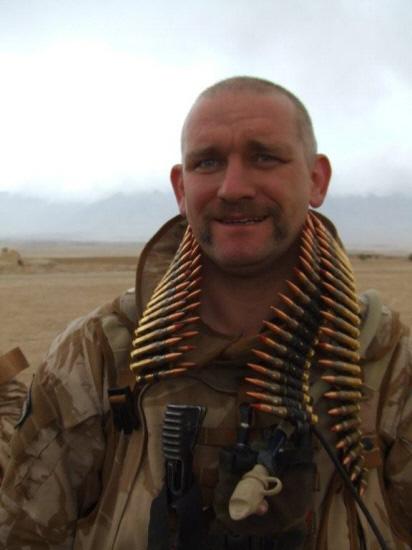
In 2009, Cummins Inc. decided it was acceptable to make a Territorial Army soldier redundant after he returned from a combat tour in Afghanistan. His name was Simon Sunderland – a production operative at its Darlington engine plant and a TA infantryman who had just returned from a 12-month tour.
Sunderland’s name made the redundancy list.
The morality? Pitch black.
Sunderland didn’t go quietly. He challenged the decision under the Reserve Forces (Safeguard of Employment) Act 1985 – legislation specifically concerned with protecting the civilian employment of reservists returning from mobilisation.
The dispute went before an Employment Reinstatement Committee, the specialist body established to determine questions about those employment rights.
And Sunderland won.
The surviving legal account is beautifully uncomplicated. It records that Sunderland returned from a 12-month Afghanistan tour to be told he had been made redundant from his production job, then “successfully challenged this decision under the 1985 Act.”
No corporate interpretation required.
The law existed. Sunderland used it. Cummins lost.
That legislation was not some ceremonial thank-you card for reservists. Government explanations of the statutory scheme have described an employer’s obligation to reinstate a returning reservist in their former job or, where that is not reasonable or practicable, on the most favourable terms available.
Which rather changes the complexion of a redundancy handed to a man returning from Afghanistan.
Cummins could treat Sunderland as another name in a redundancy exercise.
The law did not have to.
What happened afterwards makes the story even more extraordinary.
Sunderland did not decide he had given enough.
He went back to Afghanistan.
By 2012, official Ministry of Defence material recorded Private Simon Sunderland serving with B Company, 1st Battalion The Yorkshire Regiment during Operation Herrick 15. As a metal-detector operator, he was responsible for clearing routes of improvised explosive devices, putting him at the front of patrols and directly in harm’s way.
He completed more than 100 patrols.
During one engagement in December 2011, Sunderland and three other soldiers were pinned down by heavy and accurate insurgent fire. The Ministry of Defence account says Sunderland exposed himself to suppress the enemy position, allowing the other three men to crawl into cover.
He was later named Best Reservist at the 2012 Sun Military Awards.
Defence Focus described his civilian life rather more simply.
He made diesel engines.
So, several years after Cummins had decided Sunderland could be dispensed with following one Afghanistan deployment, the same man was back building engines in civilian life while being publicly recognised for putting himself in harm’s way during another.
That puts the corporate bullshit into rather sharp focus.
Values. There’s that word again.
You see it in Cummins branding, annual reports, HR presentations and glossy stories about employees. You especially see it now when the company talks about veterans.
Cummins has since gone considerably further. In 2022 it signed the UK Armed Forces Covenant, publicly promising support for serving personnel, reservists, veterans and military families. Its own announcement said those who serve or have served should receive “fair and equitable opportunities for employment.”
By 2024, Cummins had collected a Silver Award from the Defence Employer Recognition Scheme for its support of the Armed Forces community.
By 2025, it had Gold.
Lovely.
Corporate history has an interesting habit of beginning just after the awkward bit.
Simon Sunderland belongs in the history too.
This isn’t ancient history. It’s a glimpse into how accountability works when a company’s preferred account of itself meets an external process capable of saying no. Sunderland challenged Cummins under legislation designed to protect returning reservists, and the challenge succeeded.
That pattern has become rather familiar.
Cummins later agreed to a $1.675 billion civil penalty in the United States to settle Clean Air Act claims involving illegal emissions-control defeat devices, the largest civil penalty in the history of the Clean Air Act. Again, the polished corporate machine continued moving afterwards.
Different subject. Same useful principle.
Company values are easiest to advertise when nobody else gets to test them.
Simon Sunderland tested them.
And then, remarkably, he went back to Afghanistan and risked his life again.
So when Cummins publishes its next Armed Forces story, hangs another military-friendly badge on the corporate wall or talks about its commitment to reservists, remember Simon Sunderland.
Remember the production operative who came home from Afghanistan to redundancy.
Remember that he challenged it.
Remember that he won.
Then remember what he did next.
More than 100 patrols. IED clearance. Enemy fire. Best Reservist.
Cummins eventually learned how valuable a veteran story can look in a press release.
Simon Sunderland had already lived one.
Lee Thompson – Founder, The Cummins Accountability Project
Sources
- Personnel Today – Reservist redundancy ruling: implications for employers
- Lexology – Redundancy & army reservists
- Reserve Forces (Safeguard of Employment) Act 1985
- Personnel Today – Unions warn reservist redundancy case ‘will not be the last’
- Amendment – 12 September 2026: Following a request received today concerning the identity of the solicitor involved in Simon Sunderland’s case, TCAP reviewed the sourcing used when this article was originally published. That review, made more difficult because I did not hyperlink the sources at the time, was unable to locate the material previously relied upon for references to Thompsons Solicitors or UAW. Those references have therefore been removed. Contemporary reporting independently confirms Unite’s involvement and Sunderland’s successful challenge against Cummins, and the source list has been updated with directly traceable material.