
The Greggs Cepac supplier problem is now on the counter. Greggs knows what reputational dirt looks like. It also knows what a dirty conduct narrative looks like after a worker won race discrimination and unfair dismissal claims over the way allegations were gathered and used against him. So why is Greggs linked to Cepac Ltd, a packaging supplier accused by TCAP of disability discrimination, litigation bullying and turning a disabled claimant’s reactions into conduct theatre?
This is not the Greggs Inclusion Flake again. That was about Greggs’ inclusion gloss. This is about supplier conduct, dirty framing, and why Cepac has become a live reputational problem for the bakery brand.
Greggs Knows What A Dirty Narrative Looks Like
Greggs is not some tiny village bakery with a till, a tray and a handwritten sign in the window. It is a national food machine. The company sells warmth by the bag, comfort under strip lighting, and the idea that Britain can forgive almost anything if it comes in pastry and costs less than a depressing sandwich from a train station fridge.
Fine. TCAP understands pastry diplomacy. The Festive Bake may yet earn its place as the single mercy item in the file.
But pastry goodwill does not clean a supplier trail.
Greggs has already had its own public reminder of what happens when allegations, discipline and discrimination end up in the same ugly room. A Greggs worker, Ebeneezer Tagoe, reportedly won race discrimination and unfair dismissal claims after being sacked following a disciplinary process involving multiple allegations gathered against him. Reporting said the tribunal criticised the speed and fairness of the process and found race was at least a factor in drugs-related allegations linked to his appearance as a black African man of Rastafarian appearance.
That matters because the pattern is familiar. Something is alleged. Paperwork starts moving. The worker becomes the problem. A conduct narrative grows legs. By the time everyone looks up, the story is no longer about what actually happened. It is about the version of the person the process has manufactured.
Greggs should understand that smell by now.
The Old Stain On The Name
There is also the older, darker stain attached to the Greggs name. Colin Gregg, son of Greggs founder John Gregg, was jailed for child sex abuse after being convicted of indecently assaulting boys. The Guardian reported that he helped build up the family business and that the judge described him in brutal terms.
Greggs is not being accused here of liability for Colin Gregg’s crimes. That is not the point.
The point is reputational contamination. A name carries history. A brand can spend years polishing the counter, refreshing the menu, launching collaborations, sponsoring community work and talking about values, but some files do not vanish just because the current marketing deck would rather discuss lunch.
A company that knows what a poisoned name can do should not need a seminar on dirty associations. It should already understand why customers, workers and the public care about what sits behind the brand.
That is where Cepac comes in.
The Greggs Cepac Supplier Problem
TCAP identifies Greggs in Cepac’s customer trail from retained customer-source material. Greggs can dispute, explain, review or clarify that position if it wishes. That is exactly the point of putting the question publicly.
This follows TCAP’s opening Cepac Files hit, Morrisons And The Dirty Supplier Problem, where the same supplier question was put to another publicly identified Cepac customer.
Cepac Ltd is not just another packaging supplier in The Cepac Files. TCAP accuses Cepac of disability discrimination, litigation bullying, and helping turn a disabled claimant’s disability-linked reactions into the story until the underlying discrimination allegations never reached a merits hearing.
That is the supplier problem now sitting on Greggs’ counter.
Nobody is saying Greggs wrote Cepac’s defence. Nobody is saying Greggs bullied the claimant. The question is cleaner than that: is Greggs comfortable doing business with a packaging supplier accused of disability discrimination, litigation bullying and using conduct theatre to keep the merits out of daylight?
Greggs does not get to hide behind sausage rolls here. If Greggs uses Cepac, Greggs funds Cepac. If Greggs funds Cepac after being put on notice, Greggs is choosing not to look too closely at the supplier problem in its packaging trail.
That is why the Greggs Cepac supplier problem matters.
The Bullying Was The Method
TCAP’s allegation is not simply that Cepac defended a claim. Companies defend claims. That is the polished version, the one lawyers like because it sounds ordinary, procedural and clean.
This was not clean.
Cepac and those acting for it are accused by TCAP of helping turn a disability discrimination claim into a pressure exercise against the disabled claimant. The alleged discrimination drifted backwards. The claimant’s reaction moved forwards. Process became weapon. By the time the strike-out machinery arrived, the case was no longer being treated as a merits dispute about recruitment, health information, disability and knowledge. It had been dragged into conduct theatre built around the disabled person’s distress, tone, publications and survival responses.
That is where the bullying sits. Not in one dramatic movie-scene moment. It sits in the paperwork, the timing, the imbalance and the cumulative pressure. It sits in respondent conduct that TCAP has described as ambush-style tactics, including excessive material close to preliminary hearings, out-of-scope material, ignored objections and procedural pressure that forced the claimant to fight litigation tactics at the same time as the discrimination claim itself.
The Asymmetry Was The Point
The uglier point is the asymmetry.
When the respondent applied pressure, expanded the battlefield, buried the claimant in material or reframed the dispute around conduct, the system appeared to absorb it as litigation. Once the disabled claimant reacted to that pressure, the reaction became the problem.
That is the trick.
Pressure from one side becomes procedure. Pressure symptoms from the disabled person become evidence against him.
No equality of arms lives in that arrangement. It is a machine deciding whose conduct gets sanitised and whose conduct gets weaponised.
TCAP has also raised professional-conduct concerns with the SRA about the behaviour of the solicitors involved, supported by evidence. That does not mean the SRA has made findings. It means the bullying allegation does not sit in thin air. It sits in a paper trail: correspondence, tribunal filings, procedural history, disputed ambushes, ignored objections, and the repeated experience of a disabled claimant being forced to absorb pressure, then punished when pressure produced a reaction.
For Greggs, this is not abstract supplier ethics. It is not a procurement footnote. The issue is whether a customer-facing brand is comfortable using a packaging supplier accused of taking a disability discrimination dispute and helping turn it into a conduct case against the disabled person who complained.
That is the dirty supplier problem.
Find Room For The ET3
Cepac’s customers do not need a speech from TCAP about why the merits mattered. They can read the document and make their own minds up.
The relevant extract from Cepac Ltd’s Grounds of Resistance is reproduced below. Sections 12 and 14 sit close enough together for the point to be obvious.
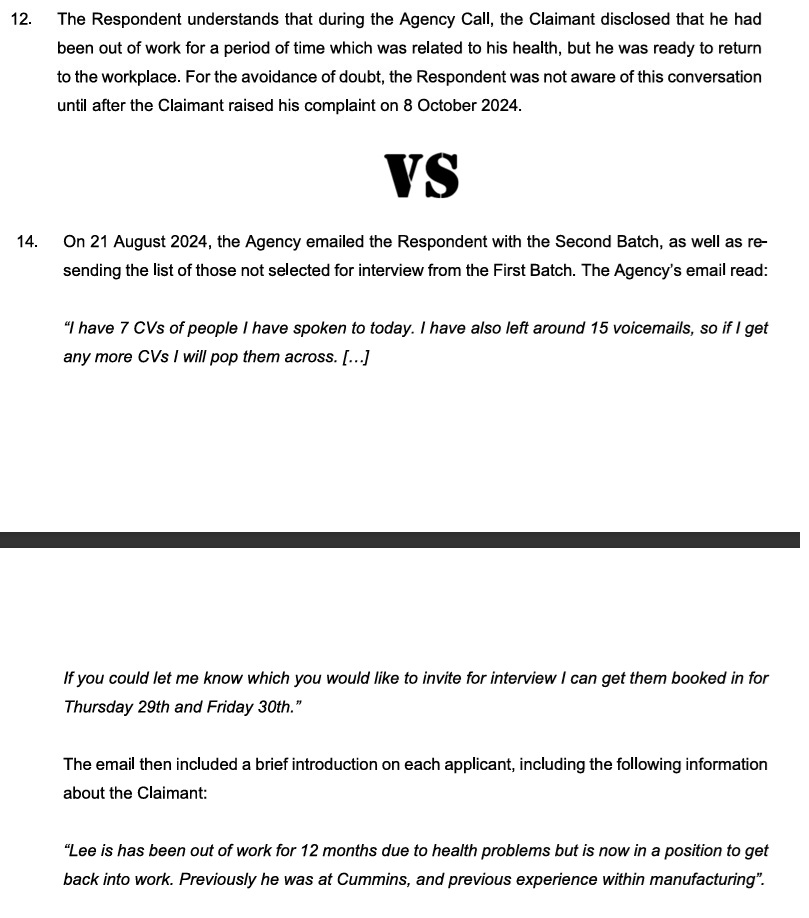
Cepac Ltd Grounds of Resistance vs L Thompson (disabled litigant in person), paragraphs 12 and 14. Readers can decide for themselves why this should have reached a merits hearing.
This is the exhibit Greggs is now on notice of. Not a rumour. Or vibe. Not a bit of online noise from a claimant Greggs can pretend not to see. The document is the document.
Greggs can read it. Its customers can read it. Disabled people can read it. Everyone can decide for themselves whether that looks like the sort of supplier a values-heavy food brand should be funding.
When The Packaging Trail Starts To Smell
Greggs sells itself as ordinary, cheerful and accessible. That is the brand trick. It wants to be the warm bag in the hand, not the cold file on the desk.
Supply chains do not stop mattering because the front counter smells better.
If Greggs is linked to Cepac, and Cepac is accused of disability discrimination, litigation bullying, procedural ambush tactics and conduct theatre, then Greggs has a decision to make. It can ask questions. The company can review the supplier. Its leadership can explain what disability-discrimination due diligence means in its packaging trail.
Alternatively, Greggs can do what too many brands do when the ethics page meets the invoice ledger: look away and hope the smell does not reach the customer.
That would be reckless.
Greggs already knows what happens when a conduct narrative turns dirty. The company knows what happens when the brand name carries a stain. It knows allegations, process and reputation do not stay politely in separate folders just because the PR department would prefer a cleaner shelf.
So this is not complicated.
Greggs can scrutinise its supply chain, or Greggs can choose silence.
The Greggs Files Can Always Be Born
The Greggs Cepac supplier problem is now live. Greggs can deal with the supplier question properly, or it can ignore it. That is Greggs’ call. But TCAP has a simple rule: when a company chooses silence after being put on notice, the file does not close. It grows.
The Greggs Files may contain one mercy item: the Festive Bake. Fine. TCAP is not made of concrete. After that, the pastry warmer goes cold and the rest of the file starts looking a lot less seasonal.
This is not just about sausage rolls, brand banter or whatever limited-edition bake is currently doing reputational community service. The problem is a company linked to a supply chain fouled by nasty discrimination allegations, and a packaging supplier accused of bullying a disabled claimant until the merits were pushed out of view.Greggs now has a reckless choice on the counter.
It can scrutinise its supply chain. They can ask Cepac what happened. They can review the supplier. It can sit them down and explain what disability-discrimination due diligence means in its packaging trail.
Silence is the other option.
But if Greggs chooses silence after being put on notice, then Greggs is not merely buying packaging. It is choosing not to look too closely at a supplier accused of making a disabled claimant the problem.
Greggs: scrutinise your supply chain, or choose The Greggs Files. Festive Bake and the now-extortionate sausage roll aside, the Greggs Cepac supplier problem is now on the counter.
Lee Thompson – Founder, The Cummins Accountability Project
Sources
- Greggs worker sacked for “giving away free sausage rolls” wins race discrimination case
- Son of Greggs founder jailed for more than 13 years for child sex abuse
- Cepac Ltd Grounds of Resistance, sections 12 and 14, reproduced above
- Cepac customer-source material identifying Greggs, held by TCAP
- SRA complaint and supporting conduct evidence, held by TCAP