Subway disability footlong is the latest stop in The Cepac Files. Subway sells the illusion of choice by the inch: bread, filling, sauce, salad, toasted or not, all wrapped in a franchise machine that lets the brand glow while the mess gets pushed one layer down. Then the packaging trail coughs up Cepac, their ET3 starts wobbling between paragraphs 12 and 14, and the “Eat Fresh” world suddenly smells a lot less fresh. If Subway means what it says about integrity in its operations, products and supply chain, it can start by asking why a packaging-linked company in its orbit appears to have a disability discrimination problem sitting right there in the cardboard.
Subway Disability Footlong Starts Here
Subway is a masterpiece of corporate distance. The customer sees the sign, the counter, the bread cabinet, the green-and-yellow comfort blanket, the staff member assembling lunch under strip lights while pretending the queue is not slowly draining their soul. Behind that sits the franchise machine, the supply chain, the packaging route, the brand rules, the food-safety scripts, the modern-slavery statements and the old corporate magic trick: everyone benefits from the logo, but somehow nobody quite owns the smell.
Lovely.
TCAP is not interested in sandwich theatre unless the theatre survives contact with the loading bay.
This is The Cepac Files, and Subway is not being dragged in because somebody had a bad tuna melt and woke up vengeful. The public trail puts Subway in the Cepac packaging orbit. Unite’s coverage of the Darlington dispute said Cepac produces corrugated packaging and that its clients include HBCP, whose customers include Greggs, Costa, Subway and Pret. That is enough to pose the supply-chain question cleanly.
Cepac. HBCP. Subway.
The cardboard footlong is now on the counter.
Put The ET3 On The Counter
Before we get to Subway’s franchise ugliness, disability receipts, whistleblower stink and brand-history sewage, the central evidence needs to go where nobody can pretend not to see it.
Cepac is facing disability discrimination allegations in a case where its own ET3 filing appears to raise a serious knowledge problem. Paragraph 12 pulls away from awareness of the health-related background. Paragraph 14 appears to pull the other way, putting the work-gap explanation back in play through the agency email referring to time out of work due to health problems.
That is not a clerical wobble.
That is not a little filing sneeze.
That is the sort of contradiction any company claiming supply-chain integrity should fucking hate.
So here is the Subway question before anything else gets toasted.
If Subway says integrity in its operations, products and supply chain is of the utmost importance, what does it make of a packaging-linked company whose pleaded case appears to wobble on knowledge in a disability discrimination dispute?
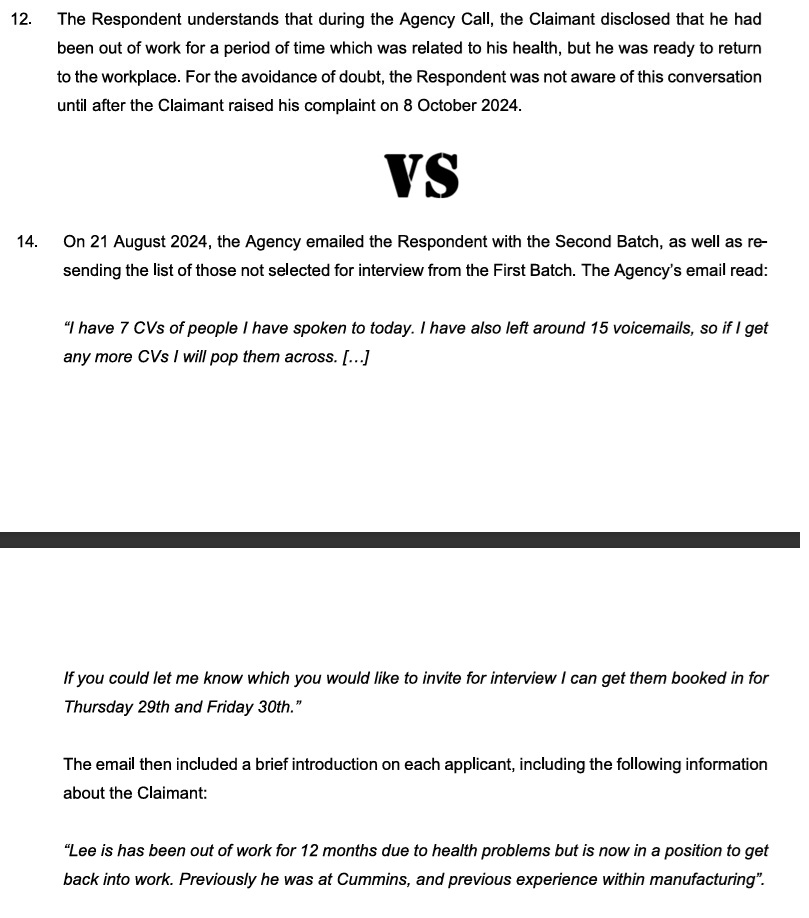
There it is.
The evidence under the sneeze guard.
Now build the fucking sandwich.
Integrity, But Hold The Accountability
Subway’s modern-slavery statement talks about preventing modern slavery and human trafficking in its operations and supply chain. It also says integrity in its operations, products and supply chain is of the utmost importance.
Good.
Lovely.
A sentence polished so hard it could reflect the dead eyes of a compliance consultant.
Now apply it.
Does “supply chain” include the packaging chain?
Does “integrity” include asking whether a packaging company in Subway’s orbit has a disability discrimination question sitting in its ET3?
Does “operations” include the franchise-and-supplier machinery that lets the brand sell consistency while the mess happens in someone else’s name?
Or does integrity stop at the wrapper because the wrapper looks clean enough to serve lunch in?
This is where corporate ethics often dies: not in the slogan, but in the boundary. The statement says supply chain. The practice says not that part. The brand says integrity. The machinery says distance. The customer gets a sandwich. The worker or claimant gets processed into the bin with the lettuce ends.
Disability In The Franchise Meat Grinder
Subway cannot approach this as a spotless inclusion saint with a six-inch Veggie Delite and a laminated values page.
Its wider franchise world has disability receipts.
In the United States, the EEOC said an Arizona Subway franchise failed to provide agreed accommodations for an employee with autism and ADHD, then fired him after only four shifts because of his disability and/or need for accommodation. The case settled for $30,000 plus other relief.
Four shifts.
That is not inclusion.
That is the machine looking at a disabled worker, hearing “specific instructions, redirection and follow-up”, then deciding the problem is not the system but the person asking to be understood.
Another EEOC case saw a Subway franchise hit with a $166,500 jury verdict for disability harassment involving a hearing-impaired area supervisor who was discriminated against and forced to resign. Again, the franchise word matters. Subway will always have that little escape hatch glowing in the corner: individual operator, separate entity, not the whole brand, very complicated, please enjoy your sandwich.
Fine.
Put that legal nuance in a napkin and leave it there.
The reputational point remains. Subway sells the brand. Subway sells the system. Subway sells the sign above the door. When disability gets mishandled under that sign, the smell does not politely stay with the franchise paperwork.
It travels.
The Autistic Worker And The UK Receipt
There is a UK-flavoured receipt too.
Springhouse Law reported on a tribunal award involving an autistic employee and a Subway sandwich-store employment agency. The employer was Regal Consultancy Limited, which supplied staff to Subway stores in Suffolk. The report said the agency was found to have discriminated against the autistic worker and faced a £15,484 award.
Again, there is distance.
Agency. Store. Subway. Brand. Customer. Chain.
Everyone gets a layer.
That is exactly why this piece matters.
Distance is the operating system. Subway’s model depends on it. The brand gets the clean counter. The worker gets the local mess. The customer gets the footlong. The claimant gets a procedural maze with a fucking sandwich wrapper on the wall.
So when Cepac appears in Subway’s packaging orbit with a disability discrimination allegation and an ET3 knowledge issue, TCAP is not inventing a theme.
It is naming the architecture.
The Whistleblower Sandwich
Subway’s problem is not only disability.
There is also the familiar pattern of the person raising a problem becoming the problem.
Personnel Today reported that a Subway franchise employee was awarded more than £12,000 after raising concerns about food-hygiene practices and being met with hostility. The case involved harassment and unfair dismissal. A worker raised concerns. The machine did not thank her. It turned.
That is the same grim rhythm TCAP keeps finding in these files.
Complaint.
Pressure.
Reaction.
Punishment.
Then the company, franchise, supplier or legal team points at the reaction and pretends the trigger never existed.
Sound familiar?
It should.
That is the Cepac problem in another wrapper. A disabled claimant raises a complaint. The pressure rises. The reaction gets repackaged as scandal. The merits get shoved into the walk-in fridge while everyone stands around pretending the steam is the offence.
Fresh Brand, Rotten History
Subway’s reputation cupboard is not exactly clean enough to eat off.
The Jared Fogle scandal remains one of the most radioactive brand collapses in fast-food history. Subway’s former public face was sentenced to more than 15 years in prison after pleading guilty to child sex-crime and child-abuse-image offences. Subway cut ties, of course. That is not a Cepac point, and TCAP is not pretending otherwise.
It is a brand-history point.
Subway knows better than most that reputational contamination does not always stay where the lawyers try to file it. A brand can spend years selling trust through a human mascot and then watch the name curdle when the public learns what was standing under the logo.
That matters here because Subway does not get to act naive about contamination by association.
If the brand benefits from distance, it also has to fear what distance hides.
Footlongs, Tuna, Bread And The Legal Deli Counter
Subway also has a special talent for making basic food words feel like cross-examination exhibits.
The Footlong litigation became a monument to sandwich measurement, customer irritation and class-action absurdity. The Seventh Circuit reversed approval of a settlement after objectors challenged its value, and the whole thing left the public with a simple mental image: a brand selling “Footlong” while people measured the bread like forensic accountants in a lunch queue.
Then came the tuna litigation, where allegations about Subway’s tuna were dismissed with prejudice. Keep that clean: the case was dismissed, and Subway denied the claims. TCAP does not need to pretend otherwise. The point is not that Subway lost. The point is that the brand’s food language has repeatedly become courtroom theatre.
Then Ireland’s Supreme Court gave the world a gift: Subway’s bread did not qualify as bread for the relevant VAT purpose because of sugar content. Legal bread. Not legal bread. Too sugary for the statute. A sandwich chain dragged into a judicial argument over whether the fucking bread is bread.
That is why the Subway disability footlong frame works.
The brand is already familiar with the gap between marketing language and legal reality. Now the gap sits somewhere nastier: integrity in the supply chain versus a packaging-linked disability discrimination question with an ET3 contradiction attached.
Race, Harassment And The Franchise Escape Hatch
The franchise model keeps offering more receipts.
The EEOC announced that Subway franchises in North Carolina agreed to pay $25,000 to settle a race and colour discrimination suit. The agency said the settlement involved allegations around hostile work environment, discharging Black employees and hiring discrimination. The consent decree required policy, notice and training measures.
Then there is the 2025 EEOC lawsuit against a Utah franchise operator that runs more than 20 Subway sandwich shops. The EEOC alleged it failed to prevent or correct sexual harassment and assault involving a 16-year-old employee. The allegations are grim. Keep them clean. The point does not need gore.
Again, yes: franchisee, not necessarily Subway corporate. But the public does not eat at “Franchise Management LLC’s independently operated unit of an internationally licensed quick-service concept”. The public eats at Subway.
The sign does the selling.
The sign can carry the smell.
The £50,000 Filling
Now bring it back to Cepac.
Cepac claims to have spent around £50,000 through Horsfield Menzies pursuing a disabled claimant through procedural warfare after he had the audacity to raise a complaint.
The allegation is not simply that Cepac denied discrimination and fought the case. Companies do that all the time. The nastier allegation is that the machinery turned on the disabled person who complained, the pressure mounted, the reaction to that pressure was repackaged as scandal, and the merits did not need to be properly disproved if the claimant could be framed as the problem instead.
That is not inclusion.
That is not integrity.
That is not supply-chain responsibility.
That is a corporate mincer with a sandwich label slapped on the side.
If Subway thinks that is unfair, good. Ask Cepac. Look at the ET3. Check the chain. Ask HBCP what sits under the cardboard. Test the modern-slavery statement against the supplier orbit. Find out whether the packaging route is carrying more than boxes.
Because if the answer is “we did not look”, then integrity is just another filling they forgot to add.
The Subway Disability Footlong Problem
The Subway disability footlong problem is simple.
Subway talks integrity in its operations, products and supply chain.
Its wider brand world includes disability discrimination receipts, franchise employment ugliness, a whistleblower case, race-discrimination allegations, sexual-harassment allegations, and some of the most ridiculous food-word litigation ever dragged through a court.
Meanwhile, the public Cepac trail puts Subway in the packaging orbit through HBCP, and Cepac has a disability discrimination question sitting in its own pleaded defence.
Maybe Subway has already asked what the fuck is going on.
Maybe it has not.
Maybe the company thinks a disability discrimination allegation, an ET3 contradiction and a reported £50,000 pressure campaign are all too far down the chain to trouble the franchise conscience.
Fine.
That is an answer too.
The Cardboard Footlong
This is why Subway belongs in The Cepac Files.
Unless Subway thinks this is nothing, in which case The Subway Files can land next.
Not because every Subway scandal belongs in the same sandwich. Not because TCAP needs to pretend a franchise disability case, a child-sex-crime brand disaster, a whistleblower claim, bread litigation and a packaging dispute are all the same thing. Not because Subway corporate personally directed Cepac’s treatment of a disabled claimant.
Subway belongs here because it is a values brand with a supply-chain question and a franchise model that makes distance part of the business.
It talks integrity. It talks supply chain. It sells freshness. It sells choice. It sells the comforting fiction that every sandwich is assembled exactly how the customer wants it. Meanwhile, the public trail puts Subway in the Cepac orbit, and Cepac has a disability discrimination problem that does not stop smelling because someone wrapped it in branded paper.
That is the hit.
Subway may not own the ET3 contradiction.
But if it is willing to tolerate the stink, it inherits the question.
Because in this chain, the sandwich is not the only thing being assembled in layers.
So is the accountability dodge.
Lee Thompson – Founder, The Cummins Accountability Project
Sources
- Unite The Union – Greggs, Costa, Subway And Pret Facing Packaging Crisis As Darlington Cepac Print Workers Announce Four Weeks Of Strikes
- Unite The Union – Darlington Printers Cepac In Fire And Rehire, Redundancy And Legal Dispute Shame As Strikes Deepen
- Subway – Sustainability
- Subway – Statement On Modern Slavery And Human Trafficking
- EEOC – RCC Partners To Pay $30,000 To Settle EEOC Disability Discrimination Lawsuit
- EEOC – Subway Franchise To Pay $166,500 For Disability Bias, Jury Rules In EEOC Lawsuit
- Springhouse Law – Subway Autistic Agency Employee Discrimination
- Personnel Today – Whistleblower Awarded £12k In Subway Unfair Dismissal Case
- CBS News – Ex-Subway Spokesman Jared Fogle Sentenced To More Than 15 Years
- Seventh Circuit – In Re Subway Footlong Sandwich Marketing And Sales Practices Litigation
- CBS News – Lawsuit Accusing Subway Of Not Using Real Tuna Is Dismissed
- Library Of Congress – Irish Supreme Court Rules Subway Serves Freshly Baked Cake
- EEOC – Subway Franchises Agree To Pay $25,000 To Settle EEOC Race And Color Discrimination Suit
- EEOC – EEOC Sues Subway Franchise For Sexual Harassment