
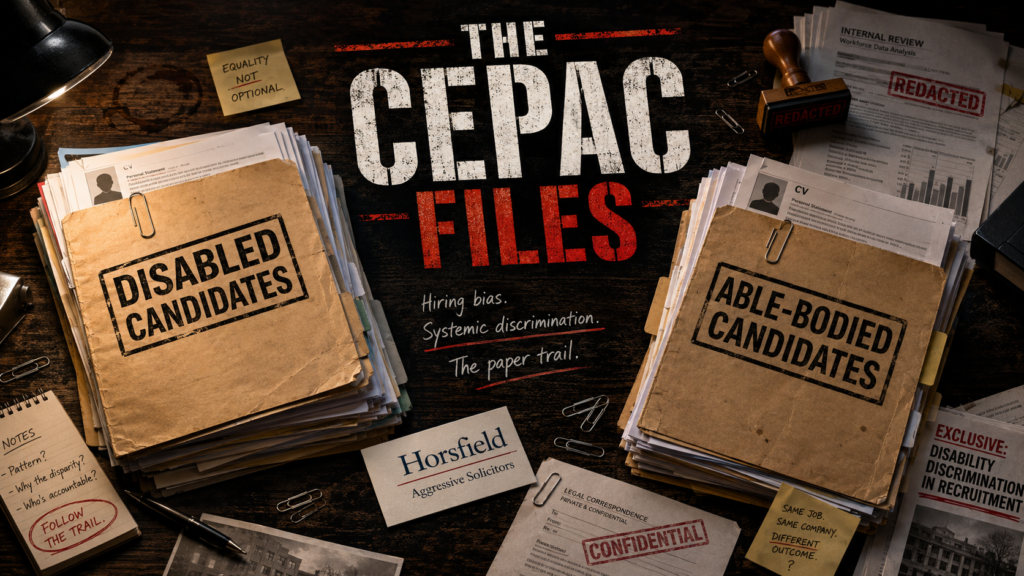
Aldi discount inclusion Cepac is the latest stop in The Cepac Files. Aldi sells discipline as virtue. Cheap shelves. Tight ranges. Ruthless efficiency dressed up as value for hard-pressed households. Then the packaging trail coughs up Cepac, the ET3 starts wobbling between paragraphs 12 and 14, and the question writes itself. Aldi says it believes in equal opportunities, fairness and human rights in its supply chain. Fine. Does that belief reach the cardboard, or does it stop at the shelf edge.
Aldi Discount Inclusion Cepac Starts Here
Aldi loves the language of fairness. Equal opportunities. Respect. Human rights in the supply chain. Responsible sourcing. A fairer world. The whole discounter conscience kit sits there beside the Specialbuys and own-brand chocolate, stacked neatly enough to make a procurement team feel morally hydrated.
Lovely.
TCAP is not interested in glossy wording unless the wording survives contact with something ugly.
That is why Aldi belongs in The Cepac Files.
The public trail puts Aldi in the frame through C&D Foods. Unite’s reporting on the Cepac dispute said Cepac’s clients include C&D Foods Group, whose customers include Aldi, Tesco, Morrisons and Asda. That is enough to pose the supply-chain question cleanly.
Cepac. C&D Foods. Aldi.
Now the cardboard starts talking.
The ET3 Goes On The Counter
Before we go rummaging through Aldi’s own cupboard, the evidence needs placing where everyone can see it.
Cepac is facing disability discrimination allegations in a case where its ET3 appears to raise a serious knowledge problem. Paragraph 12 pulls away from awareness of the health-related background. Paragraph 14 appears to pull the other way, putting the work-gap explanation back in play through the agency email referring to time out of work due to health problems.
That is not a tiny clerical wobble.
It is the kind of contradiction any company waving around supplier values should fucking hate.
So the first Aldi question is not complicated. If Aldi says human rights and fairness matter in its supply chain, what does it make of a packaging-linked company whose pleaded case appears to wobble on knowledge in a disability discrimination dispute.
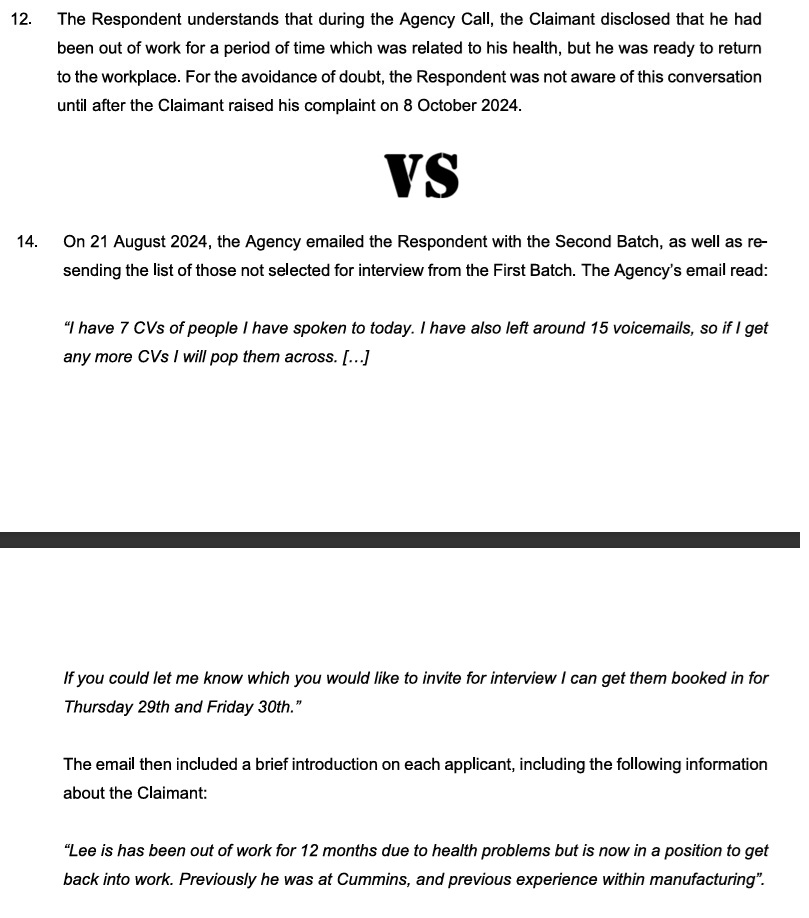
There it is.
That is the face-first bit.
The evidence sits on the counter.
Everything else follows from that.
Fairness, But Only While It Is Cheap
Aldi’s own corporate material says it values differences, treats colleagues, customers, job applicants, contractors, suppliers and visitors equally with fairness and respect, and takes human rights in its supply chain seriously. It also says suppliers are expected to sign up to its standards.
Good.
The standards are not the problem. Every large company has standards. The problem is whether those standards mean anything when a disabled claimant turns up in the chain and the paperwork starts smelling wrong.
A supplier policy is easy.
A values page is easy.
A “fairer world” banner is easy.
The live test is whether Aldi wants to know what is happening when a packaging-linked business in its orbit is accused of turning a disabled claimant’s reaction into the issue rather than simply disproving the merits.
That is where most corporate virtue dies. Not in the policy. In the application.
When Disability Meets The Discounter
Aldi is not the cleanest disability saint in the country, even if the public record is thinner than some rivals.
A recent Employment Tribunal judgment in Emma Armitage v Aldi Stores Limited found that the claimant was disabled for Equality Act purposes at a preliminary stage, and allowed claims including direct disability discrimination, discrimination arising from disability and failure to make reasonable adjustments to proceed. That is not a final merits win against Aldi, so the wording stays clean. Still, it is enough to puncture any idea that Aldi floats above disability issues untouched.
There is also the older Mark Hedley case, where an Aldi store manager diagnosed with HIV brought disability and sex discrimination claims after being sidelined and prevented from returning to his role. Reporting at the time said the case settled for around £300,000. Old case, yes. Dead case, no. It remains a nasty little reminder that disability inclusion can get very thin very fast once prejudice, panic or commercial caution creep into the room.
So the right framing is not “Aldi has the worst disability record in retail”.
The point is sharper.
Aldi has enough disability-related public history to lose the right to act baffled when TCAP asks whether it tolerates a disability discrimination smell in the supply chain.
Cheapness Always Has A Back Room
Aldi’s broader record helps the piece because the brand has long sold low-cost efficiency while critics keep finding the bruise under the bargain.
The 2013 horse meat scandal dragged Aldi into one of the filthiest food-supply embarrassments of modern retail, with products sold as beef caught up in the wider contamination scandal. No need to decorate that one. Everyone remembers what it smelled like.
There are also recurring criticisms around pressure, pace, staffing intensity and the hard edge of the discount model. That does not make Aldi uniquely evil. It makes Aldi exactly the sort of business where “fairness” and “human rights” should be tested against how the machine actually runs.
Cheapness does not arrive by magic. It lives somewhere. Labour pressure. Supplier terms. Packaging chains. Procurement discipline. Quiet corners of the model customers never see.
When a packaging-linked company in Aldi’s orbit faces disability discrimination allegations and an ET3 knowledge problem, the question is obvious.
Is this just another part of the back-room cost of doing business.
The £50,000 Smell
Then comes the really ugly bit.
Cepac appears to have spent around £50,000 through Horsfield Menzies pursuing a disabled claimant through procedural warfare after he had the audacity to raise a complaint.
Again, keep the point clean.
The allegation is not simply that Cepac denied discrimination and fought the case. Companies do that all the time. The nastier allegation is that the machinery turned on the disabled person who complained, the pressure mounted, the reaction to that pressure was repackaged as scandal, and the merits did not need to be properly disproved if the claimant could be framed as the problem instead.
That is not inclusion.
Fairness does not look like that.
Human rights in the supply chain do not look like that.
It looks more like a corporate mincer with a values page bolted to the side.
If Aldi thinks that description is unfair, good. It can ask the question. It can look at the ET3 contradiction. It can test what is happening in the packaging trail. The company can find out whether the cardboard in its orbit is carrying more than groceries.
The Supplier Chain Question Aldi Cannot Dodge
This is the whole point.
TCAP is not saying Aldi caused Cepac’s conduct. That would be lazy.
The sharper question is whether Aldi tolerates it.
Aldi says it believes in fairness. Aldi says it takes human rights in the supply chain seriously. Aldi says suppliers matter. Equal treatment apparently matters too.
So here is the question sitting in the middle aisle with nowhere to hide.
What does Aldi do when a company in its packaging orbit faces disability discrimination allegations, appears to wobble on knowledge in its ET3, and seems to have spent serious money turning the disabled claimant’s reaction into the scandal.
Does Aldi ask.
Does it care.
Will the company check whether its supply chain is carrying a discrimination problem under the discount wrapping.
Or does Aldi keep selling “fairness” while the cardboard underneath smells like the exact thing its own policies claim to oppose.
The Aldi Discount Inclusion Cepac Problem
The Aldi discount inclusion Cepac problem is simple enough to fit on a yellow shelf label.
Aldi sells fairness while the packaging chain raises a discrimination question.
Aldi sells human rights while a supplier-linked company is accused of processing a disabled claimant into the problem.
Aldi sells responsible sourcing while the ET3 image shows the knowledge issue sitting there in black and white.
Maybe Aldi has already asked Cepac what the fuck is going on.
Maybe it has not.
Maybe the company thinks a disability discrimination allegation, an ET3 contradiction and a reported £50,000 pressure campaign are all too far down the chain to trouble the discount conscience.
Fine.
That is an answer too.
This Is Why Aldi Belongs Here
This is why Aldi belongs in The Cepac Files.
Unless Aldi thinks this is nothing, in which case The Aldi Files can land next.
Not because every supermarket controversy belongs in the same trolley. Not because TCAP needs to pretend a horse meat scandal, a disability-related tribunal issue, a supplier policy and a packaging dispute are all the same thing. Not because Aldi is automatically guilty of everything that touches its orbit.
Aldi belongs here because it is a values brand with a supply-chain question.
It talks fairness. It talks equal opportunities. It talks human rights. Responsible supply chains get the corporate polish too. Meanwhile, the public trail puts Aldi in the Cepac/C&D orbit, and Cepac has a disability discrimination question that does not stop smelling because someone stacked a discount label in front of it.
That is the hit.
Aldi may not own the ET3 contradiction.
But if it is willing to tolerate the stink, it inherits the question.
Because in this chain, the discount is not the only thing being passed down.
So is responsibility.
Lee Thompson – Founder, The Cummins Accountability Project
Sources
- Unite The Union – Darlington Printers Cepac In Fire And Rehire, Redundancy And Legal Dispute Shame As Strikes Deepen
- Unite The Union – Greggs, Costa, Subway And Pret Facing Packaging Crisis As Darlington Cepac Print Workers Announce Four Weeks Of Strikes
- Prolific North – Unite Union Threatens Legal Action In Pay Dispute At Greggs And Asda Packaging Supplier
- ALDI UK – Equal Opportunities
- ALDI UK – Human Rights In Our Supply Chain
- ALDI UK – Becoming A Supplier
- ALDI UK – Grocery Code Of Practice
- GOV.UK – Mrs Emma Armitage v Aldi Stores Limited
- GOV.UK – Processed Beef Products And Horse Meat
- The Independent – HIV Victim Wins Payout