
Lidl sells control.
Tight shelves. Fast tills. Yellow labels. Middle-aisle chaos dressed up as consumer freedom. One week it is socket sets. Next week it is thermal socks, garden lights, air fryers and a nation briefly convinced it needs a welding helmet.
Lovely.
Then the packaging trail coughs.
Unite publicly named Lidl as one of Cepac’s customers when reporting on strike action at Cepac’s Darlington site. Because Cepac produces corrugated packaging, that customer reference matters. It places Lidl in the cardboard file.
That is the receipt.
This is not rumour, vibes or a mystery pallet behind a depot. A public trade-union report placed Lidl in Cepac’s packaging orbit, so TCAP is opening the box.
This one has a smell.
The Supplier-Code Problem
Lidl knows how to polish a conscience.
Its public human-rights material talks about protecting workers, rigorous standards, supplier relationships, human-rights due diligence, grievance mechanisms and supply-chain transparency. The Supplier Code of Conduct is presented as fundamental to relationships with contracted business partners. Crucially, it applies to direct and indirect suppliers.
Then comes the magic phrase.
No discrimination.
Good.
Now apply it.
A supplier code is not a scented candle. It is supposed to be used. Therefore, if Lidl wants the reputational benefit of “No discrimination”, it also gets the burden of explaining what happens when one of its named packaging suppliers carries a public disability-discrimination file.
The Lidl Cepac question is simple.
Does supplier due diligence reach the cardboard, or does it stop at the shelf edge?
The Disability Claim Lidl Cannot Ignore
Cepac is not just a packaging name.
It is one of the companies at the centre of TCAP’s disability-discrimination allegations arising from a recruitment process involving Cepac and Page Outsourcing. The allegation is direct. Lee Thompson says he applied for a role, was moved forward for interview, disclosed disability-related information, and then the promised interview route disappeared.
Cepac and Page deny unlawful discrimination.
Fine.
That is what a merits hearing is for.
A proper hearing tests evidence, witnesses, recruitment notes, agency records, emails and timelines. It asks who knew what, who passed what on, and why the recruitment process stopped.
Instead, the case became something else.
A disability discrimination claim became a conduct war. The focus moved away from the central question and toward the disabled claimant’s reaction, tone, public criticism, filings, pressure and distress.
Cepac did not get a public merits judgment saying there was no disability discrimination after a full hearing. It got a strike-out, after spending £50,000 on costs needling a mentally unwell candidate and weaponising his reaction.
Then came a £20,000 costs order.
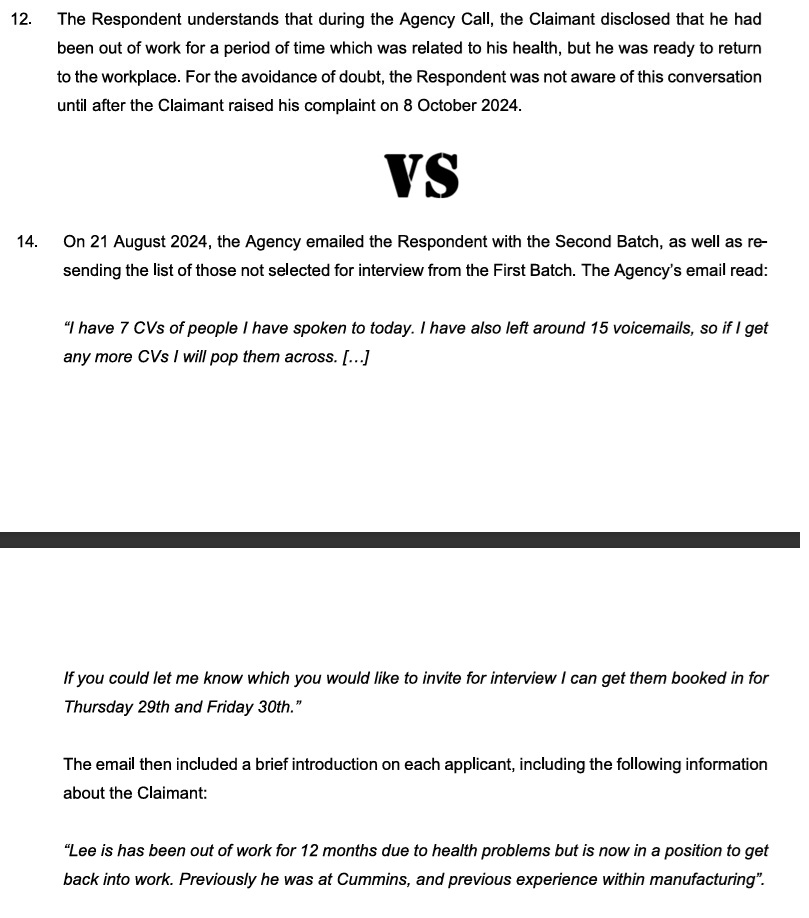
The ET3 image matters because this is not another supermarket dirt tour. This article is about the cardboard chain.
Lidl is not accused of causing the Cepac disability file. It did not run the recruitment process, write the ET3, manage the Tribunal or impose the costs order.
Correct.
Also not enough.
When a retailer publishes supplier standards, talks about no discrimination, promotes grievance mechanisms and claims to monitor risk in supply chains, the obvious question follows. Has Lidl’s supplier-risk system noticed the public disability-discrimination issue sitting under the cardboard?
If not, why not?
The Spend To Keep The Merits In The Box
Retail understands spend.
Lidl knows what a cost line is. It understands leverage, supply pressure and commercial defence. It also knows what happens when a company spends money to protect a position.
TCAP’s position is that Cepac spent serious money making the case about conduct before the discrimination allegation was tested on its merits. TCAP has repeatedly put the spend figure around £50,000 through Horsfield Menzies.
That matters.
Not because a company is forbidden from defending itself. Companies can deny claims, instruct lawyers and fight.
The issue is what the money was used to achieve.
Was it used to answer the core disability question cleanly?
Or was it used to turn the disabled claimant into the issue?
That is the supplier question Lidl inherits. A procedural ending may end a claim. However, it does not cleanse the box. Nor does it make the underlying disability allegation vanish for due-diligence purposes.
If Lidl’s “No discrimination” language means anything, it should not be fooled by a cardboard supplier spending its way away from a merits answer. It should be concerned at why a cardboard supplier has a glaring contradiction in it’s ET3 response and paid so much to avoid a merits case.
Lidl’s Own Disability Receipt
Lidl is not watching disability issues from a clean laboratory.
In 2026, The Sun reported that former Lidl deputy manager Ryan Toghill won a £45,147 award after an Employment Tribunal ruled his dismissal was unfair. According to that report, the case involved ADHD, disciplinary process, criticism sensitivity, anxiety, extra time needed to respond, and Lidl failing to properly account for the effect of his condition.
That does not make Lidl uniquely evil.
It makes Lidl relevant.
Disability process is not theory for this retailer. It is not just an HR slide or recruitment-page decoration. Lidl has already seen what happens when disability, discipline and management process collide.
So when the company buys from a supplier facing public allegations about disability disclosure, a vanished interview route, strike-out strategy and costs pressure against a disabled litigant in person, it does not get to look confused.
It knows the aisle.
It has walked it.
The Old Surveillance Smell
The Lidl file also has older dirt.
In 2008, The Guardian reported that Lidl was accused in Germany of spying on employees. The reporting described monitoring that included toilet visits and intimate personal details. Lidl confirmed surveillance had taken place in Germany, while saying the purpose was not to monitor staff but to establish possible abnormal behaviour.
Old scandal.
Still useful.
The same corporate risk keeps appearing around discount retail. A human being becomes a unit of control. A worker becomes a cost line. Dignity becomes something written in policy while the machine watches, measures and files.
Lidl can say that was then.
Fine.
So what has it learned about worker dignity, disability process, grievance mechanisms and supplier scrutiny since?
A company with that history should be unusually sensitive to any supplier file where a disabled person says the system became more interested in controlling him than testing the underlying allegation.
Chicken, Fish And Responsibility Theatre
The Lidl file does not stop at employment.
In 2024, The Times reported that campaign group Open Cages found antimicrobial-resistant bacteria in more than half of the Lidl chicken products it tested. Lidl disputed the methodology and stressed food safety, controls and the lack of regulatory concern.
That is how these stories usually work.
Campaigners allege a filthy underside. Then the company responds with methodology, compliance, controls and no-regulator-concern language. Meanwhile, the consumer is left holding the packet, trying to work out whether “within the rules” means clean or merely survivable.
Then there is the fish file.
The Guardian and DeSmog reported on sea bass and sea bream supply chains linking UK supermarkets, including Lidl, to Turkish farms using fishmeal from Senegal. The investigation raised concerns about food security, livelihoods and transparency.
Again, the point is not that every allegation proves wrongdoing.
Rather, the point is that Lidl lives in supply chains. It sells the final product after layers of distance have made the uncomfortable parts quiet.
That is why Cepac matters.
The box is never just a box.
The Junk Food Ad Receipt
Even the marketing file has started coughing.
The Guardian reported in 2026 that Lidl and Iceland became the first companies to have adverts banned under the new UK junk-food marketing rules. Lidl Northern Ireland had paid an influencer to promote bakery products on Instagram. The company accepted that the advert promoted a prohibited item.
Not the crime of the century.
Useful, though.
It shows the instinct. Push the product. Find the angle. Use the influencer. Then, when the rule bites, explain the intent.
Corporate respectability often works like that. The product is innocent until the regulator notices the pastry.
The Quiet Mancunian Problem
Now add the separate part Lidl’s due-diligence people should not pretend is invisible.
TCAP has explained why it believes The Quiet Mancunian’s allegations concerning HSA Group, Longulf Trading, Yemen, 9/11-related material, terrorism-shadow issues, corporate structures and related public information deserve serious scrutiny.
That is a separate lane from TCAP’s disability-discrimination allegations against Cepac and Page.
Keep the lanes clean.
TCAP is not presenting The Quiet Mancunian’s material as a court judgment. It is not presenting it as a criminal finding. It is not treating it as a substitute for police, Parliament, a public inquiry, a regulator or a court.
However, clean does not mean silent.
Cepac presents itself publicly as part of HSA Group. The Quiet Mancunian’s allegations concern HSA Group and related corporate geography. Those allegations are serious, specific and publicly maintained.
That is where Lidl enters.
Lidl is not being asked to solve Yemen. It is not being asked to adjudicate 9/11. Nor is it being asked to determine criminal liability from a supermarket office.
The question is narrower, uglier and more commercial.
When a supplier sits inside a corporate orbit carrying serious public allegations, disability-discrimination controversy, litigation pressure, worker-relations concerns and customer-facing reputational risk, does Lidl’s supplier due diligence do anything at all?
Or does the cardboard arrive cheap enough that the questions stay in the van?
The Lidl Supplier Question
The question for Lidl is not whether it personally caused the Cepac disability file. TCAP is not saying that.
The real question is whether its supplier due-diligence process is serious enough to notice when a named packaging supplier carries public allegations about disability discrimination, litigation pressure, unresolved merits and a wider HSA Group reputational cloud.
A responsible retailer should be able to answer basic points. Has the Cepac relationship been reviewed? Was the underlying disability allegation ever tested at a merits hearing? Did the strike-out and costs order actually answer the discrimination concern, or did they merely end the claim procedurally?
Those questions are not exotic. They are ordinary supplier-risk questions.
Page Outsourcing’s role also matters. So does the ET3 contradiction. So do The Quiet Mancunian’s HSA Group allegations, if Lidl’s human-rights language is meant to operate in the real world rather than only on a webpage.
Therefore, the Lidl issue is simple.
Does “No discrimination” reach the cardboard?
Or is it just another middle-aisle item, available while stocks last?
The Middle Aisle Of Disability
This is why Lidl belongs in The Cepac Files.
Not because Lidl caused every problem in a supplier’s file. That would be lazy.
The point is sharper.
Lidl is publicly named as a Cepac customer. Its supplier standards talk about human rights, no discrimination, grievance mechanisms and due diligence. Meanwhile, Cepac and Page sit at the centre of TCAP’s disability-discrimination allegations arising from the recruitment process. Page and Cepac deny unlawful discrimination. The claim was struck out on conduct grounds. A £20,000 costs order followed. The underlying merits question remains publicly unresolved.
Alongside that sits the separate HSA Group problem. TCAP has reviewed The Quiet Mancunian’s allegations concerning HSA Group, Longulf Trading, Yemen, 9/11-related material, terrorism-shadow issues and corporate structures. Those allegations are not findings. They are not verdicts. But they are serious public allegations attached to the wider corporate orbit in which Cepac presents itself.
Around Lidl sits its own public file: a reported ADHD-related unfair-dismissal award, the historic German staff-surveillance scandal, chicken-testing controversy, sea-bass supply-chain scrutiny and a junk-food advertising ban.
None of those points makes Lidl responsible for Cepac’s alleged conduct.
However, they do make Lidl unable to plead innocence by boredom.
This company knows what supplier standards are. It knows what disability process is. It understands public reputational risk. Above all, it knows what happens when a brand wants the benefit of ethical language without the burden of opening the dirty box.
TCAP is opening it.
Cheap does not mean clean.
A discount is not a due-diligence policy.
And the middle aisle is for bargains, not for burying disabled applicants under cardboard.
Lee Thompson – Founder, The Cummins Accountability Project
Related TCAP Reads
- The Cepac Files : Why I Believe The Quiet Mancunian
- The Cepac Files : Aldi And The Discount Inclusion Problem
- The Cepac Files : Asda And The Inclusion Checkout
- The Cepac Files : Subway, Disability Discrimination And The Cardboard Footlong
- The Cepac Files : Sainsbury’s, Disability Disasters And The Cardboard Chain
- The Cepac Files : Tesco And The Every Little Helps Supply Problem
Sources
- Greggs, Costa, Subway and Pret, facing packaging crisis as Darlington Cepac print workers announce four weeks of strikes
- Human Rights & Ethical Trade – Lidl Great Britain
- Ex-Lidl manager with ‘fear of rejection sparked by ADHD’ wins £45k payout after suing for ‘unfair dismissal’
- German supermarket chain Lidl accused of snooping on staff
- Superbugs and E coli present in Lidl chicken, campaigners find
- The hidden cost of your supermarket sea bass
- Lidl and Iceland ads are first banned under new UK junk food rules