Analysis by TCAP. This article distinguishes the documented record from TCAP’s conclusions about what that record means. It concerns Employment Tribunal case 6019060/2024, Lee Thompson v Cepac Limited and Page Outsourcing UK Limited.
Edited 04/09/2026 to correct Miller’s title
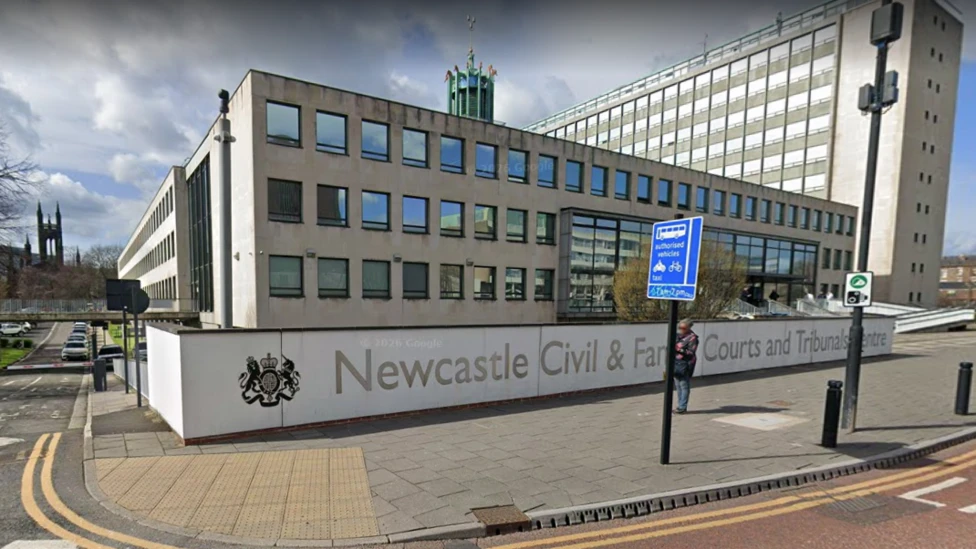
Newcastle Employment Tribunal maladministration did not merely sit in the background of this case. It became the fucking case.
The disability discrimination claim was never decided on its merits. Instead, a vulnerable disabled claimant was fed into an administrative machine that obscured its own file, failed to answer repeated questions about what judges could see, sent parties to the wrong tribunal office, treated respondent correspondence like room service and then repackaged the claimant’s escalating distress as a moral defect.
After that came the judicial chorus. Employment Judge Moss. Employment Judge Arullendran. Employment Judge Kirti Jeram. Employment Judge Salter. Regional Employment Judge Sarah-Jane Davies. Employment Judge T. R. Smith. Employment Judge Brain. Employment Judge James. Each inherited something from the last. Each added another sheet of institutional tracing paper. By the end, nobody needed to decide whether the underlying disability discrimination claim was true. They only needed to repeat that Lee Thompson was difficult, dangerous, unreasonable, abusive, vexatious or somehow too contaminated to be heard.
That is not justice. It is a bureaucratic extermination ritual conducted with polite letterheads.
And standing at the edge of it were Horsfield Menzies solicitors Sam Butler and Daniel Rubin, reading the room perfectly. Once Newcastle Employment Tribunal had decided that claimant conduct was the only currency worth trading, Horsfield Menzies arrived with warehouses of it: messages, blogs, posts, complaints, invective, costs threats, claims of professional distress and fear delivered by proxy. They knew where the tribunal’s appetite lay. They kept fucking feeding it.
The result was a £20,000 costs order against a claimant whose evidence said he lived on disability-related benefits, had no savings and spent more than he received. It was not compensation for a wrong proved at trial. It was the bill for failing to endure institutional failure quietly enough.
The claim Newcastle Employment Tribunal never had to hear
Lee Thompson brought Employment Tribunal case 6019060/2024 after applying to Cepac Limited in August 2024. His case was that an interview disappeared after disclosure of mental-health information. Page Outsourcing UK Limited was later joined as the second respondent amid disputes about recruitment evidence, redactions and disclosure.
That should have led to a merits hearing. Evidence. Witnesses. Questions. Findings about what Cepac and Page Outsourcing did, why they did it and whether disability played a part.
None of that happened.
Instead, the tribunal held a public strike-out hearing on 24 April 2026 without Lee Thompson present. Employment Judge James struck out the claim and ordered £20,000 in costs. The respondent’s claimed costs had exceeded £50,000. The judgment is thirty-seven pages long and devotes its energy not to the vanished interview but to the claimant’s language, correspondence, publications, missed hearings and alleged effect on judges, lawyers and witnesses.
The merits were not lost. They were buried under a character file.
This distinction matters. Cepac Limited was not vindicated after the disability discrimination evidence was tested. Page Outsourcing UK Limited was not cleared after its redactions and recruitment role were examined in open evidence. Horsfield Menzies did not win a conventional trial. The institutions and professionals persuaded a tribunal that Lee Thompson’s conduct made a fair trial impossible, then blamed him for the mountain of material assembled to prove it.
It was a legal fucking Möbius strip: build a conduct case so large that the litigation becomes unmanageable, then cite the unmanageable litigation as the reason the discrimination case can never be heard.
The administrative offence: Newcastle edited the reality judges received
TCAP’s conclusion is blunt: the Newcastle Employment Tribunal administration deliberately failed to ensure that judges received, understood and confronted important context.
“Deliberately” here does not require a secret meeting, a smoking gun or Miranda Charters twirling a moustache over the tribunal file. It means that the problem was identified repeatedly, specifically and in writing; administrators understood it; they had opportunities to correct it; and they consciously chose responses that preserved opacity instead.
Lee Thompson did not merely ask whether an email had reached a generic inbox. He repeatedly asked what was on the judicial file, what was visible to the allocated judge, what had been placed before Regional Employment Judge Sarah-Jane Davies and why the portal labelled respondent applications as unavailable. Those questions mattered because judicial decisions were being made from a file approaching two thousand pages while the person whose claim was at stake could not establish what the decision-maker had actually seen. He also asked Davies to order Page to unredact their pages of black blocks that they’d redacted. Davies called them irrelevant. I pushed and asked if the pages might show discrimination, and as a result, causation. Email ignored. Hearing presses ahead with emails with the subject “fwd: discrimination” redacted. You fucking morally bankrupt cunt.
Newcastle’s answer was always institutional fog.
On 18 July 2025, Newcastle Employment Tribunal Team Leader Miranda Charters said she had reviewed the file and that correspondence had been placed on it. That did not answer the critical question: what material was actually surfaced to a judge at the point of decision?
On 9 January 2026, Miranda Charters said attachments had been added and referred to Regional Employment Judge Sarah-Jane Davies. Then came the administrative shrug: no further comment.
That was not an answer. It was a fucking barricade written in customer-service prose.
Head User Investigations Richard Redgrave later refused to list or check the roughly 1,900 documents and shifted responsibility back to the claimant. The person locked outside the filing system was told that knowing its contents was his job. HMCTS had exclusive control of the judicial file but treated basic file visibility as an unreasonable luxury.
This was not a minor inconvenience. If a judge is asked to determine disability-related causation, postponement, reasonable adjustments, alleged procedural abuse or whether a party’s conduct has an explanation, context is the raw material of the decision. Hide it in a heap, fail to route it, refuse to confirm it, or present it only through an opponent’s curated chronology and the outcome has already been engineered before the judge opens the first PDF.
Newcastle did not lose the plot. Newcastle edited the fucking script. Curated a narrative and tried to make a discriminated-against, disabled man looking like a cunt. Bravo.
Leeds: the wrong office, the right excuse
The administrative handling became almost parodic in October 2025.
Orders told the parties to correspond with Leeds Employment Tribunal even though the case remained at Newcastle. Both parties followed the instruction. Newcastle then remained unaware of correspondence until late November. Miranda Charters eventually accepted that this was an administrative error.
An order sent litigants into the wrong office. Correspondence went where the tribunal told it to go. A live joinder issue remained unresolved. Yet the official instinct was still to atomise the damage: a delay here, an error there, nothing supposedly affecting progress, nothing joined to the larger pattern.
That is how institutional maladministration launders itself. Every failure is declared too small to matter on its own. Nobody is required to stand back and look at the fucking pile.
The contrast in responsiveness was worse. When Horsfield Menzies Senior Associate Sam Butler wrote on 25 November, the administration supplied apology, clarification and directions the same day. When Lee Thompson wrote to Regional Employment Judge Sarah-Jane Davies and escalated his complaint in December, the substance disappeared into silence.
The claimant’s applications went into the administrative freezer. The respondent solicitor’s correspondence arrived with table service.
That differential treatment is not cured by saying both parties could technically send emails. Equality is not the existence of the same inbox. Equality is whether the institution processes, surfaces and answers comparable communications with comparable urgency. Newcastle Employment Tribunal failed that test so badly it should be embarrassed to type the word “neutral”.
Employment Judge Moss and the invention of “the female Judge”
The sentence that helped poison everything came after a preliminary hearing before Employment Judge Moss on 28 January 2025.
Lee Thompson said he had only just learned about the hearing. The portal recorded that notice had been issued. Employment Judge Moss proceeded without him and recorded conduct suggesting that the claim might not be pursued. The next day, amid acute distress, he sent the isolated outburst that the tribunal would preserve like a holy relic:
“Tell the judge to fuck off and assign a less ridiculous one.”
Crude? Yes. Ill-advised? Obviously. Misogynistic? Read the fucking sentence. Gender is not there.
Yet later the institutional narrative described the target as a “female Judge”. Lee Thompson expressly objected to that formulation. The judgment itself records the objection. Employment Judge Moss was no longer merely a judge who had made a contested procedural decision. She became a gendered object around which the men at the end of the chain could perform professional protection.
Gender was smuggled into the caption like a knife under a napkin.
You stupid fucking bastards. If you want misogyny, then then see the Yemeni Respondent’s all male, 10-man boardroom. Not the poor cunt they fucking ditched for being disabled, who made an ill-advised comment to a judge who’s gender wasn’t know when he had vulnerable adult status. Fucking mongs.
The outburst was an indiscriminate fuck-off directed at judicial conduct. It did not say women could not judge. It did not use a sex-based insult. It did not mention Employment Judge Moss’s sex at all. The later choice to foreground “female” supplied a moral charge the original words did not contain.
That matters because this case became extravagantly sensitive to the feelings, status and safety of professional women once a disabled man had been cast as the threat. The tribunal treated the supposed gendered dimension as context against him while repeatedly stripping disability context away from him.
One side received a gender frame it had not asked for. The other lost a medical frame he had documented.
That is not principled sensitivity. It is selective fucking theatre.
The medical chronology Newcastle needed to make visible
The tribunal and respondents leaned on an earlier August 2024 judgment involving Employment Judge Sweeney and Cummins Ltd. The argument was that Lee Thompson had not previously advanced the same connection between disability and his conduct, making the later explanation look opportunistic.
Firstly, Sweeney lied. The evidence in that case shows clearly that I did advance that. Same building, another cunt, a different story. Secondly that comparison depended on flattening time.
The medical record changed after the Cummins hearing. On 4 October 2024, the record coded Lee Thompson as a vulnerable adult. On 16 December 2024, it recorded an adult safeguarding concern. On 9 January 2025, it again recorded vulnerable-adult status. On 14 January, it recorded attendance by an ambulance crew.
The message about Employment Judge Moss was sent on 29 January 2025 – twenty days after the vulnerable-adult entry and fifteen days after the ambulance attendance.
That chronology is not decorative. It detonates the lazy suggestion that the later disability explanation was merely a litigation tactic recycled after an earlier case. A claimant can deteriorate. A crisis can deepen. Especially after, say, being fucking discriminated against. Medical records can document the change. That is why courts are supposed to assess contemporary evidence rather than use an earlier judgment as a fucking fossil with which to club the present.
The medical evidence was already robust. It was not a bare assertion produced for litigation. It included contemporaneous GP records showing vulnerable-adult coding, an adult safeguarding concern, ambulance attendance and a February 2025 fit note recording that Lee Thompson was not fit for work. It also included a letter dated 14 March 2025 from Dr Melanie Pritchard of Peaseway Medical Centre. The published judgment itself records that Dr Pritchard confirmed a history of anxiety and depression and difficulty managing emotions under stress. Yes, read that cunt twice and remember it.
That material did not answer every question a judge might later invent about a particular hearing. No medical file could. It did establish the condition, deterioration, vulnerability and functional difficulty under stress before the 8 May hearing. The tribunal also had material about benefits, impaired participation and active help-seeking. It nevertheless allowed the respondent’s opportunism theory to occupy the foreground.
There was another reason why any demand for more medical disclosure required precision and care. After medical material had first been supplied, Horsfield Menzies contacted Lee Thompson’s GP or medical centre, investigated appointment availability and used the resulting information to resist a postponement request. The firm maintained that no private medical information had been disclosed. Thompson complained in writing on 23 March 2025 that the contact and use of the information were unauthorised. The available record identifies no tribunal sanction and no completed investigation outcome communicated by the firm.
So when Newcastle later demanded further medical evidence, it was not asking for neutral paper from a trusted process. It was asking a disabled claimant to disclose more after the first disclosure had already led the opposing solicitors to contact his healthcare provider and deploy appointment information against him. Nobody explained what would prevent a repetition. Any competent institution should have understood why “send us more” was no longer a safe or self-explanatory instruction.
The decisive fact is not that nobody ever uploaded a medical page. It is that Newcastle’s administration never provided reliable assurance that the relevant medical, procedural and complaint context was assembled and surfaced to each judge at the moment it mattered. Later decisions read as if the conduct arrived in high definition and the causes arrived through frosted glass.
When a file is controlled by the institution, repeatedly challenged for opacity and then used to condemn the person denied visibility, the file is not neutral. It is a weapon.
Employment Judge Arullendran: restriction before understanding
Employment Judge Arullendran – whose surname appears as Arrullendran on the current official judicial list, more competence – postponed the case in March 2025, listed a strike-out issue and imposed an order restricting correspondence because of its volume.
Administrative control can be legitimate. A tribunal cannot operate through endless uncontrolled email. But a restriction imposed in a disability case creates an immediate reciprocal duty: the remaining channel must be reliable, visible and responsive. Otherwise “case management” becomes a gag placed on the party while administrators continue misrouting, withholding and failing to explain the file.
That reciprocal discipline never materialised.
Order 10 was later enforced against Lee Thompson as if it were scripture. Respondent failures, late material, sprawling evidence collections and administrative opacity were not treated with equal severity. Employment Judge Arullendran’s restriction therefore became part of the asymmetry: the claimant’s volume was misconduct; the respondent’s volume was preparation.
One side’s paper was noise. The other side’s paper was a bundle.
That distinction is a polished little cunt of an institutional trick.
Employment Judge Kirti Jeram and the impossible medical-evidence order
Employment Judge Kirti Jeram adjourned the strike-out hearing on 8 May 2025 when Lee Thompson was absent for health reasons. The material and bundle position prevented proper determination. Order 4 then required evidence from a practitioner familiar with his condition stating whether he had been medically unfit to attend on 8 May and, if so, how the condition affected his ability to participate. It also demanded “cogent” medical evidence if he relied on his condition to explain his conduct.
That sounds clearer than it was only if everything before the order is amputated from the story.
Shortly before the hearing, tribunal correspondence told Lee Thompson that he could rely on written submissions if he “did not wish” to attend. On the morning of 8 May, he contacted the tribunal, explained that his absence was medical and relied on evidence already supplied. Nothing before the hearing told him that Dr Melanie Pritchard’s letter, the fit note and the underlying records would be treated as inadequate, or that he needed a bespoke retrospective opinion about that particular day.
Order 4 named two broad outcomes after the event. It did not identify the defect in the existing evidence, explain what additional clinical material would satisfy the tribunal, say whether a fresh examination was required or define what “cogent” meant in practice. Nor did it explain how a GP was expected to certify retrospectively what Lee Thompson could or could not have done at a hearing that had already passed.
If Employment Judge Jeram required something beyond the evidence already on file, the fair route was simple: identify the gap, provide a focused list of questions and invite Lee Thompson to put them to Dr Pritchard. Was the question about travelling, concentrating, understanding proceedings, responding under pressure, emotional regulation or the risk of deterioration? Give him the fucking questions. He could not obtain an undefined extra document merely by asking his GP for “more medical evidence”.
Instead, Newcastle created an evidential scavenger hunt. It held substantial medical evidence, failed to say before the hearing that anything else was required, changed the practical demand after non-attendance and then left the disabled litigant to guess what further proof might satisfy it. The ambiguity was not harmless. It made compliance uncertain, costly and potentially impossible, particularly when the opposing solicitors had already contacted his medical centre without any visible consequence.
There will not be a helpful internal memo saying “make the medical order impossible”. Deliberateness is inferred from how the ambiguity repeatedly functioned. Newcastle was precise about Lee Thompson’s deadline and the consequences of failure, but opaque about the supposed defect, the acceptable form of evidence and the protection of any further disclosure. That preserved the institution’s ability to say that whatever arrived was still not the right answer. In TCAP’s view, the ambiguity was the fucking point.
This should have been the turning point.
Employment Judge Jeram’s decision demonstrated that the material could not safely be bulldozed through and that disability-related causation required attention. It showed the institution knew health, participation and documentary order were not peripheral complaints. They were conditions of a fair process.
But the lesson was not carried forward. The case did not become cleaner. It became larger. The file metastasised. The communication dispute intensified. The tribunal never established a trusted, auditable account of what sat before which judge. By April 2026, the system treated the claimant’s inability to enter that environment as further evidence against him.
Jeram’s warning flare went up, but the order also became part of the trap. Newcastle watched it burn and carried on into the fucking dark.
Employment Judge Salter and the promise of orderly participation
Employment Judge Salter dealt with the matter on 8 September 2025, joined Page Outsourcing UK Limited as the second respondent and established case-management steps toward a public strike-out and costs hearing.
Lee Thompson later relied on those directions as the structure that was supposed to restore procedural order and permit safe participation. Instead, Page Outsourcing entered a case already drowning in disputes about redacted recruitment evidence, disclosure and what the tribunal file contained.
The order created the appearance of a managed route. The administration did not maintain it.
This is a recurring feature of the Newcastle Employment Tribunal horror show: a judge writes a procedural map, the administration folds it into the wrong pocket, and the claimant is blamed for not arriving at the destination.
Employment Judge Salter’s role cannot simply be erased because later judges delivered the killing blows. Every order in the chain became source code for the next decision, even when its protective or organising purpose was discarded and only its coercive edge survived.
Regional Employment Judge Sarah-Jane Davies and the paper wall
Regional Employment Judge Sarah-Jane Davies occupied a crucial position because applications and disclosure disputes were said to have been referred to her during December 2025 and January 2026.
The problem is not merely whether Regional Employment Judge Davies saw a document at some point. The problem is that Lee Thompson repeatedly sought confirmation about what had been referred, what was visible and what had been decided, while Miranda Charters answered in formulations that protected the institution from scrutiny rather than enabling participation.
If important context was not properly surfaced to Regional Employment Judge Sarah-Jane Davies, that is administrative curation. If it was surfaced but never meaningfully engaged with, that is judicial failure. Newcastle’s opacity was useful precisely because it prevented the claimant from proving which form of failure had occurred.
Either route leads to the same locked fucking door.
The system cannot retain exclusive control of routing, refuse an intelligible audit trail and then demand that a disabled litigant prove the exact internal point at which his material vanished from relevance. That burden is obscene. It rewards the institution for keeping the mechanism dark.
Horsfield Menzies read the room
Horsfield Menzies solicitors did not create every failure in Newcastle Employment Tribunal. They did something more professionally useful: they recognised the failures, adapted to the incentives and turned them against the disabled claimant.
Senior Associate Sam Butler set the tone in March 2025. His open correspondence estimated Cepac’s costs at £25,000 to £30,000, characterised Lee Thompson’s conduct as bizarre and vexatious, and offered not to pursue costs if the claim disappeared. That is not a neutral invitation to reflect. Against a disabled, unrepresented claimant reporting poverty and crisis, it is a financial boot placed slowly on the throat.
Horsfield Menzies also contacted Lee Thompson’s medical centre. The firm said no private information was disclosed, but the contact itself crossed into the most sensitive terrain in the case. Sam Butler then argued, in substance, that another medical appointment might be arranged and that moving healthcare was more expedient than moving a hearing.
Read that again. The solicitor opposing a mentally unwell claimant treated medical care as the movable object and the tribunal timetable as sacred furniture.
It was cold, strategic and fucking grotesque.
Lee Thompson submitted an open complaint about Sam Butler to Horsfield Menzies owners Angus Menzies and Simon Horsfield and to partner Daniel Rubin. The complaint addressed medical-information handling, GP contact, costs pressure, disputed statements and bundle obstruction. No communicated outcome resolved those concerns before the conduct narrative was used against him.
Angus Menzies, Simon Horsfield and Daniel Rubin had been put on notice. Horsfield Menzies cannot credibly present the later catastrophe as the spontaneous work of one associate operating beyond management’s sightline. The firm’s owners and senior leadership were told. The machine continued.
Then the strategy expanded.
For the April 2026 strike-out hearing, Cepac’s side produced curated collections covering about 150 communications and blog items plus 181 posts on X. Three hundred and thirty-one pieces of conduct material were placed around a claim that began with a disappeared job interview. Sam Butler even made a comment regarding an unrelated personal tweet I made. Some would call it a bit creepy. Stalkery, even.
That is not merely answering a claim. It is building a psychological cage around the claimant and inviting the judge to mistake the cage for the person.
Horsfield Menzies saw that Newcastle Employment Tribunal was more interested in Lee Thompson’s tone than Cepac Limited’s recruitment decision. Sam Butler and Daniel Rubin supplied tone by the fucking tonne.
Daniel Rubin, “D Rubian” and the April feeding frenzy
Daniel Rubin – rendered as “Mr D Rubian” in the published judgment by the obviously high IQ Judge James – represented Cepac at the decisive hearing on 24 April 2026. He provided written and oral submissions in Lee Thompson’s absence and pressed the institutional narrative to its conclusion.
The respondent case included the alleged fear of Cepac witness Peter Grey, the withdrawal of former counsel Wendy Miller Barrister, the claimed difficulty of finding replacement representation, Lee Thompson’s public writing and the proposition that a fair trial had become impossible.
Those were not five independent proofs. They were five ingredients tipped into the same legal bucket and stirred until Employment Judge James could be invited to call the resulting sludge “fairness”. Public criticism became intimidation. Wendy Miller’s withdrawal became proof that replacement counsel could not be found, context stripped, bullshit. Difficulty recruiting another barrister, bullshit, became proof that the judicial system itself could not manage the case. Peter Grey’s (who?) fabricated and reported reaction to writing that was not directed at Peter Grey became an act supposedly committed against Peter Grey. Each assertion borrowed weight from the one beside it while none answered the discrimination claim underneath.
That was the fucking trick. Cepac did not need to show that Lee Thompson had threatened Peter Grey, contacted Peter Grey, confronted Peter Grey or said anything about Peter Grey. It did not need to show that every competent barrister had become unavailable. It did not need to show that remote evidence, ground rules, controlled bundles or judicial restrictions would fail. The respondents only had to arrange professional discomfort into a sufficiently ominous shape and persuade a judge to mistake the silhouette for impossibility.
Notice the evidential geometry. Lee Thompson was absent. Peter Grey’s fear was conveyed rather than tested through live cross-examination. Wendy Miller’s withdrawal became a fact carrying moral weight. Respondent lawyers narrated the harm done to respondent professionals. The disabled claimant’s own health explanation was simultaneously treated as suspect, insufficient or strategically convenient.
The tribunal became exquisitely attentive to professional discomfort and almost fucking anaesthetic to clinical vulnerability.
Daniel Rubin did not need to prove that the vanished interview was lawful. He needed to convince Employment Judge James that the person complaining about it had become procedurally untouchable. Horsfield Menzies had spent months constructing exactly that argument. Cunt firm doing cunt work.
Congrats, it worked. I’m still sat here asking myself, “WHO IN THE BLUE FUCK IS PETER GREY?” I DON’T KNOW PETER GREY.
Wendy Miller: withdrawal converted into armour
Wendy Miller had represented Cepac and had also appeared in Lee Thompson’s earlier Cummins litigation. Thompson publicly criticised Wendy Miller’s appointment in the Cepac case, her professional history and the overlap he believed it created. Miller withdrew. Horsfield Menzies then folded that withdrawal, the search for replacement representation and Thompson’s public writing into the case that a fair hearing could no longer be achieved.
That sequence was treated like a chain of legal inevitability. It was nothing of the fucking sort.
Wendy Miller’s withdrawal did not answer what happened to the vanished interview. It did not resolve Page Outsourcing’s redactions. It did not prove that another representative could never act. It did not make Peter Grey unable to give evidence remotely. Most importantly, it did not convert the Employment Tribunal from a court with case-management powers into a helpless Victorian aunt fainting because somebody had published rude words on the internet.
Cepac’s claimed difficulty in replacing Wendy Miller was a problem for Cepac’s litigation arrangements. Horsfield Menzies and the judges elevated it into a reason why Lee Thompson should lose the statutory claim itself. The company’s trouble staffing its legal team became the disabled claimant’s civil death warrant. By the decisive hearing Cepac was, in fact, represented: Daniel Rubin attended, supplied written and oral submissions and helped obtain strike-out and £20,000 in costs. The respondents arrived professionally equipped enough to kill the claim while arguing that professional representation had become impossibly difficult.
Wendy Miller’s professional distress entered the case wearing armour. Lee Thompson’s medical distress entered wearing handcuffs.
This is where the white-knighting interpretation becomes difficult to avoid. The record reads as though the status and vulnerability of a female barrister and a “female Judge” activated an institutional protection reflex among the male judges at the final gate, while the documented vulnerability of the disabled male claimant activated suspicion and punishment. Neither is going to fuck you, lads.
That does not mean women should receive less protection. It means disability should not receive less reality.
The fucking obscenity lies in treating one form of vulnerability as sacred and the other as a scam.
Peter Grey: Cepac’s frightened stranger
Cepac witness Peter Grey was said to fear or feel intimidated by Lee Thompson and to be reluctant to participate. Judge James later relied on the intimidation said to have been felt by a key witness when finding that a fair trial was impossible.
Here is the rather important fucking hole in that story: Lee Thompson had never met Peter Grey. He had never spoken to Peter Grey, written to Peter Grey, contacted Peter Grey, named Peter Grey, targeted Peter Grey or expressed any sentiment about Peter Grey at all. At the time of publication, Thompson still did not know who the fuck Peter Grey was beyond the identity Cepac and its lawyers gave him in the litigation. Which he hasn’t read so still doesn’t know who the fuck he is.
There was no relationship to manage. There was no contact to prohibit. There was no statement about Grey to retract. There was no encounter from which Grey needed protection. Cepac’s case effectively converted Peter Grey’s reaction to Thompson’s writing about other people and institutions into Thompson’s intimidation of Peter Grey. The noun acquired a victim; the verb never acquired an act.
Peter Grey’s reported fear may have existed inside Peter Grey. That did not establish conduct by Lee Thompson towards Peter Grey. Fear is not a magic evidential solvent that dissolves the need for causation. A stranger’s reaction to public writing is not transformed into personal intimidation merely because Horsfield Menzies carries it into court in an expensive bundle.
Nor was Peter Grey’s account tested through the ordinary furnace of evidence at a merits hearing. Cepac’s sole proposed witness did not give the substantive evidence. His reported fear arrived through the respondents, occupied the witness box by proxy and helped prevent the hearing at which it could have been examined. The witness stayed home. The fear got top billing.
That inversion is fucking extraordinary. Jaw-dropping. The very absence that prevented questioning Peter Grey was used to give Peter Grey’s reported position greater, not lesser, force. Nobody tested what he had read, what he had been told, what exactly he feared, whether the fear related to Thompson at all, or which practical measure would permit him to testify. An unexamined reaction became a judicially useful fact; the lack of examination became a reason never to examine it.
Remote evidence, controlled questioning, judicial ground rules, screens, written evidence, restricted contact, staggered attendance and professional intermediaries exist because courts routinely manage conflict and vulnerability. This case presented the simpler situation of two men who had never interacted. Lee Thompson proposed protective alternatives. Newcastle Employment Tribunal chose procedural annihilation.
Peter Grey could have participated without ever meeting, seeing or hearing directly from Lee Thompson. Lee Thompson could have had the discrimination evidence determined without contacting Peter Grey outside controlled proceedings. The machinery existed. What was missing was the institutional appetite to use it.
So Peter Grey became the perfect respondent witness: too frightened to attend, too important to proceed without and too absent to be questioned. Horsfield Menzies supplied the fear. Employment Judge James supplied the legal consequence. Cepac supplied no merits evidence in open trial at all.
The frightened stranger did not merely avoid the witness box. His empty chair helped throw the disabled claimant out of court. If Peter Grey wants an apology for me frightening him by never acknowledging him or knowing who he is, please, contact the blog, don’t piss your pants. It’s yours. Sorry, Peter, whoever you are. Fucking ridiculous.
Speedreader Smith and the 1,941-page miracle
Then came Employment Judge T. R. Smith, the man who turned judicial file review into an Olympic event.
On 10 March 2026, T. R. Smith said he had spent three hours reviewing a file of 1,941 pages and counting. The resulting tribunal letter called the matter a “simple claim”, blamed Lee Thompson as the “principle culprit” for the state of the file, criticised weak applications and foregrounded absence, language and correspondence.
Let us do the arithmetic that the institution apparently hoped nobody would do. Let’s hope it doesn’t ascertain you as the principle cuntprit.
- 1,941 pages divided by 3 hours equals 647 pages per hour.
- That equals 10.78 pages per minute.
- That allows 5.56 seconds per page.
- At a conservative 250 words per page, it implies about 2,696 words per minute.
This is Speedreader Smith’s fork in the road.
If Employment Judge T. R. Smith genuinely read and properly evaluated all 1,941 pages in three hours, Newcastle had discovered a human with supernatural comprehension. If he did not, then he issued sweeping blame from a skim of a contested, badly administered file whose contents and visibility the claimant had spent months challenging.
There is no respectable third option hiding under the desk. Cuntprint status: confirmed.
That is not judicial review. That is a cuntprit with a stopwatch, a preloaded conclusion and 1,941 pages he resented before he pretended to understand them.
The insult is sharpened by what T. R. Smith minimised. He called it simple while the tribunal file approached two thousand pages, the respondent had assembled an unsolicited 150-page conduct binder, a 600 page order-breaching (unpunished, obviously) bundle, hundreds more pages sat outside the original merits and live disputes existed about disability, disclosure, joinder, postponement, adjustments, portal visibility and costs.
“Simple” did not describe the case. It performed a trick. If the claim was simple, complexity had to be somebody’s fault. Smith selected the disabled claimant and even misspelled the fucking accusation.
The tribunal’s one reliable act of compression was turning institutional chaos into personal blame. My complaint was apparently that I “didn’t get a job”. You need to slow down, Speedreader and read the fucking complaint again.
Miranda Charters and the administrative-to-judicial conveyor belt
Miranda Charters was not a passive postbox in this sequence. As Newcastle Employment Tribunal Team Leader, she handled complaints about file visibility and administrative conduct. She then transmitted the T. R. Smith letter that reframed those same unresolved administrative complaints as evidence of claimant misconduct.
That overlap matters.
The claimant complained that important context was not being surfaced. Administration refused a meaningful audit. A duty judge then reviewed the enormous opaque file at 647 pages an hour and blamed the claimant for its condition. The administrative official already inside the complaint chain delivered the rebuke.
It is a closed institutional circuit: complaint enters, blame exits.
Lee Thompson corrected the Smith narrative the same day. He pointed to the misrepresented claim, which was spectacularly outrageous in it’s own right, and to the respondent’s own 150-page binder, a bundle exceeding 600 pages beyond the underlying claim, the need for applications created by file and scope uncertainty, and the stark difference between the response to Sam Butler and the response to him.
Those corrections did not repair the frame. Once “principle culprit” had entered the judicial bloodstream, later decisions drank from it.
Miranda Charters, Richard Redgrave, Mark Craigen and Julie Brown belong in any honest account of Newcastle Employment Tribunal maladministration because the judicial outcome did not materialise separately from administration. Judges decide what the system places coherently before them. Administrators decide how the file is constituted, routed, labelled and made visible. Pretending those functions never touch is institutional bullshit.
Employment Judge Brain shut the door
On 21 April 2026, three days before the case-ending hearing, Employment Judge Brain refused Lee Thompson’s postponement application.
The application was not based on wanting a more convenient afternoon. It concerned a late respondent-curated file that AGAIN breached an order from Salter to protect me from late material, uncertainty about the tribunal’s own file, portal problems, expansion of conduct material, disability, and the claimant’s stated inability to participate safely under the conditions created.
Lee Thompson did not say he would never participate. He said the environment had to be made safe and procedurally intelligible. Employment Judge Brain, lol, converted that conditional willingness into a route for proceeding without him.
Three days later, the tribunal held the hearing in his absence.
Employment Judge Brain did not merely deny extra time. He supplied the hinge on which the final trapdoor swung.
When T. R. Smith addressed the position on 23 April, he said he was bound by the refusal made by Recorder Brain, sitting as Employment Judge Brain, lol. Smith warned that the hearing might proceed without the claimant. Lee Thompson asked how inflammatory labels would be controlled. Smith said such matters should be raised at the hearing rather than through correspondence.
That answer was a procedural cunt’s trick. The claimant said the hearing was unsafe; the judge said the remedy was to attend the unsafe hearing; the prior judge had already refused the postponement that might have made attendance possible. A bit like testing gun safety by shooting yourself in the fucking dome first.
Brain shut the door. Smith checked the lock.
Employment Judge James performed the execution
Employment Judge James then conducted the 24 April 2026 hearing without Lee Thompson.
Daniel Rubin appeared for Cepac. Mr B. Gray appeared for Page Outsourcing UK Limited. The respondents had lawyers, organised submissions and curated conduct evidence. The claimant had written material, a disputed file and an empty chair that the tribunal treated as another exhibit against him.
Employment Judge James said he was bound by earlier refusals to postpone and considered them properly made. He proceeded. He accepted that the conduct case made a fair trial impossible. He struck out the disability discrimination and victimisation claims before their merits were tried.
This was the moment the judicial parroting became complete.
Employment Judge Moss’s disputed hearing generated the outburst. Employment Judge Arullendran restricted correspondence. Employment Judge Jeram recognised health and bundle problems but her warning was not operationalised. Employment Judge Salter laid out a route that administration failed to stabilise. Regional Employment Judge Sarah-Jane Davies sat behind opaque paper referrals. T. R. Smith blamed the claimant after a three-hour dash through 1,941 pages. Employment Judge Brain refused the last postponement. Employment Judge James treated the previous refusals as binding foundations and killed the claim.
One parrot repeated the next until repetition acquired the appearance of truth.
The tribunal was not evaluating a fresh event at each stage. It was compounding inherited assumptions. Every decision made the next decision easier. Every adverse description became new material. Every attempt to challenge the description became further conduct. By April, the institution had built a self-authenticating mythology.
Employment Judge James was the final cunt at the end of the conveyor belt, but the belt had many hands on it.
The alternatives that supposedly did not exist
Strike-out is supposed to be a last resort. The obvious question was whether a fair hearing could be protected through less destructive measures.
Lee Thompson identified alternatives: remote or private participation, scheduled breaks, a companion, plain-language directions, controlled bundles, restricted channels, ground rules for questioning, judicial management of communications and proportionate costs consequences short of annihilating the claim.
The tribunal later said, in effect, that no adequate alternatives had been identified.
That is bullshit on the face of its own record.
The alternatives may have been rejected. A judge may have considered them insufficient. But saying they were not identified is different. This is the recurring Newcastle method: convert “we did not accept it” into “it did not exist”; convert “we did not surface it” into “it was not provided”; convert “we did not answer” into “the claimant kept corresponding”.
Administrative omission becomes judicial fact by grammatical sleight of hand.
Reconsideration: Employment Judge James agrees with the parrot
Lee Thompson sought reconsideration. He raised disability-related causation, procedural asymmetry, the portal, respondent conduct, prejudgment, costs and the failure to engage with alternatives.
Employment Judge James considered that application on paper and refused it on 11 May 2026.
The reconsideration judgment contains the line that exposes the whole judicial echo chamber. James explained that if he used wording similar to T. R. Smith, it was “because he agrees with Judge Smith’s conclusions”.
There it is. Not copying, apparently. Agreement. Not institutional inheritance. Independent minds all arriving at the same phrases while drinking from the same administratively curated file.
Judicial independence apparently means every parrot chooses the same fucking cracker.
The reconsideration process also created an impossible evidential fork. Either important submissions and context were not properly placed before Employment Judge James, in which case Newcastle’s administration failed at the decisive moment, or they were before him and he did not meaningfully engage with them, in which case the failure was judicial. The institution’s opacity prevented clean allocation of responsibility, but it cannot erase the failure itself.
Employment Judge James reviewed his own execution and found the axe satisfactory.
The male judicial white-knight relay
The final sequence involving T. R. Smith, Employment Judge Brain and Employment Judge James reads like a male judicial white-knight relay.
That is an interpretation, not a claim that anybody wrote “protect the women” in a secret minute. The evidence for the interpretation lies in the asymmetry of concern.
The original profanity did not mention gender, yet Employment Judge Moss became “the female Judge”. Wendy Miller’s withdrawal became part of the case for impossibility. Peter Grey’s definitely genuine fear acquired structural force. The professional bullshit burden on Daniel Rubin and Horsfield Menzies was taken seriously. The curated difficulty of replacing counsel was treated as a threat to justice.
Meanwhile, Lee Thompson’s vulnerable-adult coding, adult-safeguarding entry, ambulance attendance, depression, anxiety, benefits position and expressed need for safe participation were filtered through suspicion. Like he’d gotten the ambulance out to pre-empt an excuse for being unable to attend a preliminary at short notice.
The professionals were presumed injured. The disabled claimant was presumed manipulative.
Smith blamed him. Brain refused him. James erased him.
If that is not white-knighting, it is doing a fucking immaculate impression of it.
The point is not that Employment Judge Moss or Wendy Miller were “too precious”. The point is that the institution made their protected professional status precious while treating the claimant’s documented disability as disposable. A court may protect judges, counsel and “scared” witnesses. It must not do so by manufacturing gender content, ignoring medical chronology and depriving the accused person of a merits hearing.
That is not equality. It is chivalry with a costs schedule. White-knighting. A small man’s past-time.
Page Outsourcing UK Limited watched the same machine work
Page Outsourcing UK Limited entered as the second respondent after disputes about recruitment evidence and redactions. Lee Thompson’s case was that Page had aided Cepac and withheld or obscured evidence relevant to disability discrimination. The Information Commissioner’s Office position, as recorded in the complaint material, was that Page had more work to do on the subject access response.
Yet Page never had to defend the underlying case at a merits hearing either.
Mr B. Gray, counsel for Page Outsourcing, submitted at the April hearing that Page had not been the principal target of the claimant’s conduct but that attention could shift. That hypothetical future risk joined the pile supporting present destruction.
Richard Shears and Shears Law also belong in the Page Outsourcing keyword trail because Page’s separate legal response formed part of the multi-party pressure surrounding a litigant in person. TCAP does not attribute Horsfield Menzies conduct to Richard Shears. The point is structural: by the final hearing, both corporate respondents were professionally represented while the disabled claimant was absent, and both benefited from strike-out without the recruitment facts being tested.
Page Outsourcing escaped the merits through the same institutional side door as Cepac. What was the fucking point in the joinder if posturing to strike out? Waste of time and money. The court should issue itself a fucking costs order to Page.
£20,000: the price of not breaking politely
Employment Judge James knew Lee Thompson’s stated financial position. The tribunal record referred to Universal Credit, Personal Independence Payment, limited capability for work, no savings and outgoings exceeding income.
The judge chose not to take means into account and ordered £20,000 in costs. Nice one and good luck.
That sum is not an abstract legal number. Against the stated means, it is punitive force aimed at a disabled person after his claim was terminated without trial. It tells every vulnerable litigant the same thing: if maladministration destabilises you, if lawyers exploit the destabilisation and if judges recast it as misconduct, the institution may invoice you for the privilege.
The £20,000 costs order completed the moral reversal. Cepac’s recruitment conduct remained untested. Page’s role remained untested. Newcastle’s administration escaped adjudication. Horsfield Menzies converted the surrounding chaos into a costs case. Lee Thompson alone emerged as the payable problem.
The institution broke the process, punished the symptoms and sent the casualty the fucking bill. I’m working on it, promise. Next time I see you I’ll have it, honest.
The closed loop of deliberate maladministration
The Newcastle Employment Tribunal process can be reduced to one vicious loop:
- Administration created uncertainty about notices, offices, routing, document visibility and the judicial file.
- Lee Thompson repeatedly tried to clarify and correct that uncertainty.
- His volume and escalating language were treated as misconduct.
- Horsfield Menzies curated the resulting communications into a character prosecution.
- Judges relied on that prosecution while treating the administrative causes as peripheral or already resolved.
- Absence from an environment described as unsafe became further misconduct.
- The claim was struck out because the consequences of the process supposedly made a fair process impossible.
Maladministration produced distress. Distress produced correspondence. Correspondence became misconduct. Misconduct excused maladministration.
It is a perfect institutional circle with the claimant bolted inside.
Calling this deliberate does not depend on proving that every person wanted the final result from day one. Institutional intent can emerge through repeated conscious choices: do not answer the visibility question; do not provide the audit trail; do not correct the asymmetry; do not separate disability symptoms from abuse; do not test fear; do not engage with alternatives; do not reopen the inherited framing.
At every junction, somebody chose the path that preserved blame.
That is deliberate enough.
Every player in the Newcastle Employment Tribunal horror show
For search engines, institutional memories and anybody tempted to claim they were merely passing through, this is the cast:
- Employment Judge Moss conducted the 28 January 2025 preliminary hearing that preceded the isolated outburst later gender-framed around a “female Judge”.
- Employment Judge Arullendran / Employment Judge Arrullendran postponed, listed strike-out and imposed the communication restriction whose force later fell asymmetrically on the claimant.
- Employment Judge Kirti Jeram adjourned the May 2025 strike-out hearing, recognised the health and material problems and required medical evidence.
- Employment Judge Salter joined Page Outsourcing UK Limited and established later case-management steps that were supposed to organise the route to hearing.
- Regional Employment Judge Sarah-Jane Davies was the North East regional judge to whom important applications and attachments were said to have been referred behind an opaque paper process.
- Employment Judge T. R. Smith / Judge TR Smith / Speedreader Smith spent three hours on a 1,941-page file, equivalent to 647 pages an hour, before laying sweeping blame at Lee Thompson’s feet.
- Employment Judge Brain / Recorder Brain refused the final postponement three days before the case-ending hearing.
- Employment Judge James proceeded without the claimant, struck out the claims, ordered £20,000 costs and rejected reconsideration of his own decision.
- Employment Judge Sweeney delivered the earlier Cummins judgment imported into this case despite later medical entries documenting a changed chronology.
- Miranda Charters, Newcastle Employment Tribunal Team Leader, handled complaints and file assurances before transmitting T. R. Smith’s claimant-blaming letter.
- Richard Redgrave, HMCTS Head User Investigations, refused the requested document-level accountability and pushed responsibility for tracking the opaque file back onto the claimant.
- Mark Craigen and Julie Brown appear in the HMCTS administrative and complaint trail and therefore belong in the institutional record, not outside it.
- Sam Butler, Horsfield Menzies Senior Associate, used costs pressure, hostile characterisation, medical-centre contact and the claimant’s communications within Cepac’s litigation strategy.
- Daniel Rubin / D Rubian, Horsfield Menzies partner, represented Cepac at the decisive hearing and presented the conduct case in the claimant’s absence.
- Angus Menzies and Simon Horsfield, Horsfield Menzies owners, received the open complaint about Sam Butler and remained responsible for the firm’s institutional response.
- Wendy Miller, former Cepac counsel, withdrew; that withdrawal was later converted into support for the proposition that a fair trial was impossible.
- Peter Grey, Cepac witness, was said to fear participation; that fear carried decisive weight without the merits hearing at which evidence would ordinarily be tested.
- Mr B. Gray, counsel for Page Outsourcing UK Limited, participated in the April 2026 hearing and advanced Page’s position in the claimant’s absence.
- Richard Shears / Shears Law represented Page Outsourcing within the wider disclosure, redaction and case-management conflict.
- Cepac Limited avoided a merits judgment on the alleged disappearance of an interview after disclosure of mental-health information.
- Page Outsourcing UK Limited / PageGroup avoided a merits judgment on its recruitment role, disclosure and redaction issues.
- Newcastle Employment Tribunal, HM Courts & Tribunals Service and the Ministry of Justice own the institutional conditions in which all of this occurred.
Nobody gets to disappear into passive voice.
What this case says about access to justice
The ugliest feature of case 6019060/2024 is not profanity. Courts hear profanity every week. Lawyers send threats dressed as correspondence every day. Judges manage angry, frightened, traumatised and difficult people because access to justice is not reserved for applicants who remain charming while institutions fail them.
The horror lies in the selective conversion of behaviour into destiny.
Lee Thompson’s worst sentence was frozen forever. Newcastle’s wrong-office direction was treated as a regrettable administrative speck. His repeated applications became volume. The respondent’s 331-item character case became evidence. His complaint about the file became proof he obsessed over the file. The tribunal’s inability or refusal to show what judges could see became his responsibility to track submissions.
Professional actors received context. The disabled claimant received consequences.
A tribunal worthy of the word justice would have isolated the merits, imposed reciprocal controls, created a verified core file, confirmed what each judge had received, appointed one stable communication route, ruled on disclosure, designed disability adjustments and tested evidence. It would have sanctioned specific misconduct if necessary without exterminating an untried statutory claim.
Newcastle Employment Tribunal did the opposite. It allowed the surrounding process to consume the legal question and then declared the consumption inevitable.
That is why “maladministration” alone sounds almost too polite. It suggests a lost envelope and a late apology. This was sustained institutional curation with judicial consequences. It was a machine that learned which facts to magnify and which to starve.
It was deliberate. It was cowardly. It was fucking ruinous. I’ll try to be a silver-tongued cunt in future.
TCAP’s verdict
Newcastle Employment Tribunal did not protect the integrity of a hearing. It protected the integrity of its own story.
The story said Lee Thompson was the cause of the disorder. To preserve it, administrators obscured the conditions that generated the disorder. Horsfield Menzies monetised the story through costs and weaponised it through curated conduct. Judges repeated it until repetition became doctrine. Gender was added where it made the claimant look uglier. Disability was discounted where it made the institution look cruel.
Employment Judge T. R. Smith performed the impossible 647-pages-an-hour review. Employment Judge Brain made absence inevitable. Employment Judge James made absence fatal. Then James reviewed himself and agreed with Smith, as though a circle of agreement becomes a straight line if enough judges walk around it.
Sam Butler and Daniel Rubin read the room. Angus Menzies and Simon Horsfield had notice of the complaint. Wendy Miller’s withdrawal and Peter Grey’s definitely real fear were treated as institutional emergencies. Lee Thompson’s medically evidenced vulnerable-adult status was treated as a litigation inconvenience.
The discrimination claim never reached the merits. The conduct prosecution did.
That is the Newcastle Employment Tribunal horror show: deliberate administrative blindness, judicial parroting, professional white-knighting and opportunistic solicitors bullying a disabled claimant while the court watched without a flicker of fucking embarrassment.
Call it case management if you like.
TCAP calls it what it was: an institutional stitch-up carried out by people who believed a robe, a title or a solicitor’s letterhead could make the cuntishness disappear.
It cannot. Cunts.
Lee Thompson – Founder, The Cummins Accountability Project
Right of reply
TCAP will publish any substantive correction or response from the people and organisations named above, subject to ordinary editorial checks. Opinion will not be withdrawn merely because it is uncomfortable; factual corrections supported by evidence will be made clearly.
Sources
- Employment Tribunal judgment: Mr L Thompson v Cepac Limited and Page Outsourcing UK Limited, case 6019060/2024, heard 24 April 2026
- Employment Tribunal reconsideration judgment: Mr L Thompson v Cepac Limited and Page Outsourcing UK Limited, case 6019060/2024, dated 11 May 2026
- Courts and Tribunals Judiciary: Employment Tribunal judges in England and Wales
- Dr Melanie Pritchard, Peaseway Medical Centre, letter confirming Lee Thompson’s history of anxiety and depression and difficulty managing emotions under stress, 14 March 2025. Held by TCAP.
- Peaseway Medical Centre, updated medical records documenting vulnerable-adult coding, an adult safeguarding concern, ambulance attendance, fit notes and continuing treatment, 4 October 2024 to 16 April 2025. Held by TCAP.
- Employment Judge Moss, preliminary-hearing record and orders, 28 January 2025, case 6019060/2024. Held by TCAP.
- Employment Judge Arullendran, case-management orders including Order 10, March 2025, case 6019060/2024. Held by TCAP.
- Employment Judge Kirti Jeram, Record of Preliminary Hearing and Case Management Orders including Order 4, 8 May 2025, case 6019060/2024. Held by TCAP.
- Newcastle Employment Tribunal, pre-hearing correspondence stating that Lee Thompson could rely on written submissions if he “did not wish” to attend, shortly before 8 May 2025. Held by TCAP.
- Lee Thompson, morning-of-hearing notice explaining medical non-attendance and relying on medical evidence already supplied, 8 May 2025. Held by TCAP.
- Lee Thompson, written application disputing Order 4 and asking the Tribunal to identify what additional medical evidence or clinical questions were required, with related June and July 2025 correspondence, case 6019060/2024. Held by TCAP.
- Employment Judge Salter, Case Management Orders made 8 September 2025 and sent 17 October 2025, case 6019060/2024. Held by TCAP.
- Lee Thompson, “Urgent Compliance Concern: Misconduct & Data Misuse (Case 6019060/2024)”, sent to Angus Menzies, Simon Horsfield and Daniel Rubin, 23 March 2025. Held by TCAP.
- Lee Thompson, follow-up complaint seeking confirmation of an investigation and outcome from Horsfield Menzies, 24 March 2025. Held by TCAP.
- Lee Thompson, “Administrative complaint: Newcastle ET handling (Case 6019060/2024; HMCTS complaint 71737337)”, 20 October 2025. Held by TCAP.
- Miranda Charters, response to HMCTS complaint 71737337, 18 July 2025. Held by TCAP.
- Richard Redgrave, final response to HMCTS complaint 71737337, 7 November 2025. Held by TCAP.
- HMCTS, acknowledgement of complaint 77553129, 2 December 2025. Held by TCAP.
- Miranda Charters, response to complaint 77553129 accepting that the case had been routed to Leeds in error, 16 December 2025. Held by TCAP.
- Lee Thompson, Stage 2 and file-status complaint material, January 2026. Held by TCAP.
- Tribunal Office, letter conveying Employment Judge T. R. Smith’s review of the file, 10 March 2026. Held by TCAP.
- Lee Thompson, response to the Tribunal Office and Employment Judge T. R. Smith letter, 10 March 2026. Held by TCAP.
- Lee Thompson, Stage 3 HMCTS complaint, 12 March 2026. Held by TCAP.
- Richard Redgrave, final response to HMCTS complaint 77988379, 23 March 2026. Held by TCAP.
- Employment Judge Brain, refusal of Lee Thompson’s postponement application, 21 April 2026. Held by TCAP.
- Employment Judge T. R. Smith, direction concerning the scope of the April hearing, 23 April 2026. Held by TCAP.
- Cepac Limited, First Respondent’s strike-out evidence Part 1 covering communications and blog material from 18 November 2024 to 23 March 2026, and Part 2 covering X posts from 15 November 2024 to 28 March 2026. Held by TCAP.
- Cepac Limited, First Respondent’s skeleton argument and response dated 30 March 2026, together with the amended response served before the 24 April 2026 hearing. Held by TCAP.
- Lee Thompson, witness statement dated 21 April 2026 and supplemental witness statement dated 24 April 2026. Held by TCAP.
- Wendy Miller, withdrawal correspondence in Thompson v Cepac Limited, case 6019060/2024, and related professional-regulatory correspondence. Held by TCAP.
- Horsfield Menzies and Cepac Limited, correspondence and submissions concerning Peter Grey’s reported fear, Wendy Miller’s withdrawal and the claimed difficulty obtaining replacement counsel. Held by TCAP.
- PHSO Core Evidence Bundle CE-1 to CE-15, including HMCTS complaint records 71737337, 77553129 and 77988379, compiled 31 July 2026. Held by TCAP.
- Daniel Rubin and Horsfield Menzies in the Cepac litigation
- Angus Menzies, Simon Horsfield and the Sam Butler complaint
- Sam Butler, Horsfield Menzies and the “Sam File”
- Sam Butler and Horsfield Menzies: TCAP commentary