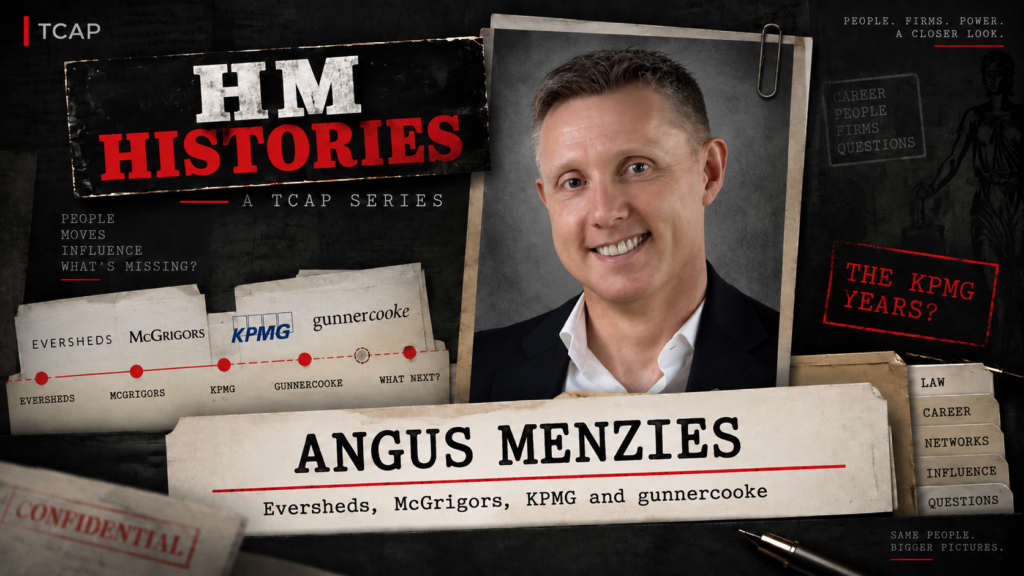
Angus Menzies at KPMG takes HM Histories into a business where the pension promise became an obstacle to a deal. Our last Angus instalment followed McGrigors through its KPMG separation and Pinsent wedding. Now we follow his own move to the Big Four firm, reported in April 2011. Professional biographies make KPMG look like an upgrade. However, the Silentnight record shows what else came with the name: advisers helping a buyer pursue a business without the pension liabilities attached.
Readers of Jiten’s Jobs have already encountered KPMG’s pay gap and its Carillion audit history. Silentnight opens another part of the operation, where restructuring expertise met workers’ retirement money. Fuck me, even a bed manufacturer could not guarantee a peaceful night. The people making the mattresses had spent years building pension entitlements. Meanwhile, the professional attention turned towards getting the business into new hands with those obligations left behind.
Angus Menzies At KPMG: The Career Move
On 25 April 2011, City AM reported that Angus Menzies was joining KPMG from McGrigors as a director to lead a new employment-law team. His current Horsfield Menzies profile confirms that he established and led Employment Legal Services at a Big Four practice. The Silentnight misconduct findings cover August 2010 to April 2011 and concern KPMG and its restructuring partner David Costley-Wood. We have not established whether Angus played any role in the Silentnight matter. His employment supplies the career connection; this chapter examines the documented conduct of that employer.
Angus’s appointment brings us through the employer’s door; the tribunal report shows what happened elsewhere inside it. A CV can compress a vast organisation into one impressive name. HM Histories opens that name back up. Consequently, the employment-law career entry sits beside the institution’s treatment of a pension problem. All that expertise, all those specialisms, and this was the shit that happened under the roof. The prestige survives on the business card. The uncomfortable history deserves the same visibility.
The Workers Behind The Liability
Silentnight employed around 1,250 people in early 2011. Its pension scheme had approximately 1,200 members at the end of 2020. The disciplinary tribunal noted that most scheme members were factory workers, many with long service. Those details matter because the phrase pension liability describes an employer’s obligation from the paying side. From the receiving side, it represents part of the money people expect to live on when their working years end.
Having spent years in factory work, I understand that bargain. A pension belongs in the calculation when you agree to spend years doing the work. Yet once a deal team enters the room, somebody’s retirement can become a troublesome line in a model. What a convenient fucking translation. A worker sees an income for later life; the acquisition spreadsheet sees a cost that makes the purchase less attractive. Suddenly, the promised future starts competing with the buyer’s preferred price.
2010-2011: The Crisis Becomes Part Of The Plan
The tribunal found that Costley-Wood assisted a strategy designed to push Silentnight into insolvency, or towards it, so HIG could acquire the business without its pension liabilities. That strategy aimed to pass the scheme to the Pension Protection Fund, at the expense of members and levy payers. This was the “burning platform” at the centre of the case: financial pressure helping create the conditions for shedding the pension obligation.
The metaphor does a remarkable amount of work. A burning platform sounds like a crisis that demands immediate action. Here, the findings put the creation of that pressure inside the strategy. Christ, what a service to buy. The professional adviser can explain why the situation requires a painful solution while assisting the process that makes the situation painful. Then urgency takes over the conversation. Workers’ promises begin to look expendable because the deal needs to move. Apparently, somebody’s retirement can just bugger off out of the way.
Which Client Gets The Comfortable End Of The Bed?
KPMG advised Silentnight, yet the tribunal found that it acted against its client’s interests in fundamental respects and favoured a party with opposing interests. It also found that the desire to nurture HIG as a client compromised objectivity. Keeping a commercially attractive relationship sweet had consequences for the advice. The problem reached the core of the professional engagement, where the client should have received independent judgment.
There is something particularly foul about paying for expertise and discovering that another party’s appeal has entered the calculation. After all, the adviser knows the technical language, the available routes and the people to persuade. That knowledge should make the service valuable. Yet the supposed guardians of professional standards made a right arse of the independence required here. Instead, conflicted advice gives the better-connected interests another advantage. Bollocks to the reverence that surrounds a Big Four badge. Professional size makes the failure more consequential because clients have more reasons to trust the people doing the work.
2021: Thirteen Million Pounds Of Professional Failure
In August 2021, the Financial Reporting Council announced a £13 million fine and severe reprimand for KPMG. Costley-Wood received a £500,000 fine, exclusion from the accountancy body ICAEW for 13 years and a matching ban on holding an insolvency licence. The tribunal found breaches of integrity and objectivity. It also found dishonest, misleading or incomplete statements to the pension authorities, Silentnight and the scheme trustees. KPMG was liable under the disciplinary scheme for its partner’s conduct.
Those findings strip the polish from the transaction. For a start, the people overseeing the pension needed a truthful account of the business’s difficulties. Instead, the professional advice came with misleading explanations that helped the effort to shed the liabilities. For fuck’s sake, the expertise was supposed to make the facts clearer. A regulator needs to understand how the crisis developed before agreeing to arrangements that affect savers. Feed it a distorted account and the whole safeguard starts working with defective information.
The Defence Adds Another Layer Of Shite
The report’s publication in October 2021 brought a further finding into view. Costley-Wood’s defence claimed that Silentnight already faced the burning platform. The tribunal found that he did not believe this throughout the relevant period and knew how the withdrawal of banking support had created the pressure. It described that part of his defence as “a construct invented by him to assist in his defence”. The FRC said KPMG and Costley-Wood had advanced a partly untruthful defence.
Well, that is some professional housekeeping. Once the conduct faces scrutiny, an invented explanation for the crisis enters the hearing. First the pension authorities receive misleading accounts; later the disciplinary process has to examine an untruthful defence. The same underlying question keeps demanding attention: how did the company arrive at this point? Convenient bullshit can make a chosen course sound inevitable. Unfortunately for the people relying on that version, the tribunal examined the history.
The Note Was Late. The Email Search Never Happened.
The FRC identified further failures to cooperate. Costley-Wood wrote a note of a crucial August 2010 meeting about 13 months afterwards, in response to the pensions investigation. Neither he nor KPMG highlighted that delay to the investigators. The firm also failed to search his personal emails despite two specific requests. It relied instead on his recollection of events more than nine years earlier, risking the loss of opportunities to pursue evidence.
An expert organisation should understand the difference between a contemporary record and a reconstruction written over a year later. For heaven’s sake, the clever sods sell their ability to examine information. Equally, a request to search an email account requires a search. Bugger the solemn vocabulary about cooperation when the practical steps fall short. Investigators need to know when a note came into existence and what messages survive. Otherwise, memory gets a comfortable chair while the documentary trail waits outside. A regulated profession has the resources to do considerably better.
Serious Criticism Reaches Management
KPMG received the Pensions Regulator’s warning notice in December 2014, with serious criticism of the conflict. The tribunal said this should have prompted a thorough investigation of Costley-Wood’s conduct and the firm’s systems. It recorded no evidence that KPMG took those steps. Separately, the report found that the relevant controls had failed to prevent the misconduct. KPMG’s systems had undergone substantial revision by the time of the hearing, and the tribunal required further review.
That sequence makes the management question unavoidable. When an outside regulator raises a serious concern, an organisation selling judgment and scrutiny should know what comes next. Yet the report leaves the expected internal examination unaccounted for. What a piss-poor performance from a business whose expertise is the product. Rules and controls earn their value when someone uses them to challenge profitable work. Otherwise, compliance becomes corporate wank: elaborate reassurance with precious little achieved when the moment demands action.
The Settlement Leaves A Pension Gap
HIG settled the Pensions Regulator’s separate case in February 2021 for £25 million, without admitting liability. The regulator said the scheme would receive about £35 million including liquidation proceeds. However, that remained insufficient to eliminate the deficit on the Pension Protection Fund’s basis. The report therefore expected transfer to the PPF. At the end of a decade of proceedings, the recovery still fell short of that funding threshold.
The PPF protects members after employer insolvency when eligible schemes cannot secure benefits at least equal to its compensation. During the Silentnight period, its funding included levies on other eligible schemes, alongside assets, recoveries and investment returns. Consequently, shifting a scheme into that protection system moves the burden beyond the buyer’s balance sheet. The safety net has a purpose: protecting people when an employer fails. Treating it as part of an acquisition strategy is a shitty use of protection intended for workers. The lifeboat should not become a bloody sales accessory.
Real People, Preferred Outcomes
Today, Horsfield Menzies describes Angus as “calm, sensible and commercial”, recognising that “real people” sit behind his advice. It also emphasises his focus on the “client’s preferred outcomes.” Those words describe his current practice. Set beside the history of his former employer, they prompt the question running through HM Histories: whose outcome does the commercial machinery favour, and who absorbs the consequences when it succeeds?
Silentnight supplies an appalling institutional answer. KPMG’s restructuring expertise helped a strategy for shedding pension liabilities, then its handling of scrutiny compounded the failure. The workers belonged to the story throughout. Nevertheless, the deal treated their pension obligation as something to get around. Calling that approach commercial does nothing to improve it. The clever bastards had the knowledge to understand the consequences. That is precisely why the findings deserve contempt.
Our McGrigors instalment ended with employees facing cuts after a merger celebration. Angus Menzies at KPMG brings us to retirement promises caught in a restructuring strategy. So the next career entry can wait its turn. For this chapter, the Big Four pedigree comes with a £13 million misconduct fine and a partly untruthful defence attached. Sleep tight, says the bed manufacturer. Meanwhile, the pension paperwork explains why a worker might lie awake wondering what the clever cunts have done with tomorrow.
Lee Thompson – Founder, The Cummins Accountability Project
Sources
- City AM: City Moves – Angus Menzies Joins KPMG, 25 April 2011
- Angus Menzies – Horsfield Menzies Partner Profile
- Financial Reporting Council: Silentnight Disciplinary Tribunal Report
- Financial Reporting Council: Sanctions Against KPMG And Former Partner In Relation To Silentnight, 5 August 2021
- Financial Reporting Council: Report Publication, Untruthful Defence And Investigation Failures, 13 October 2021
- The Pensions Regulator: Silentnight Group DB Scheme – Regulatory Intervention Report, 2 March 2021
- Pension Protection Fund: Frequently Asked Questions
- HM Histories : Angus Menzies – McGrigors, The KPMG Divorce And The Pinsent Wedding
- Jiten’s Jobs : KPMG – Mind The Fucking Gap
- Jiten’s Jobs : KPMG II – £29 Million To Never Say No