Pernod Ricard and Cepac have turned drinks displays into a reliable award pipeline. Unfortunately, Pernod’s supplier standards say disability discrimination, bullying and intimidation are not part of the fucking brief.
Pernod Ricard knows how to make an entrance.
Absolut arrives wearing Swedish minimalism. Jameson brings Dublin mythology. Malibu turns coconut-flavoured sugar into a beach holiday for people standing under supermarket lighting. Chivas Regal sells hierarchy in a bottle.
Behind the bar sits a French multinational with a supplier code, a sustainability roadmap called Good Times from a Good Place and enough ethics language to wallpaper an airport lounge.
Then there is Cepac.
Cepac makes the displays. Pernod Ricard supplies the famous bottles. Judges supply the trophies. Everybody thanks everybody else beneath flattering lights, and “collaboration” is poured until the corporate table starts believing its own toast.
It is a productive relationship. It is also an awkward one.
Pernod Ricard’s own standards prohibit supplier discrimination based on disability. They prohibit bullying, threats, intimidation, retaliation and coercion. Meanwhile, TCAP has repeatedly published allegations concerning the treatment of a disabled job applicant by Cepac and the litigation conduct that followed.
Pernod Ricard is not accused of committing Cepac’s alleged conduct. It is being asked whether its supplier standards are actual standards or decorative fucking coasters.
The Trophy Pipeline
Crucially, this is not a tenuous link assembled with binoculars and wishful thinking. Cepac publishes the relationship itself.
In 2023, Cepac celebrated two UK Packaging Awards: one for a Sainsbury’s Malibu display for Pernod Ricard and another for an Absolut outer. The same year, an Absolut limited-edition project for Pernod won at the Digital Labels & Packaging Awards.
Jameson followed. A St Patrick’s Day display for Pernod Ricard won Gold at the 2024 POPAI Awards. In 2025, it became Cepac’s first international Gold for point-of-sale design.
Meanwhile, the drinks kept coming and so did the metalware. Cepac says its Jameson and Malibu displays collected three POPAI UK and Ireland trophies in 2025. An Absolut Warhol display for Tesco, produced “in partnership with Pernod Ricard”, then won Gold at the UK Packaging Awards.
This is not a customer name found fossilised in an ancient brochure. Pernod brands have become part of Cepac’s public success story.
Absolut. Jameson. Malibu. More prizes than a village fête run by Dionysus.
Cepac calls the work collaboration. Fine. Collaboration is a charming word. It holds hands in annual reports and never asks who completed the due-diligence questionnaire.
Good Times From A Convenient Place
Pernod Ricard calls its sustainability and responsibility programme Good Times from a Good Place.
The phrase has been polished until it can see its own reflection. Grain becomes glass. Suppliers become partners. Commerce becomes conviviality. Every bottle appears to have emerged from a focus group wearing an ethical hemp waistcoat.
However, the company’s 2025 Supplier Standards are less whimsical. They say shared values form the foundation of supplier relationships. They require suppliers to acknowledge the standards before doing business. Consequently, non-compliance may lead to contractual remedies.
In addition, the document discusses risk profiles, sustainability assessments and on-site audits. Suppliers must notify Pernod Ricard of adverse impacts they cause or contribute to and then resolve them.
Most relevantly, the standards state that no supplier discrimination should be tolerated in hiring, promotion or termination on grounds including disability. Workers must be free from violence and harassment. Bullying, threats, verbal abuse, retaliation, intimidation and coercion are all expressly named.
That is admirably specific.
Pernod Ricard did not leave a semantic escape hatch marked “unless the supplier makes a lovely Jameson display”.
Therefore, the question is simple: has Pernod Ricard assessed the public allegations involving Cepac?
If so, what did it conclude?
If not, why the fuck not?
The Cepac File It Cannot Unread
The underlying Cepac allegations remain allegations. They were not determined on their merits by the Employment Tribunal.
Lee Thompson says Cepac promised him a job interview, learned of his disability and then failed to call him back. He brought disability-discrimination proceedings. Cepac denied discrimination.
TCAP has also highlighted what it says is a material tension within Cepac’s ET3 Grounds of Resistance. Section 12 appeared to deny relevant knowledge of disability. Section 14 appeared to plead an alternative explanation for what happened after disability had been disclosed.
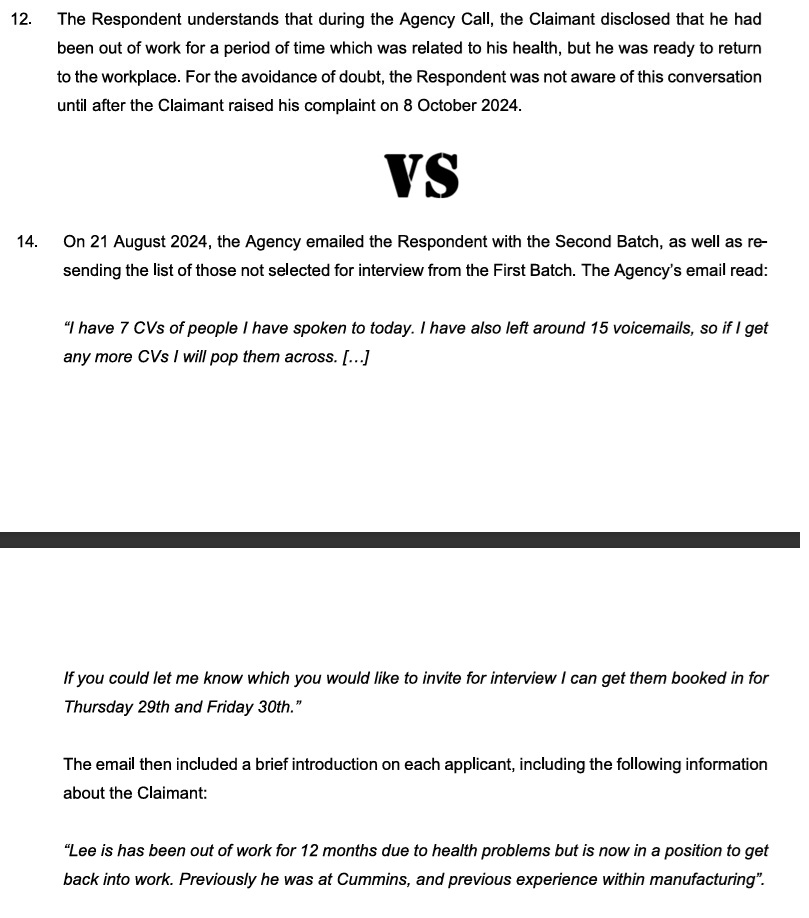
That issue was never tested at a full merits hearing. TCAP does not rewrite an untested case as a judicial finding. Nor does it pretend that procedural closure baptised everybody in innocence.
The allegation exists. The pleadings exist. The supplier relationship exists. Pernod Ricard’s standards exist.
As a result, those four facts now share a table.
Perhaps Pernod did not know before. It does now.
This is where corporate ethics stops being a PDF and develops a pulse. A standard matters only when applying it is inconvenient. Any bastard can oppose discrimination in a document designed by Brand Communications. The test arrives when the supplier is useful, decorated and commercially familiar.
India: The Conviviality Investigators Keep Misunderstanding
Pernod Ricard does not approach this supplier question from a spotless moral altitude.
India is its biggest market by volume. Meanwhile, its regulatory paperwork has begun reproducing like rabbits in a filing cabinet.
In May 2026, India’s Competition Commission ordered an investigation into alleged exclusive arrangements between Pernod and New Delhi retailers. The complaint alleged that Pernod provided roughly $24 million in corporate guarantees to help retailers obtain loans. In return, 35 per cent of their shop stock would allegedly consist of Pernod brands.
The regulator said it found merit in allegations that the arrangements could distort demand and restrict consumer choice. Moreover, Reuters reported that a Pernod internal investigation had found senior executives violated the law by colluding with retailers, even while the company denied wrongdoing publicly and in court.
Pernod unequivocally denies wrongdoing and says it operates to the highest compliance and governance standards.
Of course it does.
Nothing accompanies an antitrust investigation quite like a sentence beginning “we operate to the highest standards”. It is the corporate equivalent of straightening the tie while bailiffs measure the piano.
The investigation is ongoing. There has been no final adverse antitrust finding in that matter. The allegations must remain allegations.
The fucking paperwork, however, is real.
Scotch, Codenames And A $314 Million Bar Tab
The customs dispute is even larger.
Indian investigators concluded that Pernod Ricard withheld the age and composition of imported Scotch concentrate to conceal its true value and reduce tariffs. Reuters reported a back-tax demand of about $314 million. With penalties, the total exposure could exceed $600 million if Pernod ultimately loses.
However, authorities alleged that the group “intentionally complicated” disclosures using new internal malt codenames. They said Pernod failed to declare the true description, composition and age of imported malts. India further alleged that imports had been undervalued by 67.49 per cent.
Pernod rejects any suggestion of wrongdoing and maintains that it complied with the law. In July 2026, it withdrew its Delhi High Court challenge so it could pursue the tax authority’s statutory appeal route. The demand did not disappear; it merely changed bars.
Again, the dispute is contested. Again, a demand is not a final judgment.
Still, there is dark comedy in a premium spirits group accused of hiding the age and composition of Scotch. Age and composition are normally the bits whisky companies engrave into the mythology. They put years on boxes, hire actors with ancestral cheekbones and describe oak as though it served in the navy.
Yet when customs allegedly asked what was actually in the fucking concentrate, the answer required codenames and litigation.
Good times. Complicated place.
Twelve Pastis And A Responsible Drinking Policy
Pernod Ricard also sells responsible drinking with the solemnity of a priest blessing a casino.
In 2019, three salespeople told Le Parisien that they had faced pressure to drink while working with clients. Reports described one man claiming he consumed 12 glasses of pastis a day, another recalling three-day binges and a woman saying excessive drinking caused hallucinations.
Meanwhile, one former employee pursued a labour dispute. Pernod Ricard firmly rejected the existence of any policy encouraging staff to consume alcohol. Its chief executive said there was “absolutely zero obligation” to drink and argued that abuse could lead to dismissal.
Those denials belong beside the allegations. So does the grim absurdity.
A drinks group allegedly requiring salespeople to drink heavily would be satire rejected for lacking subtlety. Twelve pastis before the afternoon has finished is not conviviality. It is a hostage situation with an aniseed finish.
The company’s responsible-drinking language may be entirely sincere. The allegations may have been individual and disputed, as Pernod said.
Nevertheless, when your corporate defence needs to clarify that nobody is officially required to become hallucinatingly pissed for quarterly sales, the good place has developed a fucking sinkhole.
Korea: Humiliation On The Corporate Expense Account
By contrast, in South Korea, the record moved beyond allegations.
In December 2019, the Seoul Central District Court ordered a senior Pernod Ricard Korea executive to compensate eight former employees over sexual harassment and workplace bullying. Moreover, the Korean company was ordered to share the payment.
The court said the employees had suffered serious mental pain and had been made to feel humiliated and ashamed. It also found that the company neglected its duty to supervise employees properly.
The incidents reported by The Korea Times included degrading physical behaviour and workplace humiliation. Pernod Ricard Korea appealed, according to contemporaneous reporting.
The damages were modest. The principle was not.
Corporate dignity frequently arrives after the harm, wearing a lanyard and carrying a statement about zero tolerance. The victim gets the humiliation. The company gets an appeal. Human Resources gets another slide for next year’s training deck.
This matters because Pernod’s supplier standards now prohibit exactly this vocabulary: bullying, threats, harassment, intimidation and abuse.
Good. Apply it.
Not only in Seoul. Not only after a judge has translated suffering into a number. Apply it when a decorated UK supplier becomes publicly associated with disability-discrimination allegations and alleged litigation pressure.
Otherwise, “dignity” is merely another premium label stuck over cheaper contents.
Absolut Russia: Principles With A Reverse Gear
After Russia invaded Ukraine in 2022, Pernod Ricard initially stopped exports. Absolut shipments later resumed in 2023.
The company said it was trying to protect local employees from possible criminal liability and safeguard its brands from parallel imports. That explanation did not produce the warm glow of authentic conviviality in Sweden.
Consequently, bars and restaurants removed Absolut. Politicians condemned the decision. Boycott calls gathered pace. Pernod then stopped Absolut exports again and announced that it would cease distributing its portfolio in Russia.
The eventual withdrawal was welcome. The route there looked less like a moral stand than a shopping trolley with one broken wheel.
Suspend. Resume. Face fury. Suspend again. Leave.
Corporate principle is often most agile when kicked hard enough in the arse.
That history is relevant to Cepac because it shows why public scrutiny matters. Pernod changed course after commercial and reputational consequences became impossible to garnish with a press release.
Its supplier standards recognise the same basic truth. Adverse impacts travel through commercial relationships. Companies cannot outsource the work, bank the prestige and declare the ethical border closed at reception.
Enter HSA Group, Carrying The Qur’an And A Drinks Display
Cepac is owned by Yemen-based HSA Group, which publicly wraps itself in values, social responsibility and an Islamic corporate identity. Its wider business interests have included Qur’an printing.
At the same time, Cepac proudly manufactures promotional displays for Absolut, Jameson and Malibu.
That is not an allegation of illegality. It is an allegation of world-class corporate compartmentalisation.
HSA can advertise faith and ethics at group level while its UK subsidiary helps vodka, whiskey and coconut liqueur stride through supermarkets dressed for an awards ceremony. Pernod can publish supplier rules on disability, dignity and bullying while the public Cepac file sits outside with its name already on the visitor list.
Everyone has values. They simply live in different departments and are discouraged from meeting.
The Qur’an goes to one division. Meanwhile, the vodka display goes to another. Discrimination allegations go to Legal. Finally, the trophy goes in reception.
Then the annual report calls the whole fucking arrangement purpose-led.
What Pernod Ricard Should Answer
TCAP is not asking Pernod Ricard to decide an Employment Tribunal claim that never reached a merits judgment.
It is asking the company to apply its own processes.
- Does Pernod Ricard currently regard Cepac as a supplier or commercial partner?
- Has it assessed the disability-discrimination allegations and the ET3 knowledge issue published by TCAP?
- Has Cepac been asked to explain the allegations and subsequent litigation conduct?
- Did Pernod require notification of any relevant adverse impact under its Supplier Standards?
- Has any risk assessment, corrective-action plan or review of the relationship taken place?
- If the standards do not apply here, why not?
These are ordinary due-diligence questions. They become uncomfortable only when ethics was expected to remain decorative.
Pernod is free to conclude that no action is required. It is free to accept Cepac’s account. It is free to continue commissioning displays and providing the raw material for another shelf of trophies.
However, silence now has content.
It says the supplier was useful, the awards were photogenic and the standards were not designed to survive contact with either.
The Morning After The Awards
Pernod Ricard and Cepac make an excellent corporate couple.
One provides premium bottles, supplier standards and a scandal archive with international distribution. The other provides award-winning displays, a disputed disability file and a parent group capable of putting Islamic virtue and vodka promotion under the same corporate roof without either being introduced.
Together, they achieve more.
More trophies. Greater brand visibility. Fresh ethics copy. More questions placed politely beneath the carpet until somebody pulls it hard enough to send reception furniture across the room.
No special TCAP award is required. Pernod Ricard already has plenty of fucking trophies.
The question is whether it has the courage to look behind them.
Because Good Times from a Good Place is a lovely slogan.
But when the good place contains alleged retailer collusion, a possible $600 million customs exposure, a Korean harassment ruling, disputed claims of staff drinking until hallucination, a Russian export U-turn and a decorated supplier facing unresolved disability-discrimination allegations, it begins to resemble less of a place and more of a witness statement with a cocktail menu.
Drink responsibly.
Source ruthlessly.
And check your fucking suppliers.
Lee Thompson – Founder, The Cummins Accountability Project
Sources
- Cepac – Reflecting on 2025: a landmark year of innovation and excellence
- Cepac – UK Packaging Awards 2023 winners
- Cepac – Digital Labels & Packaging Awards 2023 winners
- Cepac – Award spotlight: Jameson for Pernod Ricard
- Pernod Ricard – Global Supplier Standards 2025
- Reuters via Business Standard – CCI orders antitrust probe into Pernod Ricard over exclusive retailer deals
- Reuters via MarketScreener – India alleges Pernod withheld Scotch composition and age
- Reuters via Euronext – Pernod withdraws court challenge against $314 million India tax demand
- The Spirits Business – Pernod Ricard CEO responds to drinking-pressure allegations
- The Korea Times – Pernod Ricard Korea executive ordered to compensate former employees
- BRAUWELT International – Absolut Vodka halts exports to Russia after backlash
- Pernod Ricard – Pernod Ricard to cease its operations in Russia
- TCAP – The Cepac Files: C&D Foods And The Cardboard Chain
- TCAP – The Cepac Files: Morrisons And The Dirty Supplier Problem
- HSA Group – Chairman’s Message