
BT controversies have a peculiar relationship with connection.
First, disabled applicants fail to connect with promised interviews. Meanwhile, customers fail to connect with essential contract information. Elsewhere, freelancers discover broadcasters connecting with one another about rates of pay. Finally, almost 14,000 attempts to reach the emergency services fail to connect at all.
Then the regulator gets through.
BT currently describes itself as the “digital backbone of Britain”. Its purpose is to “connect for good”. Millions of people, the company says, depend upon its trusted networks in the moments that matter.
That is beautiful corporate language. Polished. Warm. Almost medically free of evidence.
However, the public record is rather less fucking soothing.
In fact, it contains disability discrimination, successful race and sex discrimination complaints, racially harassing management conduct, unfair dismissals, competition-law infringements, a £530 million accounting crater, a preventable workplace death and a catastrophic 999 outage.
Naturally, this brings us to Daniel Rubin.
Another FTSE Logo In The Shop Window
Horsfield Menzies presents Rubin as a pragmatic employment lawyer who handles strategic change, restructurings, redundancies and outsourcing. His profile says that “reputation management and investor confidence are key” to his work. It also promotes his experience of regulatory investigations, disciplinary issues and sensitive boardroom disputes.
During his career, the firm says, Rubin spent time on secondment at Barclays, BT and AstraZeneca.
Crucially, the profile provides no dates, department, duties or reporting line for the BT secondment. Moreover, TCAP has found no evidence that Rubin caused, knew about, advised upon or had any connection with any BT controversy examined below.
Therefore, that legal boundary is not decorative.
Renting Rubin is not guilt by secondment. Lawyers may act for clients, and working inside a company does not make somebody responsible for its entire history.
However, Horsfield Menzies uses BT as a credential. Therefore, TCAP is entitled to inspect the goods displayed beside the price tag and the BT controversies attached to the brand.
Even so, it turns out that the digital backbone requires a chiropractor, an accountant and several employment judges.
Disability Confident, Applicant Discarded
Kevin Owen Meier has Asperger’s syndrome, dyslexia and dyspraxia. In 2017, he applied for a BT graduate role and sought the benefit of its Disability Confident guarantee.
BT knew about his disabilities. Nevertheless, the recruitment team dealing with his application did not receive the relevant monitoring information. He then failed a situational-strength test and was rejected before interview.
Consequently, in 2019, the Northern Ireland Court of Appeal upheld the finding that BT had discriminated against him by failing to make reasonable adjustments.
The court said BT knew of his disability yet failed to consider whether the information supplied was relevant to its adjustment duties. Moreover, the company never properly faced its commitment to let him progress under the guaranteed-interview scheme.
In other words, BT’s position had effectively required the disabled applicant to design the adjustment for the multinational employer.
On the one hand, there is Disability Confident as a badge. On the other, there is disability confidence as conduct.
The former fits nicely on the careers page. By contrast, the latter requires somebody inside the fucking building to read the application.
The scheme promised a bridge. BT installed an online test, misplaced the access request and blamed the traveller for not bringing engineering drawings.
Connection failed.
Equality, With Itemised Damages
The Meier case was not BT’s only encounter with discrimination law.
In 2021, a consent judgment recorded Keisha Daniels’ successful complaints of direct race and sex discrimination against British Telecommunications Plc. BT was ordered to pay £80,768.88, including past loss and injury to feelings.
Separately, an Employment Tribunal upheld Fignola Alexandre’s complaints of harassment related to race against Openreach in 2022. Other complaints, including direct race discrimination and victimisation, were not upheld or could not be considered.
The distinction matters. TCAP does not inflate partial success into total victory.
It does not need to.
Nevertheless, two published judgments already leave the corporate equality brochure looking like it was printed on dissolving paper.
Meanwhile, BT’s public purpose speaks about breaking down barriers and releasing potential. Excellent. In Meier’s case, a court found that the barrier sat inside BT’s recruitment process. In Daniels’ case, successful race and sex discrimination complaints came with an £80,768.88 invoice.
Indeed, corporate values are often described as embedded.
So is shrapnel.
The useful question is not what the poster says. It is what survives contact with payroll, recruitment and management power.
Zero Tolerance Meets Zero Context
BT’s more recent employment judgments offer a different kind of institutional comedy.
In 2025, Jack Caird was unfairly dismissed after BT investigated Teams messages at its Dundee contact centre. Some language was plainly crude. However, the tribunal found that BT dismissed him for matters that had not formed part of the disciplinary charges.
The process was a fucking mess.
For example, one disputed phrase referred to Dundee United supporters, who are known locally as “Arabs”. The dismissing manager accepted that explanation and put the allegation aside. However, another manager effectively resurrected it on appeal. Other matters then entered the reasoning despite not appearing in the charges.
BT paid £10,926.46 in compensation.
Next came Kasam Khokhar and Lynsey Miller. Certainly, their Teams remarks about violence towards a colleague were offensive and stupid. Both accepted that they had let themselves down.
Yet the tribunal found their dismissals procedurally and substantively unfair. It called BT’s process “fundamentally flawed”, rejected the supposed belief that the remarks genuinely incited violence and criticised the closed-minded approach.
The combined awards exceeded £57,000.
The Corporate Investigation Department Investigates Itself
The Khokhar and Miller judgment is particularly awkward beside Rubin’s advertised expertise.
Horsfield Menzies sells experience in disciplinary issues, regulatory investigations and sensitive corporate problems. BT supplied a live demonstration of how not to do the first two before creating the third.
According to the tribunal, managers failed to explore context and mitigation. Furthermore, the investigation did not properly examine workplace culture or training. Indeed, BT’s own report recommended education about acceptable Teams use.
Management chose the ceremonial firing squad first and the training module second.
In short, that is modern corporate morality in miniature. Ignore the culture. Skip the difficult questions. Find the policy. Capitalise “Zero Tolerance”. Dismiss somebody. Then discover at tribunal that righteous posture is not a substitute for a fair process.
The messages did not become acceptable because the dismissals were unfair. Equally, offensive conduct does not give an employer permission to improvise the charges, ignore mitigation or approach the appeal with the shutters already down.
BT could transmit data across continents.
Context could not make it across the meeting room.
Your Emergency Is Important To Us
Among the most dangerous BT controversies, the emergency-call failure sits in a category of its own. On 25 June 2023, BT’s handling system failed for ten and a half hours.
Nearly 14,000 attempts to call 999 or 112 were unsuccessful. Moreover, the disruption affected text-relay calls, leaving deaf and speech-impaired people unable to make calls during the incident.
Ofcom fined BT £17.5 million.
The regulator found that BT lacked sufficient warning systems and adequate procedures for assessing the severity, impact and cause of the failure. Its disaster-recovery platform lacked sufficient capacity and functionality. Worse, the first attempt to switch to that platform failed through human error because instructions were poorly documented and staff were unfamiliar with the process.
Consequently, disaster recovery needed disaster recovery.
Ofcom said BT had fallen “woefully short” and put customers at unacceptable risk. No serious harm was confirmed by the emergency authorities, a qualification that belongs clearly in the record.
Still, 999 is the number dialled when qualification has already left the room.
Perhaps someone is trapped. Elsewhere, somebody is bleeding. In another home, a person cannot breathe. BT’s contribution was hold music without the music.
The nation’s digital backbone had misplaced the spinal cord.
The Contract Information Outage
In 2024, Ofcom fined BT another £2.8 million over EE and Plusnet sales.
The regulator found that BT had made more than 1.3 million sales without providing customers with required contract information and summaries. After all, those documents were supposed to help people understand the deal before becoming bound by it.
BT knew some sales channels would not comply when the rules came into force. According to Ofcom, it chose to accept the risk of late implementation.
Naturally, the customers received the risk free of charge.
Nevertheless, some people who had not received the required information were later charged for leaving their contracts early. By July 2025, BT had refunded or credited £18 million and donated roughly £440,000 where refunds were not possible.
The sequence is exquisite.
Fail to provide the terms. Bind the customer. Charge the customer for escape. Meet the regulator. Return £18 million. Publish another paragraph about trust.
BT connects for good.
The direct debit connects automatically.
£42 Million For Missing The Installation Window
The regulatory archive goes deeper.
In 2017, Ofcom imposed a £42 million penalty after finding that BT’s Openreach division had misused contract rules governing late Ethernet installations. The regulator also required BT to compensate affected telecoms providers, with BT estimating the payments at about £300 million.
Openreach had reduced compensation by incorrectly treating delays as agreed by providers. In addition, BT received a separate £300,000 penalty for failing to provide complete information to Ofcom.
As a result, the company admitted liability and received a reduced fine.
In summary, high-speed lines were late. Compensation was suppressed. Information supplied to the regulator was incomplete.
That is not a communications business. It is a hostage note with fibre-optic branding.
Once again, the language of the enterprise collided with the mechanics. BT existed to connect businesses. Openreach missed deadlines, fiddled the contractual classification and made the financial consequence smaller until the regulator arrived carrying a calculator.
The cable eventually reached the building.
Accountability required a longer installation window.
Alun Owen And The Line That Cost A Life
Alun Owen was 32 years old when he died trying to repair a telephone line across the River Aber in October 2020.
Previously, Openreach engineers had worked near and in the river over two months. On the day Mr Owen died, flooding made the water higher and faster. He was then swept away while attempting to cross.
The Health and Safety Executive found no safe system of work for activity on or near water. Nor had the engineers received the necessary training, information or instruction.
Ultimately, Openreach pleaded guilty to breaching health and safety law. In 2024, it was fined £1.34 million and ordered to pay costs.
The HSE inspector said his death would have been preventable.
Accordingly, this is where the jokes stop being about the dead man and turn upon the machinery that sent him there.
A telephone line mattered enough to keep sending engineers towards a flooded river. A safe system of work apparently did not. The cable needed connecting. The risk assessment could remain on hold.
Finally, a family received the call no network can repair.
Openreach paid the fine. The river kept the rest.
Connecting Broadcasters, Flattening Freelancers
In March 2025, the Competition and Markets Authority fined BT £1,738,453 for six competition-law infringements involving freelance labour in sports broadcasting and production.
The CMA found exchanges of competitively sensitive information about rates of pay. Across the wider investigation, some infringements also included coordination on pay.
Specifically, BT’s six infringements ran between August 2014 and September 2021 and involved bilateral exchanges with ITV, Sky, IMG and the BBC.
Ironically, connectivity was excellent.
Broadcasters found one another perfectly when the subject was what freelance camera operators, editors, producers, sound staff and other workers might be paid. The invisible hand of the market had apparently joined a group chat.
BT settled and received leniency and settlement discounts. Again, the legal outcome should be stated accurately.
Still, the regulator’s finding is wonderfully direct: while selling competition to viewers, major broadcasters exchanged information capable of weakening it behind the screen.
The match was live.
The labour market had gone to VAR and discovered the broadcasters in the officials’ room.
Italy: Investor Confidence Loses Signal
Finally, BT’s Italian operation produced the catastrophe most directly connected to Horsfield Menzies’ phrase “investor confidence”.
In 2017, BT disclosed adjustments of roughly £513 million after fraud was identified in its Italian operations. The wider accounting scandal led to a £530 million write-down and wiped billions from BT’s market value.
The Financial Reporting Council later sanctioned PwC and its audit partner over failures in auditing BT’s 2017 accounts. It stressed that its findings concerned the auditors, not BT, and did not mean the financial statements were misstated or that the adjustments were wrong.
Meanwhile, an Italian court convicted eight individuals in 2024 of manipulating financial statements. BT Italia itself was acquitted.
Of course, those boundaries matter.
Nevertheless, so does the wreckage.
Profits had been overstated, investor confidence went through the floor and a prestigious FTSE group spent years explaining how half a billion pounds had wandered out of alignment.
The corporate dashboard showed green.
The numbers had simply learned ventriloquism.
Eventually, BT agreed to sell the Italian business and the connection was terminated. Unfortunately, the reputational roaming charges remain.
Excessive, Persistent And Somehow Not Unfair
BT won the £1.3 billion standalone-landline collective action in December 2024. That sentence should not be buried merely because the result complicates a good kicking.
The Competition Appeal Tribunal dismissed the claim that BT had abused a dominant position through unfair pricing.
However, the tribunal also found that the prices charged for the relevant standalone fixed-voice services were significantly and persistently above its competitive benchmark. Overall, it calculated an average excess of 38 per cent.
The claim failed because excessive pricing alone did not establish the further legal requirement of unfairness. The tribunal found the prices were not unfair in themselves or by comparison.
Therefore, BT escaped liability through the magnificent legal distinction between charging millions of often older landline customers significantly and persistently excessive prices and doing so unfairly.
Perhaps this is why lawyers drink indoors.
In ordinary language, the customer’s bill was excessive. The excess persisted. Yet, after 301 pages, unfairness failed to connect.
BT won.
Sometimes the dead zone is not in the network. It is between ordinary language and competition law.
What The Rubin Connection Does – And Does Not – Mean
Daniel Rubin’s secondment does not make him responsible for BT’s record.
Horsfield Menzies does not state when he worked there, what he did or whether he encountered any matter discussed above. TCAP will not invent the missing details.
Instead, the controversies belong to BT and its relevant subsidiaries. The judgments belong to the courts and tribunals. Rubin did not inherit them by walking through reception.
However, his firm advertises BT as evidence of his corporate experience. The same profile promotes reputation management, investor confidence, investigations and disciplinary issues as features of his work.
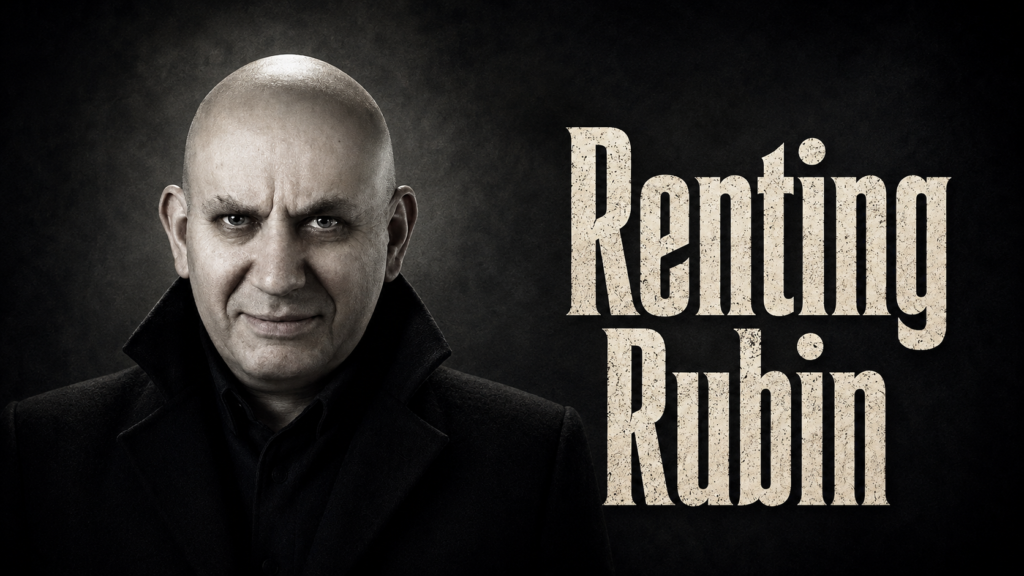
Consequently, Renting Rubin examines the prestige names placed in that biography.
Barclays was one.
AstraZeneca was another.
BT completes the advertised set.
Separately, TCAP’s opinion of Rubin comes from its own documented experience of his conduct, not from these secondments. BT does not make Rubin a dirty bastard. It merely supplies the dirty bastard’s shop window with one more expensive logo and several regulator-shaped cracks.
That distinction protects the truth while leaving the contempt exactly where TCAP fucking intended it.
BT Controversies In The Reputation Management Dead Zone
BT says it connects for good.
Its public record connects rather differently.
First, a disabled applicant was rejected after the company failed to make reasonable adjustments. Furthermore, successful race and sex discrimination complaints produced an £80,768.88 award. Openreach was also found liable for racial harassment. Three employees then won unfair-dismissal cases after BT’s internal machinery mistook severity for competence.
Meanwhile, Ofcom imposed £17.5 million after the 999 failure and £2.8 million over missing contract information. The CMA fined BT for six freelancer-pay infringements. Openreach pleaded guilty after a preventable death. Italy swallowed more than half a billion pounds of confidence and spat out an accounting scandal.
Viewed together, these BT controversies are not one dropped call.
It is a fucking network.
Horsfield Menzies says reputation management and investor confidence are key to Daniel Rubin’s work. BT provides an excellent lesson in the limits of both. After all, reputation can be managed only until the judgment is published, the regulator issues its decision, the family names the dead and the figures refuse to reconcile.
After that, however, management becomes euphemism maintenance.
The corporate purpose remains online. The facts remain online. Now this article does too.
If BT would like to connect with accountability, it should press one.
To hear about disability discrimination, press two.
For regulatory fines, press three.
Unfair dismissals are available on four.
To hear these options again, wait for the next fucking secondment.
Lee Thompson – Founder, The Cummins Accountability Project
Sources
- Horsfield Menzies: Daniel Rubin
- BT : About BT And Its “Connect For Good” Purpose
- Northern Ireland Judiciary: Court Dismisses BT Appeal In Kevin Owen Meier Disability Discrimination Case
- Employment Tribunal: Keisha Daniels v British Telecommunications Plc, Consent Judgment
- Employment Tribunal: Fignola Alexandre v Openreach Limited
- Employment Tribunal: Jack Caird v British Telecommunications Plc
- Employment Tribunal: Kasam Khokhar And Lynsey Miller v British Telecommunications Plc
- Ofcom: BT Fined £17.5 Million For 999 Call-Handling Failures
- Ofcom: BT Contract Information Investigation, Fine And £18 Million Customer Redress
- Ofcom: BT £42 Million Openreach Confirmation Decision
- BBC: Openreach Fined Following Alun Owen’s Death
- Competition And Markets Authority: Sports Broadcasters’ Freelancer-Pay Infringements
- Financial Reporting Council: PwC Sanctions Following The BT Italy Fraud
- Financial Times: BT Agrees To Sell Italian Business After Accounting Scandal
- Competition Appeal Tribunal: Justin Le Patourel v BT Group Plc