Today’s Chambers Chatter moves back to St Philips Chambers, the Chambers that outright rejected to comply with a DSAR I submitted, where Wendy Miller operates and from which she represented both Cummins and Cepac against Lee Thompson. Wendy is not the feature today. She can leave her shoes by the door and check whether they meet chambers standards. Today belongs to Richard Atkins KC, current Head of Chambers, former Chair of the Bar, part-time Mental Health Tribunal judge, and a man who once looked at advice about proper haircuts, polished shoes and looking like a barrister and thought: yes, the internet needs this.
Richard Atkins KC Returns To The Big Chair
St Philips announced in May 2026 that Richard Atkins KC had been elected Head of Chambers for a second time, something the set says had never happened before.
The announcement comes dressed appropriately. Atkins is described as highly regarded. Former Chair of the Bar of England and Wales. Former Leader of the Midland Circuit. Crown Court Recorder. Master of the Bench of Gray’s Inn. Part-time Mental Health Tribunal judge. Silk since 2011.
This is serious Bar furniture.
Not IKEA. The old stuff. Heavy legs, leather top, probably survived two wars and still disapproves of trainers.
St Philips clearly loves him. Its CEO said his second election showed the regard in which members hold him. Fair enough. Chambers elect their leaders and presumably know what they want.
What St Philips wanted, apparently, was Richard Atkins again.
TCAP merely opened the wardrobe.
The Proper Haircut Incident
In November 2020, Atkins was still sufficiently charmed by the old Bar that he shared a tribute to the late High Court judge Sir Robert Johnson.
The relevant part concerned Johnson’s expectations of his pupils: properly cut hair, smart dress and well-polished shoes. The punchline was that even if a pupil did not know much law, at least they could look like a barrister.
Atkins introduced these as “wise words”.
And there it is.
A tiny phrase. Two words. Barely enough to trouble a billing unit.
Yet those two words opened the mahogany cupboard and let 1927 wander into Twitter wearing a waistcoat.
The reaction was immediate because, inconveniently, the legal profession had by 2020 acquired women, Black barristers, working-class barristers, disabled barristers, people with hair that might not satisfy the aesthetic memory of a deceased judge, and several thousand younger lawyers who had developed the dangerous belief that professional competence might outrank fucking shoe shine.
Legal Cheek reported criticism from lawyers who described the sentiment as outdated, Dickensian, classist and bound up with old assumptions about what a barrister is supposed to look like.
Atkins apologised. He said he had intended to honour Sir Robert Johnson, had meant the post light-heartedly, had not intended to upset anyone, and had spent much of his career promoting a modern, diverse Bar.
Which is fine.
Everyone is allowed a bad tweet.
But some bad tweets arrive carrying their own wig box.
Looking Like A Barrister
“Looking like a barrister” is a fascinating concept.
What does one look like?
Apparently the answer used to involve polish, tailoring, hair control and enough visual conformity to reassure the dining hall that nobody had accidentally admitted a tradesman.
That was the old bargain. The Bar offered merit, technically, but wrapped it in costume. Accent mattered. School mattered. Inn mattered. Tailor mattered. Knowing which fork to use probably saved somebody a pupillage somewhere.
Nobody needed to write “working class applicants may feel uncomfortable” on the door. The architecture handled it.
That is why the Atkins episode was not simply about footwear.
A polished shoe is just a polished shoe until the profession with centuries of class filtering starts using it as shorthand for belonging.
Then it becomes an entrance exam administered by a cobbler.
Atkins himself later stressed his commitment to diversity and social mobility, and his current St Philips biography records substantial work promoting access to the Bar. That should be acknowledged. People are allowed complexity. A person can spend years opening doors and still occasionally sound like he wants everyone coming through them to stop at Church’s first.
TCAP does not need to flatten him into a cartoon.
The tweet already brought its own pencil.
St Philips Discovers Social Mobility
The timing now makes the old episode even better.
In June 2026, St Philips published a Social Mobility Day feature celebrating people who reached the profession from state schools, council estates, small towns and families with no legal connections. One month later, it welcomed students through the Bar Council’s placement scheme, explicitly using social-mobility criteria.
Good.
Genuinely.
The Bar desperately needs more of that.
Yet the current Head of Chambers remains the man who once decided that an anecdote about proper haircuts and polished shoes contained “wise words” worth sharing.
There is no contradiction in saying Atkins has supported social mobility while also observing that the tweet belonged in a museum gift shop.
Human beings contain multitudes.
Barristers apparently contain shoe brushes.
The larger joke sits with the profession. The modern Bar spends millions of words explaining that background should not matter, then keeps discovering sentimental little relics from the age when belonging could be assessed from twenty feet away by trouser crease.
St Philips calls itself one of the country’s most forward-looking chambers.
Occasionally somebody should check which direction the Head is facing.
Then Comes The Mental Health Tribunal Detail
Here is where TCAP’s eyebrow leaves the building.
Richard Atkins KC is also a fee-paid, part-time Judge of the Mental Health Tribunal.
To be absolutely clear, TCAP has found no evidence that Atkins has imported his old-school aesthetic nostalgia into that judicial role. There is no allegation here that he judges mentally ill people by footwear, haircuts or tailoring.
That would be absurd.
The point is cultural, and it is uncomfortable enough without inventing anything.
Mental-health adjudication requires exactly the opposite instinct from “look the part”. It requires context. Behaviour cannot simply be detached from illness and turned into character. Distress is not disrespect. Dysregulation is not bad manners. Presentation is not capacity. A person struggling to meet conventional expectations may be demonstrating the very impairment the tribunal exists to understand.
That ought to be fucking elementary.
And yet anyone who has followed TCAP’s encounters with Newcastle Employment Tribunal will know why this catches the eye.
Newcastle has repeatedly provided TCAP with the impression of a legal culture perfectly capable of turning disability-related behaviour into a moral assessment: tone becomes aggression, distress becomes misconduct, persistence becomes pathology of character, and the person asking the system to understand mental illness somehow ends up being graded on courtroom deportment.
Frankly, Atkins might have fitted the décor.
Not because of anything he has done at Newcastle. He has nothing to do with those cases.
Stylistically, though?
A former Bar chair nostalgic enough to broadcast the virtues of polished shoes and proper haircuts would have looked entirely at home beside TCAP’s Jurassic experience of how legal institutions sometimes understand mental illness.
Wendy Miller’s St Philips Corridor
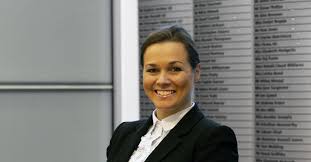
This is where Wendy Miller gets her customary namecheck.
Miller practises from St Philips and also operates from 4-5 Gray’s Inn Square. She represented Cummins against Thompson and later represented Cepac against the same disabled litigant in separate employment litigation.
That recurring appearance is why TCAP started opening chambers profiles in the first place.
If a barrister keeps appearing in your litigation, eventually curiosity stops being rude and becomes due diligence.
St Philips markets Miller as someone with more than twenty years’ experience in complex, fiercely contested work, with particular expertise in discrimination, harassment and disputed decision-making. Her profile describes a forensic, no-nonsense practitioner comfortable in pressurised corporate environments.
Upstairs, Richard Atkins KC is Head of Chambers.
Former Chair of the Bar. Mental Health Tribunal judge. Social-mobility advocate. Also the man who once thought the old “proper haircut, polished shoes, at least look like a barrister” routine deserved another lap around the track.
It is quite a fucking corridor.
No conspiracy is required.
TCAP simply enjoys knowing who shares the coat rack.
The Bar’s Costume Department
The Atkins episode matters because the Bar has always had a costume problem.
The wig is obvious. The gown is obvious. The language is obvious. Even the architecture conspires to tell outsiders that they have entered somewhere older, stranger and more important than wherever they came from.
Tradition can be useful. Ritual can impose seriousness. A courtroom should probably feel different from Greggs.
But tradition becomes ridiculous when people confuse the packaging with the product.
Law is supposed to be about judgment.
Not shine.
Advocacy is supposed to be about analysis, courage, clarity and evidence.
Not barbering.
A pupil who knows the law and wears imperfect shoes remains useful. A beautifully groomed idiot is still an idiot, merely reflective around the toes.
That should not require silk to establish.
Indeed, one of the lawyers reacting to Atkins made essentially that point: courage, fairness, determination, reliability, honesty and competence matter rather more than whether somebody has been intimate with a tin of Kiwi.
TCAP agrees.
Dangerous radicals, clearly.
Sorry About The Tweet, Keep The Chair
Atkins apologised after the backlash, and that deserves inclusion because this is not a prosecution.
He did not double down. He explained the tribute, accepted that people were upset, stressed his record of supporting a diverse Bar and moved on.
Six years later, St Philips elected him Head of Chambers again.
Nothing sinister about that.
It is simply an unusually neat illustration of how the profession metabolises embarrassment.
There is no public flogging. No career collapse. No permanent stain. Someone says something clunky, the profession argues for a weekend, an apology goes out, everybody finds another outrage, and eventually the person returns to the Head of Chambers page with a flattering quote from Chambers UK.
Maybe that is healthy.
People should be allowed to make mistakes.
TCAP would merely like the same fucking doctrine extended to disabled litigants.
Imagine it.
A distressed claimant says something badly under pressure. Instead of converting it into evidence of personality, the institution considers context, accepts an explanation, notes the impairment and moves on.
Revolutionary stuff.
Perhaps somebody could tweet it as wise words.
The Fossil Is Not The Man
Here is the important distinction.
Richard Atkins KC is not a fossil because he is old. Ancient, even. That would be lazy.
The fossil is the idea.
That professionalism can be read from hair.
The fossil is that competence has a dress code beyond reasonable formality.
The fossil is that belonging at the Bar should be recognisable before anybody opens their mouth.
Atkins picked that idea up, dusted it off and briefly held it to the light.
Twitter told him what century it was.
He apologised.
End of disciplinary drama. There never was one.
But Chambers Chatter is not limited to misconduct. Sometimes the interesting thing is a professional culture accidentally showing its family photographs.
This photograph had polished shoes.
St Philips Keeps Moving Forward, Apparently
St Philips now publishes extensively about diversity, social mobility, pro bono work, access to law and widening participation. Its pupils include people from different backgrounds. Its own materials talk about being forward-looking.
Good.
Keep going.
But do not be surprised when somebody checks the archive.
Institutions love reinvention because websites are cheap and memory is expensive. New diversity page. New social-mobility story. And new award nomination. New pupils. New photography. Everybody facing slightly left.
Then TCAP wanders in from the staff entrance carrying a six-year-old tweet and asking whether anyone still has the shoe polish.
That is not unfair.
It is institutional memory.
Proper Haircut, Proper Ending
Richard Atkins KC is Head of St Philips Chambers again.
Members elected him. His CV is formidable. His public-service record is substantial. He has supported social mobility and legal education. He sits judicially and has held some of the most senior representative positions at the Bar.
And he also once introduced an old barrister’s advice about proper haircuts and polished shoes as “wise words”.
Both things can be true.
That is what makes the story worth keeping.
The legal profession does not need fewer accomplished people. It needs fewer moments where accomplished people mistake inherited etiquette for wisdom.
Especially when the same profession sits in judgment on people whose disabilities may make conformity, presentation, tone and behaviour difficult in ways no shoe brush can fix.
So, welcome back to the Head of Chambers chair, Richard.
The shoes look lovely.
TCAP is looking slightly higher up.
Lee Thompson – Founder, The Cummins Accountability Project
Sources
- Richard Atkins KC Elected Head Of Chambers
- Richard Atkins KC – St Philips Chambers
- Top QC Under Fire For Suggesting Pupil Barristers Should Have ‘Well Polished Shoes’ And A ‘Proper Haircut’
- New Head Of The Barristers’ Profession Takes Office
- Routes Into Law : Seven Stories For Social Mobility Day
- St Philips Supports The Bar Council’s Bar Placement Scheme
- Wendy Miller – St Philips Chambers
- Cummins Confidential : Wendy Miller – Who Does She Really Represent?
- Cepac Ltd Update : Wendy Miller’s Other Case Versus Me
- Horsfield Menzies : Blog vs Behaviour – Sam Butler’s Equality Clocks Off When Cepac Calls