
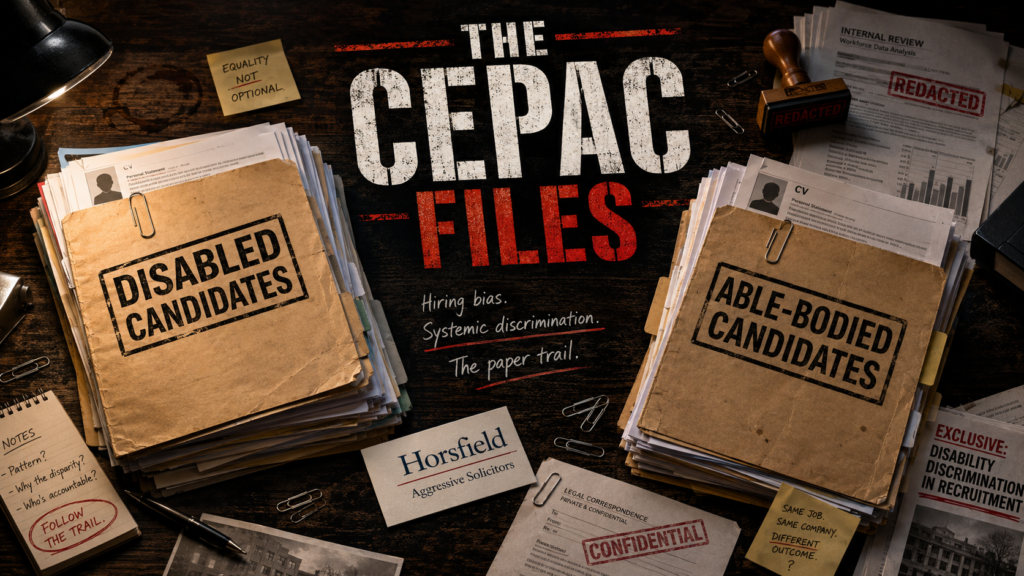
The Simoniz Cepac supplier question comes with two displays, three exhibits and a rather inconvenient policy name. Cepac’s 2026 portfolio shows Simoniz car care and Holts Gun Gum. Meanwhile, Holt Lloyd publishes commitments on respectful treatment, ethical sourcing and victimisation. Its purchasing terms even name disability discrimination and mental abuse. Now put those documents beside the WhatsApp receipt, Maria Walker’s denial and Cepac’s ET3. The showroom finish is about to meet the service history.
Two Displays And One Very Shiny Problem
Page four of Cepac’s POS Portfolio 2026 carries a Simoniz display with bottles arranged across bright panels beneath an enormous gold wax tin. Nearby sits a Holts Gun Gum stand advertising exhaust repairs. Both appear in the section for counter display units. Consequently, the commercial evidence comes from the packaging company’s own sales material, where it has chosen these brands to demonstrate its work.
Holt Lloyd’s corporate website identifies Simoniz among its brands, alongside Holts, Redex and Prestone. The company trades on practical fixes: keeping cars running, maintaining appearances and sorting the defects that spoil a driver’s day. Its products occupy the reassuring end of the motor aisle, where somebody has apparently already thought about the thing making that horrible fucking noise.
However, this file concerns the business behind the display. Holt Lloyd can establish who commissioned the work, which entities contracted, when the projects ran and what commercial relationship continues. The photographs provide a clear starting point for that enquiry. Purchasing records can supply the remaining detail.
Then comes the harder inspection. An interview disappeared after a mental-health disclosure, a contemporaneous message recorded the offer, and Cepac later supplied an incompatible explanation. The finish looks lovely. Underneath it, something still needs attention.
The Policy Has Victimisation In Its Name
On 21 August 2026, Holt Lloyd’s board approved its latest published modern-slavery statement, signed by President and Managing Director Bruce Ellis. That date falls exactly two years after Page Outsourcing called me about the Cepac vacancy. One business was renewing its ethical commitments while the recruitment sequence in this file reached its second anniversary.
The statement identifies Holts as part of Performance Fluid Experts Group. It promises a respectful, non-discriminatory workplace and says staff should feel able to expose wrongdoing “without any risk to themselves”. Moreover, it lists HLI-040, the “Workplace Discrimination, Harassment, Violence & Victimisation Policy”, alongside its ethics and whistleblower policies. Its sourcing commitments include checking suppliers’ employment practices and training procurement staff in ethical employment.
That is a useful list of things for an organisation to recognise. Accordingly, the question for Holt Lloyd is how its supplier assessment handles a complaint followed by escalating pressure on the complainant. Its own published vocabulary already describes the territory. Nobody needs to invent another fashionable acronym before opening the correspondence.
The public statement names HLI-040; the full policy belongs in the review. So let the people responsible for it examine this file and explain how their standards inform the decision. A policy number is an excellent filing aid. It becomes less impressive when its principal achievement is keeping the fucking policy filed.
The Interview Was News Before It Was Evidence
On 21 August 2024, Page Outsourcing called about a production role at Cepac and offered an interview for the week after the bank holiday. We discussed a £27,000 training wage rising towards £29,000. During the call, I explained that mental-health treatment accounted for the gap in my employment. Page said another call would confirm an exact, mutually agreeable interview time.
That confirmation never arrived. However, a record of the original conversation already existed because I had told somebody the news that day. The WhatsApp exchange contains two short lines:
“Interview next week”
“27k training wage up towards 29”
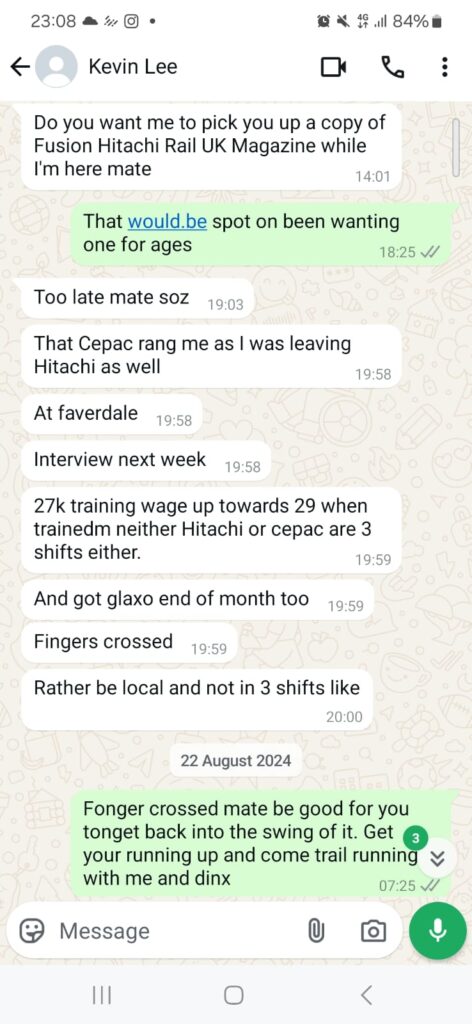
The recipient retained the conversation and later provided a witness statement dated 20 February 2025 confirming its origin and context. Crucially, I sent the message before any dispute existed. There was no litigation strategy to improve and no public campaign to support. Someone had offered me an interview, so I told a friend.
That is why the two lines matter. They preserve the immediate account of what Page said before lawyers, pleadings and carefully managed explanations entered the story. Consequently, any serious review should compare them with the recruiter’s surviving call records and candidate history. Start with the original event, then examine what changed.
Maria Walker Supplied A Different History
At 04:35 on 8 October 2024, I complained directly to Cepac. My email set out the interview offer, its expected timing, the promised callback and the mental-health disclosure. Therefore, Cepac had a specific recruitment complaint to investigate. The question concerned an offer that had vanished, not a request for generic advice about applying again.
Maria Walker, Cepac’s HR Business Partner, replied at 09:52. She said my CV had reached the recruiting manager with other candidates but I “was not shortlisted on that occasion”. Walker also maintained that the manager would not have known about the mental-health information. Instead, she apologised because Page had supposedly failed to explain that I had not secured an interview.
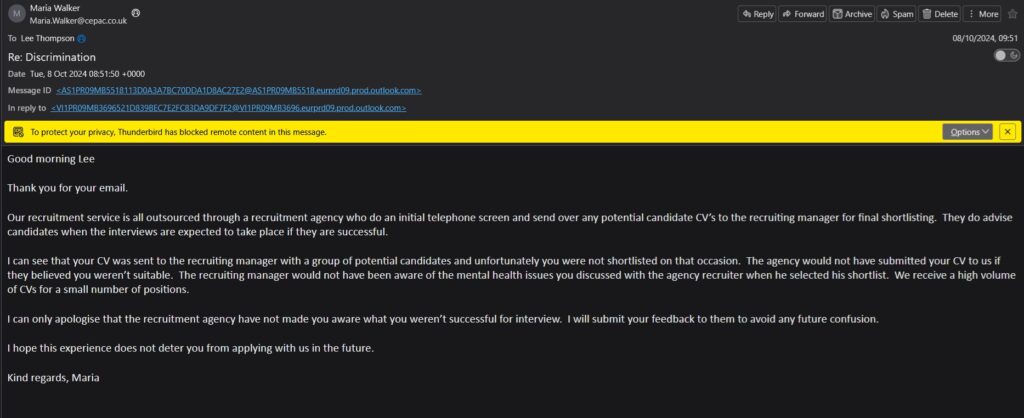
Yet Walker had not seen the WhatsApp when she answered. The receipt predated her response, but her explanation did not account for it. Cepac had adopted the unsuccessful-shortlisting story before it knew that a same-day message preserved the interview and money.
An investigator can now ask what Walker reviewed during those five hours and seventeen minutes. Which Page records supported her account, and did anyone check the call itself? Calling the discrepancy confusion does not reconcile it. That is dashboard polish applied to a warning light: attractive for a moment, but the underlying fault remains.
The ET3 Adds Another Warning Light
Cepac’s Grounds of Resistance deepen the problem. Paragraph 12 distances the company from knowledge relevant to my disability. However, paragraph 14 records recruitment information that I had spent around twelve months out of work because of health problems and felt ready to return. The defence therefore contains health information inside the very recruitment account that needs examining.
The extract below comes from Cepac Ltd’s Grounds of Resistance.
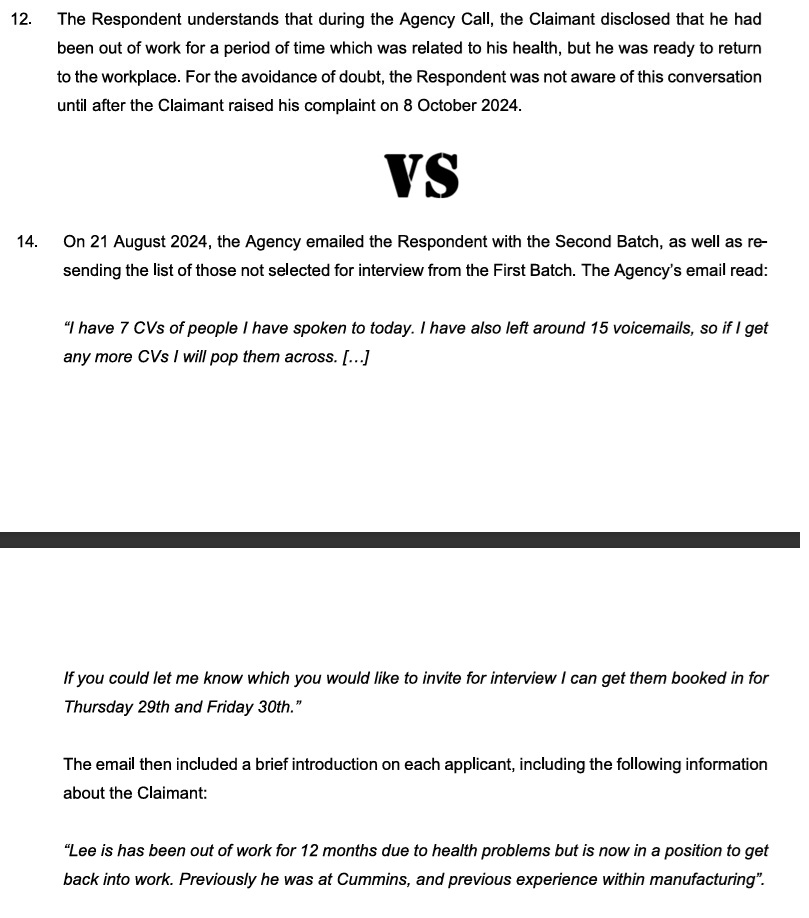
Somebody supplied that information. Consequently, the audit should identify its source, when it entered each system and who could access it before the relevant recruitment decisions. Dates and recipients matter here. The path from Page’s call to Cepac’s pleading should have records along it, and those records can test the company’s explanation.
The WhatsApp, Walker email and ET3 are therefore a connected sequence. One preserves the offer, another supplies the later denial, and the third raises questions about the health information travelling through the process. Together, they give Holt Lloyd a defined evidence trail to request.
A competent mechanic follows a fault through the system. Procurement can manage the equivalent with a call note, a status change and an email. The subject is awkward, but the method is hardly fucking experimental.
Cepac Made The Complainant The Defect
In March 2025, Horsfield Menzies put Cepac’s estimated legal costs at £25,000 to £30,000 and offered not to pursue them if the claim disappeared. Meanwhile, I had explained financial hardship, worsening mental health and difficulties participating safely. Cepac’s legal representatives therefore knew the vulnerability of the person receiving that pressure.
The campaign subsequently gathered correspondence, complaints, articles and X posts into a 191-page conduct dossier. My reactions became the material from which Cepac built its argument for ending the proceedings. Yet the disability, pressure and procedural failures surrounding those reactions did not receive anything like the same attention in that account.
This is the conduct I describe as bullying and weaponisation. Cepac, acting through Horsfield Menzies, pressed a disabled litigant in person, preserved the distressed responses and used them to pursue strike-out. As a result, the person asking what happened to his interview became the alleged obstacle to hearing the interview claim.
For Holt Lloyd, that sequence should make the policy discussion concrete. Read the instructions, correspondence and submissions together. Then assess whether the supplier’s handling of a discrimination complaint fits the standards the business expects in its commercial relationships.
The original fault never vanished. Instead, Cepac moved the argument towards how much trouble I caused by continuing to point at it. Apparently the approved repair involved disconnecting the fucking warning system.
The Medical Centre Entered The Workshop
Horsfield Menzies contacted my medical centre, investigated appointment availability and used the information to oppose a postponement. I had supplied medical evidence to explain disability and the adjustments needed for safe participation. However, that evidence also gave the opposing side a route into my healthcare arrangements, which it then used against the request.
The firm maintained that the centre disclosed no private medical information. Even so, its contact with the centre remains a specific event requiring examination. The questions concern who authorised it, what the solicitors asked, what the centre supplied and how the resulting information appeared in submissions. Those answers should exist in ordinary professional records.
My criticism is of the intrusion and its use. Cepac’s representatives investigated a disabled opponent’s access to medical support while seeking a hearing he said he could not safely attend. Meanwhile, the recruitment documents remained unresolved. The energy available for checking appointment arrangements somehow failed to produce an answer about the missing interview confirmation.
That allocation of effort deserves scrutiny. A supplier review should compare the attention given to my vulnerability with the attention given to the original complaint. Afterwards, Holt Lloyd can explain whether it regards the methods as acceptable and why.
No specialist cleaning product is necessary. Put the correspondence in chronological order and read it. The uncomfortable part is deciding what to do once the fucking marks become visible.
More Than £50,000 Around An Unanswered Question
Cepac’s combined costs schedules eventually exceeded £50,000. The Tribunal struck out the claims and ordered me to pay £20,000 to Cepac. However, it never determined whether Page offered the interview, why the confirmation disappeared or whether disability influenced the recruitment outcome. Those questions survived the procedure that ended the case.
The distinction matters to anyone reviewing the supplier. A strike-out establishes the outcome of the litigation; it does not supply the missing recruitment explanation. Consequently, a purchasing team still needs the call account, candidate-status history, Walker’s investigation and the source material behind the ET3. None becomes unnecessary because the legal bill grew large enough to impress somebody.
Cepac secured an exit before a merits hearing. Its representatives did so through a strategy centred on my conduct while the circumstances producing those reactions remained contested. That is the basis of my criticism of the expenditure: the company spent heavily pursuing a procedural end instead of having the recruitment evidence tested at trial.
Now the same evidence follows its display work into another customer file. Therefore, anyone tempted to circulate the costs order as a complete answer should attach the WhatsApp and Walker email as well. Add paragraphs 12 and 14, then explain the sequence.
The bill tells us what the legal campaign cost. It still does not tell us where the fucking interview went.
Newcastle Left The Fault Unexamined
The fuller institutional account appears in Newcastle Employment Tribunal : Deep Dive – Deliberate Maladministration. It sets out misdirected correspondence, uncertainty about the judicial file and the handling of applications concerning my ability to participate. Those administrative failures form part of the history against which Cepac collected and presented my reactions.
Employment Judge T. R. Smith recorded spending three hours reviewing a 1,941-page file. Three days before the decisive hearing, Employment Judge Brain refused the requested postponement. Then, on 24 April 2026, Employment Judge James proceeded without me. The claims ended without the witnesses and recruitment records undergoing examination at a merits hearing.
Consequently, the institutional and respondent accounts belong together. Newcastle’s failures helped create the conditions in which my participation deteriorated. Cepac, through Horsfield Menzies, supplied the dossier and argument for treating my responses as the reason proceedings should end. The resulting order closed the claim while leaving the original documentary questions untouched.
Holt Lloyd can read that history alongside the judgment and reach its own assessment. However, nobody should confuse the existence of an order with an investigation into every allegation in the file. The order cannot provide answers it never decided.
A garage would struggle to call a repair complete after throwing out the driver and leaving the fault in place. Tribunal procedure apparently offers a more adventurous approach to fucking customer service.
The Simoniz Cepac Supplier Terms Get Specific
Holts’s published purchasing terms, dated 11 November 2024, contain more than general goodwill. Clause 27 addresses basic human rights and fair treatment. Clause 28 expressly names disability among prohibited grounds of worker discrimination and rejects mental, physical, sexual or verbal abuse. These are supplier promises concerning performance of an order, so procurement needs to identify the actual agreement governing the relevant work.
That wording gives the review a practical starting point. Does the recruitment evidence indicate a problem with the way Cepac handles disability? What do the records show about the pressure applied after the complaint? Moreover, how does the supplier explain the sequence when someone examines the offer, denial and conduct campaign together?
An allegation starts an enquiry; the enquiry needs documents. Here, the documents are unusually accessible because the central dispute turns on a small number of dated items. Holt Lloyd can request an explanation, test it against the underlying records and document the decision that follows. It need not wait for another promotional stand to arrive before discovering curiosity.
The point of specifying standards is to have something against which to assess the work and the business providing it. Otherwise, the terms merely make the purchase order heavier. There is already quite enough cardboard in this relationship without adding a fucking paperweight disguised as oversight.
Seven Years Of Records Should Help
Clause 23 requires seven years’ retention of records relating to performance of an order, with access for review and audit. Clause 8 provides for reasonable inspection of manufacturing facilities. Moreover, clause 3 gives Holts termination rights in specified circumstances, including contractual breach. The published framework therefore contains mechanisms for checking and acting, subject to the agreement actually made.
Start with the commercial records those provisions concern. Establish the route behind Simoniz and Gun Gum, identify the contracting businesses and record the dates. Then ask Cepac for the separate recruitment and litigation material needed to assess the concerns. A sales photograph opens the question; a proper account requires the people holding the records to supply them.
The review should identify who approved Walker’s explanation, what Page recorded and when the relevant candidate status changed. Next, it should examine the medical-centre contact and the conduct submissions against the disability evidence and procedural history. Finally, somebody needs to write a conclusion explaining what they accepted, what remains unresolved and what action follows.
That last document matters because it makes the judgement reviewable. A private assurance between familiar suppliers tells the complainant very little. By contrast, an explained outcome shows whether anyone actually considered the evidence.
Holt Lloyd sells products for finding, cleaning and repairing problems. Procurement now has an opportunity to demonstrate the same basic competence without reaching for another can of corporate fucking air freshener.
Polish The Car, Examine The Supplier
The Simoniz Cepac supplier file now has a defined shape. An offered interview and wage discussion appear in a same-day message. Maria Walker later supplied a no-interview account before seeing that record. Meanwhile, Cepac’s ET3 placed health information inside its recruitment narrative while distancing the company from disability knowledge. The litigation ended without resolving those questions on their merits.
Holt Lloyd can now establish the commercial facts, obtain a substantive response and explain its assessment. Its own published commitments give that work a starting point. The images above give it something specific to examine. Together, they remove the need for another vague conversation about how seriously everybody takes these things.
The strongest response would contain dates, findings and decisions. What did the call records show? Which explanation survived comparison with the contemporaneous message? How did the review assess the treatment of the complainant? An organisation capable of investigating a product defect can arrange a meaningful enquiry into the conduct of a supplier.
Simoniz’s business depends on the difference between an attractive finish and proper care underneath it. That distinction now applies to the purchasing relationship. However impressive the display, its appearance cannot settle the questions in the file.
Holts has put victimisation in the policy title. Cepac has put Simoniz in the portfolio. Now put the fucking documents on the same bench and inspect what is underneath the polish.
Lee Thompson – Founder, The Cummins Accountability Project
Source List
- Cepac – POS Portfolio 2026, Page Four
- Holt Lloyd – Corporate Profile And Brands
- Holt Lloyd – Modern Slavery Statement, Approved 21 August 2026
- Holt Lloyd – Purchase Order Terms And Conditions, 11 November 2024
- Holt Lloyd – Statements, Policies And Certificates
- Simoniz – Car Care And Cleaning Products
- Holts – Car Maintenance And Repair Products
- TCAP – KFC II : Maria Walker And The Interview Receipt
- TCAP – Newcastle Employment Tribunal : Deep Dive – Deliberate Maladministration
- Employment Tribunal – Thompson v Cepac Limited And Page Outsourcing UK Limited
- TCAP case file: WhatsApp conversation dated 21 August 2024; email exchange with Maria Walker dated 8 October 2024; supporting witness statement dated 20 February 2025; Cepac ET3 Grounds of Resistance; respondent costs schedules, conduct submissions and medical-centre correspondence.