
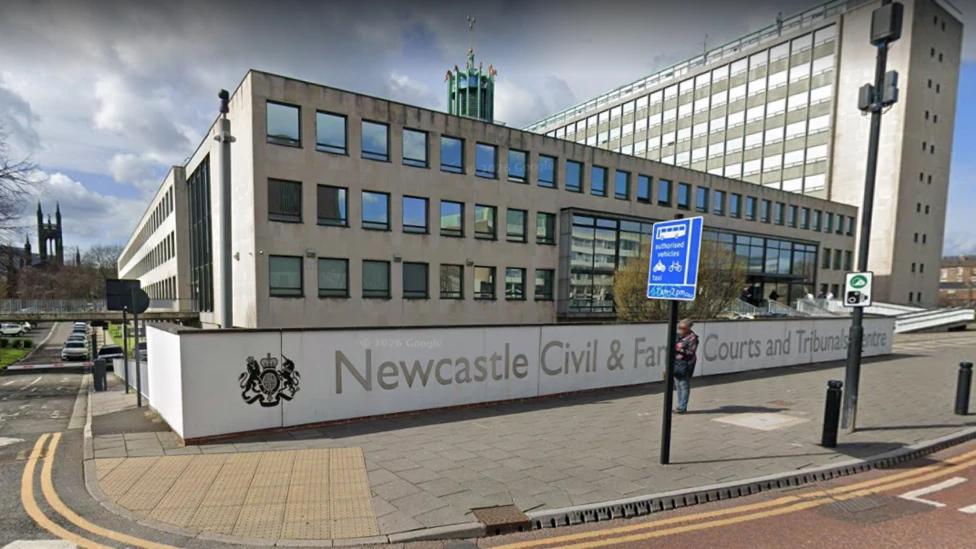
There is a particular kind of institutional sleight of hand that requires no forged document or secret meeting beneath a courthouse. Remove the context from an allegation, fasten the surviving fragment to somebody already considered troublesome, and let the reader supply the missing conclusion. The technique works especially well when a judge writes the account and the person he describes already carries the labels unreasonable, scandalous and vexatious.
Employment Judge Andrew James offered a striking example in his judgment of 28 April 2026. He was deciding the fate of my disability discrimination proceedings against Cepac Limited and Page Outsourcing UK Limited. Among the publications he criticised was material concerning historical terrorism-financing allegations about the wider corporate group to which Cepac belongs. I had discussed those allegations, named their author and expressly warned readers that they remained unverified. James’s account omitted the author, the reporting history and those qualifications.
The original source was Anthony C Heaford, who publishes as The Quiet Mancunian. His longstanding work concerns claimed experiences in Yemen in 1997, alleged encounters with individuals connected to Khalid Sheikh Mohammed, and disputed corporate relationships involving the Hayel Saeed Anam Group. I consider parts of his account worthy of investigation. That does not mean I have established its central allegations, which remain unproven. I examined the material and came away with questions. Rather than invent answers, I contacted HSA Group directly. No reply came.
The Terrorism Denier : What The Title Actually Means
I call James the terrorism denier because his published description effectively denies readers the provenance of an allegation concerning terrorism financing. I do not suggest that he denies the September 11 attacks occurred. Nor did he issue a judicial finding exonerating anybody accused in Heaford’s work. My criticism concerns the information his judgment leaves out, not an invented view about his beliefs.
James did not need to investigate international terrorism to decide an employment dispute. But he voluntarily brought this inflammatory material into a judgment condemning my conduct. Once he did that, identifying what I had actually published became an elementary requirement of accurate characterisation. A source, an allegation and a verified finding are three different things. If a judge chooses to invoke the financing of the September 11 attacks, I would expect him to manage those distinctions before reaching for the fucking judicial pen.
Instead, the reader encounters a claimant, a corporate respondent and the most notorious terrorist attack of the modern era. The man whose allegations began the discussion is nowhere to be found.
Paragraph 110: Two Sentences And A Missing Source
Paragraph 110 says:
“The claimant alleges on 8 December 2025 that the first respondent is linked to 9/11 funding. There are other examples of such posts”.
That’s the lot. James does not name Heaford or The Quiet Mancunian. He supplies no quotation from the publication supposedly made on 8 December, and he identifies no specific exhibit or page. The judgment therefore gives readers no way to distinguish my actual words from the judge’s compressed description. Nor does it explain whether I referred to an existing report, offered a qualified opinion or personally asserted that a criminal act occurred.
A disabled claimant disputes recruitment, starts a critical blog and becomes embroiled in litigation. Then, according to the judgment, he associates his opponent with 9/11 financing. Without the source history, this reads like another wild escalation by an embittered litigant. The story writes its own villain, and James supplies the costume.
I did not originate Heaford’s allegations. I never claimed to witness the events he describes. Instead, I encountered his work, examined its available material, identified its author and discussed what I thought deserved further investigation. Those facts don’t automatically make every word I published appropriate. They do materially alter the account of what I was doing.
A source doesn’t become irrelevant simply because somebody has decided the messenger is a fucking nuisance. If you’re going to embellish what looks like a predetermined narrative with an allegation of this gravity, you’d better give the fucking thing some teeth. James arrived armed with paragraph 110. Unfortunately, it appears to have a severe case of gingivitis: plenty of inflammation, not a fucking bite.
What TCAP Actually Published In 2025
The documentary comparison does not require anybody to accept my recollection. TCAP’s earlier coverage exists in the public archive. In 2025, I published Ce-UnPac’d : Shadows of Power – The Dirhem Abdo Saeed Anam Exposé, now archived under 30 July 2025. It examined allegations about HSA-related individuals and companies, identified The Quiet Mancunian and warned readers that the serious claims remained unverified.
The article opened with a direct notice:
“All claims herein are third-party allegations and unverified. Sources are hyperlinked. Readers should conduct their own due diligence”.
That warning preceded the allegations. It wasn’t a reluctant amendment I invented after an adverse judgment, and readers did not need a microscope to find it. The article also identified the third-party reporting and repeated the qualification at its conclusion. More awkwardly for the portrait of a gullible accuser, my initial assessment questioned the available corroboration. I openly criticised weaknesses in Heaford’s account and declined to treat its most serious conclusions as proved.
James’s wording places the allegation squarely on me. The earlier article demonstrates something more specific: I identified an existing account, expressed scepticism and discussed why it deserved scrutiny. Reporting an attributed allegation with stated reservations differs from inventing one and claiming firsthand knowledge. That distinction matters even though neither activity carries automatic immunity from criticism.
My 2025 disclaimer does not establish the exact wording of a separate post dated 8 December 2025. I make no such claim. But it does establish an existing editorial practice that James’s paragraph never acknowledges. If the December publication used stronger language, the proper response would be to identify it and explain what changed. If it retained the attribution, the judgment should have taken that into account. Either way, show the fucking publication rather than asking readers to accept an unexplained paraphrase.
Anthony C Heaford: The Man Behind The Allegations
Heaford is not an anonymous X account that appeared after my recruitment dispute began. He publishes under his own name and describes his professional background as a field service technician. His website contains photographs, timelines, correspondence, corporate references and accounts of commercial machinery transactions. The material covers years of writing, not a convenient weekend spent inventing a conspiracy to assist a stranger with an Employment Tribunal claim.
His central account concerns a September 1997 visit to Taiz, Yemen. Heaford says he travelled there to install printing machinery and later came to believe that the customer had connections to Khalid Sheikh Mohammed’s network. He describes individuals he encountered and transactions involving businesses associated with Longulf Trading and the HSA Group. He also advances conclusions about the possible significance of those experiences for the September 11 attacks.
Those are extraordinarily serious allegations. Heaford’s presence in a particular location, if established, would not automatically authenticate his retrospective identifications. Photographs may show people together without proving who they were or what they intended. Company records may confirm a trading relationship without revealing an unlawful purpose. The existence of supporting material makes an allegation examinable; it does not make the allegation true.
A Source Open To Challenge
Heaford publishes corrections as well as accusations. His own account acknowledges errors and changes to earlier recollections, including details about what he knew before visiting Yemen. That matters when evaluating reliability. A correction may demonstrate candour, but it also exposes the dangers of treating decades-old recollection as conclusive proof. His more ambitious inferences remain open to serious challenge.
I find the specificity worth examining: named people, places, machinery, transactions, dates and published correspondence. Other readers may reach a less favourable assessment. That is why I link to the material and identify where the proof ends and interpretation begins. His work predates my August 2024 contact with Cepac by years. That chronology doesn’t prove his claims, but it rather thoroughly destroys any suggestion that I invented the original story to settle a score over a job interview.
A Claimed Warning Before September 11
One feature of Heaford’s work particularly interests me. He says that in June 1997, following a journey from Boston to Toronto, he warned a Canadian business contact about the possibility of hijackers using an aircraft to attack the World Trade Center. He also describes raising similar concerns during his September 1997 Yemen visit. These are his retrospective accounts of alleged conversations before 9/11. The available material does not independently establish that those exchanges occurred exactly as he recalls.
His later correspondence forms a separate history. Heaford says he began documenting the Yemen allegations publicly in 2015. His website also presents material relating to his approach to Sir Graham Brady, then his Member of Parliament, on 25 March 2017. He describes submitting a dossier, followed by correspondence indicating that Brady forwarded information to organisations including the US Embassy, Parliament’s Intelligence and Security Committee and the Secret Intelligence Service.
The dates matter. Heaford claims he made a warning before 11 September 2001. His approach to Brady occurred after the attacks, in 2017. Nobody should confuse the later parliamentary correspondence with independent, contemporaneous proof of the alleged 1997 warning. I certainly won’t improve his case by shifting events sixteen years backwards to make a more dramatic fucking headline.
The correspondence does, however, offer a trail that investigators could authenticate. Heaford has also published communications which he connects to the US military commission process concerning 9/11. Receiving a dossier does not mean accepting its contents, and an official contact does not certify the truth of a witness account. Those distinctions matter. So do the dates, names and documents that invite somebody to check what happened. None of this background appears in James’s two-sentence characterisation.
Historical Reporting Long Before TCAP
Heaford’s account sits alongside older reporting about HSA-related relationships and terrorism-financing investigations. That journalism does not prove his specific story of Yemen in 1997. It does show that questions about some associated financial and commercial networks circulated publicly before I ever encountered Cepac.
In September 2004, Fox News examined possible connections involving the UN Oil-for-Food programme, the Malaysian Swiss Gulf and African Chamber, known as MIGA, and individuals associated with the HSA Group. The report discussed Abdul Rahman Hayel Saeed, earlier commercial arrangements and Ahmed Idris Nasreddin. US and international authorities had scrutinised financial networks associated with Nasreddin. The reporting raised questions but did not publicly establish that disputed Oil-for-Food funds had flowed into MIGA.
None of this makes Cepac a terrorism financier. A historical relationship between businesses does not establish the purpose of a disputed payment. Nor does the presence of a name in investigative reporting constitute a criminal finding. The records have their own significance and limits. Serious scrutiny requires both.
The Response And The Later Delistings
HSA did not remain silent. In October 2004, Fox News published a response in which the group disputed important aspects of the earlier reporting. HSA said its business relationship with Nasreddin ended acrimoniously in 1984. It challenged suggestions about continuing authority under a historical power of attorney and denied involvement in improper Iraqi kickback payments through Pacific Interlink.
Later developments also complicate any simplistic reading. In November 2007, US authorities removed Nasreddin and twelve associated entities, including MIGA, from the relevant sanctions list. Related international records reflected removals too. Those changes matter; omitting them while repeating the earlier designations would give readers a distorted history. Yet neither the response nor the delistings adjudicated every separate claim Heaford subsequently made about his own experiences.
An honest account acknowledges the allegation, the rebuttal and the limits of both. It doesn’t require the writer to announce a verdict before examining the evidence. These questions predated my dispute by decades. James’s paragraph offers readers no indication of that wider history, although its existence undercuts the impression of a grievance-created invention.
Cepac’s Corporate Connection Is Not A Conviction
One part of the background requires no acceptance of Heaford’s disputed allegations. The HSA Group publicly identifies Cepac among its companies. Companies House records document corporate appointments, and Longulf Trading exists as a registered British business. These are ordinary facts available from corporate sources, not inventions assembled by a disappointed applicant with WordPress and an unhealthy interest in cardboard.
That corporate connection explains why I examined the wider group after looking into Cepac. It does not prove that Cepac, any of its directors or anyone in the HSA family financed terrorism. Shared ownership does not transfer criminal responsibility by osmosis. A company appointment proves an appointment, not complicity in an attack.
Readers can therefore distinguish three separate propositions: Cepac’s genuine corporate relationships; Heaford’s historical allegations; and the unproved claim that particular people or entities knowingly supported terrorist activity. My reporting did not turn the third proposition into a conviction. James’s sentence, however, compresses the discussion until those boundaries become difficult to see. The corporate relationship survives his summary. The original author doesn’t.
Paragraph 110 Show Us The Publication
I cannot establish the exact December publication from the wording of paragraph 110. It may appear in the respondent’s social-media evidence rather than the TCAP archive. My earlier published disclaimers demonstrate how I approached the subject, but they cannot establish every word I subsequently used. If James relied on stronger wording in December, the original post would settle the question. Instead, he supplies a date without reproducing the allegation, identifying the exhibit or giving readers a meaningful opportunity to assess his characterisation.
TCAP has never needed to invent evidence or attach convenient dates to imaginary publications. I identify my sources, link to supporting documents and invite corrections when somebody can demonstrate an error. James, meanwhile, gives us 8 December 2025 without showing us what I supposedly said. Perhaps the relevant publication sits somewhere in the respondent’s enormous bundle. Wonderful. Then produce the fucking thing. A date followed by an inflammatory paraphrase is not a substitute for the underlying evidence, however impressive the judicial signature beneath it might look.
And that brings me to James’s repeated characterisation of my supposed problems with authority. Paragraphs 163 and 166 describe an unwillingness to accept the authority of the Employment Tribunal. No, Judge James. My problem isn’t with authority. My problem is with people who make unsupported assertions, deploy loaded language and expect their position to insulate those assertions from scrutiny. I recognised fair judicial treatment when Employment Judge Salter provided it, despite receiving no favourable determination of my claim. What I refuse to recognise is the proposition that a judicial title transforms an incomplete or misleading account into the fucking truth. If your exercise of authority depends upon readers accepting an allegation without seeing the evidence behind it, perhaps the problem isn’t my attitude towards authority. Perhaps it’s what you’re attempting to pass off as evidence.
Even The Allegations Have More Evidence Than Your Judgment
A judge doesn’t need to reproduce every exhibit in full. A clear reference or a short quotation would have done the job. James could also have acknowledged Heaford while criticising my decision to amplify his allegations. Instead, he gave the accusation its full inflammatory force and removed the information needed to evaluate it. If independent bloggers must account for the claims they publish, judicial authors shouldn’t regard basic attribution as an optional fucking accessory.
Heaford has spent more than a decade publishing his account, identifying records, explaining his conclusions and inviting readers to examine the evidence. Meanwhile, I have personally witnessed Employment Judge Andrew James produce a judgment containing demonstrably false statements about my conduct, readily disproved by the documentary record. The hearing proceeded in my absence, after the respondents’ conduct had already rendered the proceedings fundamentally unfair.
One man has spent years putting his evidence before the public and inviting scrutiny. The other has used the authority of his judicial office to publish factual inaccuracies about me while failing to substantiate an allegation he considered sufficiently serious to include in a judgment ending my case.
And James has the fucking audacity to lecture me about credibility, conduct and respect for authority.
Show your fucking working, Judge James. Just like Heaford has shown his.
Religion Does Not Substitute For Evidence
The missing provenance also risks distorting my motives. Cepac belongs to a group associated with a prominent Yemeni business family. Some people named in Heaford’s account are Muslim. A reader who sees only James’s compressed description might imagine that I attached a terrorism allegation to a corporate opponent because of personal animosity. Once religion enters that speculation, the picture can become uglier still.
A person’s Muslim faith is not evidence of terrorism. Neither is Yemeni nationality, an Arabic surname or a legitimate corporate relationship. Serious criminal allegations demand evidence about conduct, knowledge and responsibility. A person’s background provides none of those things. Equally, the religion of people associated with a company cannot render documented questions about that company immune from scrutiny.
You cannot construct a fair assessment of somebody’s public commentary by selecting the material that supports your conclusions while ignoring the material that contradicts them. There’s no room for balance when the inconvenient evidence keeps getting left on the fucking cutting-room floor. Perhaps the respondents could have obtained those posts and asked Page to redact them. Then they could have claimed the evidence was in the bundle without suffering the inconvenience of anybody actually reading the fucking thing.
Nothing says transparency quite like a page full of black rectangles.
James Did Not Need To Investigate 9/11
An obvious objection deserves an answer. James was deciding applications for strike-out and costs in employment proceedings. He was not chairing an international inquiry into September 11. His task did not require him to investigate Heaford’s encounters in Yemen, reconstruct historical payments or decide whether anyone knowingly financed terrorist activity. Those questions lay outside the issues in my recruitment claim.
But the judge chose to introduce my discussion of those allegations into his conduct assessment. Once he did, he needed to describe the relevant publication fairly. The question is not whether James should have investigated international terrorism. It is whether he accurately described my reporting about allegations of international terrorism. Those are entirely different obligations.
The Tribunal could assess a publication’s gravity, context and consequences. It might decide attribution could not justify its circulation during litigation. But it would still need to describe the words and circumstances accurately. Otherwise, the allegation becomes a prop in a character prosecution rather than evidence readers can assess.
James relied on numerous matters besides paragraph 110. He criticised my correspondence, public commentary, treatment of representatives and conduct of the proceedings. Ultimately, he struck out the claims and ordered me to pay £20,000 towards Cepac’s costs. My underlying disability discrimination allegations never received a merits hearing. I dispute his reasoning and have pursued the appeal process.
Paragraph 110 wasn’t some harmless fucking footnote. James inserted an inflammatory allegation concerning 9/11 financing into a judgment that branded me scandalous, unreasonable and vexatious, struck out my disability discrimination claim and saddled me with £20,000 in costs. He supplied a date but not the publication, identified the claimant but not the original author, and used an extraordinary allegation to blacken my character without providing readers with the evidence necessary to examine his account. That is what his published reasoning actually does.
And the fact that James assembled a wider catalogue of complaints about my conduct does not excuse the deficiencies in this particular example. An accumulation of accusations is not a substitute for accuracy, you pompous bastard. Each allegation must withstand scrutiny on its own merits. You cannot heap contentious assertions together, sprinkle the whole fucking lot with judicial authority and expect the result to emerge as an unimpeachable finding. That’s not evidential reasoning. It’s judicial alchemy performed by a man who apparently expects the audience to applaud before checking whether there’s anything up his sleeves.
If James considered the December publication sufficiently important to include in a judgment ending my case, he can identify it, reproduce my actual words and explain why the original source and surrounding context did not warrant mention. Until then, paragraph 110 is an inflammatory characterisation in search of its supporting evidence. A judicial signature does not turn an inadequately substantiated assertion into the fucking truth.
Judicial Immunity: A Magnificently Convenient Arrangement
Employment Judge Andrew James also benefits from a protection unavailable to most people whose words damage another person’s reputation. Judges in England and Wales enjoy extensive immunity from personal civil proceedings over acts undertaken in their judicial functions. Statements made in court proceedings generally attract absolute privilege. The justification is judicial independence: judges must decide difficult cases without facing retaliatory litigation from disappointed parties or powerful organisations.
I understand that principle. Courts cannot operate fairly if every unfavourable judgment exposes its author to personal financial ruin. Yet immunity serves a purpose; it does not make the judge infallible. It cannot establish the accuracy of a disputed sentence, confer credibility on a missing source reference or turn an incomplete account into a complete one. Judicial independence requires freedom to decide cases, not freedom from public examination of the reasons given.
And one observation for Employment Judge Andrew James personally.
You’re fucking lucky, Judge James, that judicial immunity protects you from personal civil proceedings over what you write in the exercise of your judicial functions. Without it, this supposedly vexatious, scandalous motherfucker would sue you into fucking oblivion.
Not because you declined to decide whether Heaford’s allegations were true. That wasn’t your job. Nor because you were required to accept my assessment of his reporting. You weren’t. My objection concerns your decision to invoke an allegation of extraordinary gravity in a public judgment condemning my conduct, while leaving its original author unidentified and the supposedly offending publication unquoted.
Your words carry institutional authority. My objections can become further material for the narrative of unreasonable conduct. Meanwhile, the same judgment deprived me of a merits hearing and imposed a £20,000 costs order. What a magnificently convenient fucking arrangement: the claimant suffers the consequences, while the judicial author generally remains protected from personal civil liability over the words used to explain them.
Immunity Is Not A Certificate Of Accuracy
You may enjoy protection from being sued personally over paragraph 110. You do not enjoy protection from public scrutiny of its wording, context and evidential foundations. The greater the authority of a judgment, the stronger the case for examining its accuracy. That is an argument for judicial accountability, not an attack on judicial independence.
I cannot know from the published judgment whether James read Heaford’s material or consciously decided to omit it. Nor can I establish that he meant to give anybody a misleading impression. His intentions are not available for inspection. His words are. I am criticising what the public judgment contains, what it leaves out and the characterisation readers encounter. A judge’s signature does not perform the function of a fucking source reference.
Scrutiny Is Not The Same Thing As Contempt
I have examined The Quiet Mancunian because his allegations, if substantiated, would warrant serious investigation. His account contains specific claims, people, places and documents that invite verification. It also contains gaps, retrospective identifications and corrections that any responsible investigator must take seriously. I can regard the account as worth examining without treating its conclusions as proven.
Heaford may have misidentified people, misunderstood transactions or attached too much significance to coincidences. His recollections may contain errors beyond those he has already acknowledged. Equally, investigators might find that some part of his testimony corresponds to independent evidence. Both possibilities deserve careful evaluation. Neither becomes more or less plausible because an Employment Judge dislikes my manner of discussing the subject.
My recruitment dispute explains why I investigated Cepac’s ownership. It does not explain away Heaford’s earlier publications or the separate reporting from 2004. James’s judgment establishes no finding that the terrorism-financing allegations are true or false. It determines the fate of my employment proceedings. Treating his criticism of my publications as though it settled those historical questions would be a category error worthy of the finest institutional bullshit. Still, credit where it’s due: James managed to put Cepac and allegations concerning 9/11 terrorism financing together in the same public judicial judgment. Not a TCAP headline. His own words, carrying the authority of his office, available for anybody to read. For a man so preoccupied with my publications, that’s quite the fucking publicity campaign.
Let’s hope your ego and mouth-frothing determination to bury me don’t end up Streisanding your client – sorry, the other party, Judge James. You have taken an allegation that many readers might never have encountered, introduced it into a public judgment and provided just enough information to make curious people start digging. Unfortunately for you, The Quiet Mancunian is only a search away, and unlike paragraph 110, he actually shows his fucking working.
You wanted to make an example of me. Perhaps you’ve inadvertently made an advertisement for him.
The Risk Of An Authoritative Shortcut
An allegation can fail under scrutiny. That is a proper outcome when the evidence doesn’t support it. But a person’s disapproval of the messenger does not examine the allegation itself. If a judgment encourages readers to view longstanding, attributed reporting merely as evidence of a claimant’s misconduct, it risks moving attention away from the underlying material without resolving anything about its truth.
That is the uncomfortable possibility here. I cannot demonstrate that anyone abandoned an investigation because of paragraph 110. I can demonstrate that the paragraph omits the source and places the allegation inside a broader account condemning my behaviour. The effect is an authoritative characterisation with crucial context missing. Where the underlying subject concerns possible responsibility for mass murder, that should trouble anybody who values careful evidence over convenient reputational narratives.
The Wrong People Must Not Benefit From Contempt
I hope Heaford is mistaken about the gravest conclusions he draws. I hope the people and organisations he names played no role in the crimes he describes. If evidence disproves his allegations, those accused deserve an accurate account that clears away unjustified suspicion. TCAP’s corrections policy exists because evidence should take precedence over editorial conviction. When somebody demonstrates an error, I correct it. That’s how accountability is supposed to fucking work.
And for the record, TCAP has never received a single request for a correction under that policy. Not one. The invitation remains open to anybody who can identify inaccurate, incomplete or unfair reporting and support their concerns with evidence. Unlike you, Judge James, I identify my sources, show readers the material behind my conclusions and give those I criticise an opportunity to challenge them. I don’t expect the public to accept inflammatory assertions merely because I happen to be the bastard who wrote them.
That’s the difference between accountability and judicial arrogance. I cite my fucking sources. You can start by finding yours.
A Sombre Question For Judge James
But I also hope something else. I sincerely hope that Employment Judge Andrew James’s contemptuous framing of my reporting has not helped protect the wrong people from scrutiny. That does not mean he knowingly protected terrorists or concealed proof of criminal activity. No evidence before me establishes either accusation. My concern lies in the possible consequences of an authoritative account that treats a disputed allegation as an example of misconduct while leaving its original source unidentified.
A public judgment carries influence. Readers may assume its author has distinguished allegation from finding, attribution from invention and criticism from proof. When the published reasoning fails to explain those differences, the resulting impression can travel far beyond the case itself. Perhaps Heaford’s central account will one day collapse under independent examination. Perhaps some important part will survive. Either way, the relevant evidence deserves better treatment than an unexplained two-sentence reference.
The families of those murdered deserve serious questions examined with care. The people Heaford accuses deserve fairness, accurate reporting and consideration of their rebuttals. Heaford deserves accurate attribution. Readers deserve to know where the allegations began. And I deserve to have what I actually published distinguished from the words a judge chose to put around it. None of those propositions requires blind belief in the allegations. Each requires a commitment to getting the facts right.
I hope you have not contributed to the wrong people escaping scrutiny, Judge James. Because if the allegations are false, those accused deserve the truth. And if they are true, the people who died deserved somebody to take the evidence seriously.
Lee Thompson – FACTUAL Founder, The Cummins Accountability Project
Sources
- Employment Tribunal: Thompson v Cepac Limited and Page Outsourcing UK Limited – Judgment, 28 April 2026
- TCAP: Ce-UnPac’d – Shadows of Power, The Dirhem Abdo Saeed Anam Exposé
- TCAP: The Cepac Files – Why I Believe The Quiet Mancunian
- TCAP: Newcastle Embarrassment Tribunal – Judge James, Blogging Is Not A Crime
- The Quiet Mancunian: HSA Group
- The Quiet Mancunian: Homepage
- The Quiet Mancunian: My 9/11 Timeline
- The Quiet Mancunian: 9/11 Official Correspondence
- The Quiet Mancunian: Corrections
- HSA Group: Cepac – Official Company Listing
- Companies House: Cepac Limited – Officers
- Companies House: Longulf Trading (UK) Limited
- Fox News: Possible Saddam–Al Qaeda Link Seen In UN Oil-for-Food Program, September 2004
- Fox News: Group Responds To FOX Oil-for-Food Story, October 2004
- US Federal Register: Removal Of Nasreddin And Associated Entities From Sanctions, November 2007
- Courts and Tribunals Judiciary: Judicial Independence And Immunity
- Human Rights Act 1998: Section 9 – Judicial Acts