Natures Aid Cepac display work appears in the packaging company’s 2026 portfolio. Behind the supplements brand stands STADA, a healthcare group with rules on disability discrimination, privacy and supply-chain complaints. Now those promises meet an interview that never materialised, Maria Walker’s explanation, two contemporaneous WhatsApp lines and Cepac’s own ET3. How far does the care travel once somebody stops buying health products and starts disclosing a health problem?
Natures Aid Cepac Displays: A Supplement To The Evidence
Page four of Cepac’s 2026 POS portfolio contains a Natures Aid counter display. The photograph shows the brand’s Full Spectrum CBD range, with peppermint-flavoured spray and different strengths beneath the logo. Cepac presents that work among its counter display units. Consequently, the commercial connection enters this article through the packaging company’s own sales material. Nobody has reverse-engineered a conspiracy from a vitamin bottle and a suspiciously folded carton.
That portfolio establishes branded display work. However, the photograph cannot supply the commissioning party, purchasing route, contract dates or present arrangements. Natures Aid and its parent can provide those details. Start with the people who ordered the bloody thing, then follow the invoices. A company capable of tracing a production batch should also manage to discover who bought its counter furniture.
Meanwhile, the image creates an unusually pointed question for this series. Here is a health brand in Cepac’s showroom, while Cepac’s recruitment dispute concerns a mental-health disclosure and the interview that never followed. The packaging sells reassurance. The case file asks what happened when a person supplied inconvenient health information. Put those together and the display needs a rather more informative leaflet.
STADA’s Care Comes With Instructions
STADA acquired Natures Aid in November 2016 and still includes it in its consumer healthcare portfolio. The parent also describes its purpose as “Caring for people’s health as a trusted partner”. That sentence sounds straightforward until the person seeking care turns up in a recruitment file. Then somebody has to decide whether the sentiment survives contact with procurement.
More usefully, STADA’s Business Partners Code prohibits disability discrimination, harassment and intimidation. Its response requirements expressly encompass conduct by workers, agents and contractors. The code also requires lawful, transparent handling of personal information. Therefore, outsourcing does not make the ethical question disappear. Page handled the recruitment; Cepac supplied the vacancy and the subsequent explanation. Both sides of that exchange need examining.
Those provisions give STADA something better than another polished expression of concern. It has specific expectations to apply to the records. Otherwise, the code becomes a homeopathic approach to accountability: keep diluting the obligation until procurement can no longer detect an active ingredient. Consequently, the Natures Aid Cepac connection deserves a practical response. Open the file and establish what the promises actually require.
Two WhatsApp Lines Before The Complaint
On 21 August 2024, Page Outsourcing called me about a production role at Cepac. During that conversation, the recruiter offered an interview for after the bank holiday and discussed the pay. I also explained the mental-health reason for my employment gap. Page then said another call would settle an exact interview time. However, that confirmation never arrived.
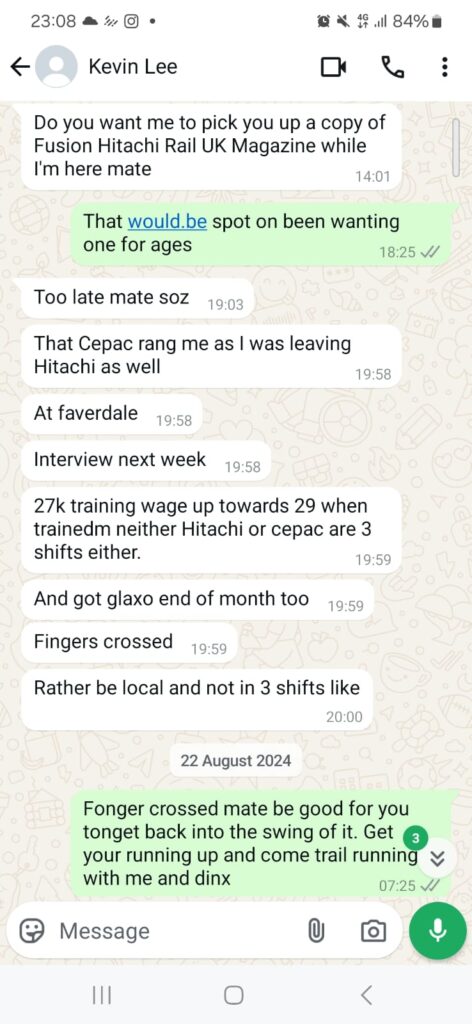
Later that day, I messaged a friend: “Interview next week” and “27k training wage up towards 29”. These are my contemporaneous messages after the call. The recipient kept the exchange and also supplied a supporting witness statement later. At the time, I was talking about work and wages. There was no complaint, tribunal claim or public campaign to construct a message around.
That distinction matters because the message records my understanding immediately after the conversation. It is evidence to test against the recruiter’s records, rather than a written offer from Page itself. Nevertheless, it gives an investigator something concrete: an interview, a timeframe and a wage discussion, recorded before the dispute. Calling the eventual disagreement confusion does not answer why I sent those lines that afternoon. For that, somebody needs the call notes rather than another spoonful of corporate syrup.
Maria Walker’s Explanation Arrives At 09:51
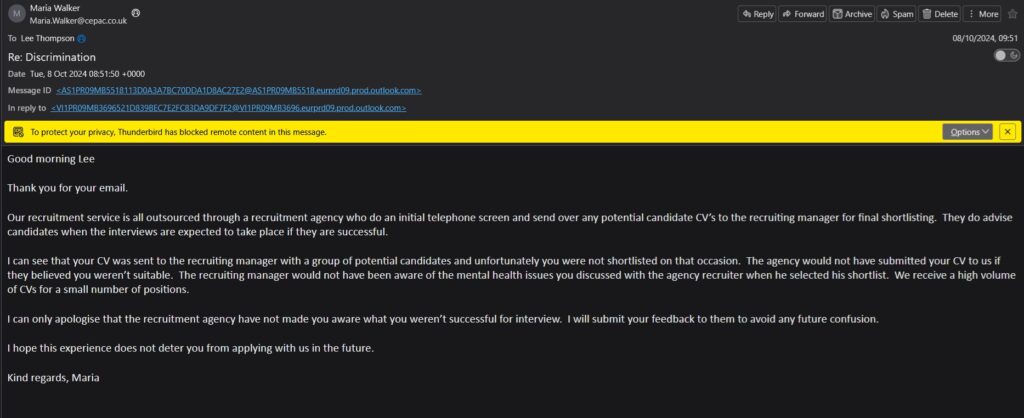
At 04:35 on 8 October 2024, I complained directly to Cepac. My email described the interview offer, the promised confirmation and the mental-health disclosure. Maria Walker, its HR Business Partner, then replied that morning. Her email displays 09:51. According to her explanation, Page screened candidates and passed CVs to the recruiting manager, with interview arrangements dependent on selection.
Walker said my CV reached that manager, but I was “not shortlisted on that occasion”. She also said the manager would not have known about the mental-health information discussed with the recruiter. Meanwhile, her apology concerned Page’s failure to explain that I had not secured an interview. An offered interview had become an unsuccessful shortlist, with the discrepancy packaged as confusion.
Crucially, Walker had not seen the WhatsApp receipt when she gave that answer. Her explanation therefore needs comparing with evidence she had not considered. What did Page record, and what did Cepac check before replying? The KFC II account sets out this sequence in the wider series. A healthcare group’s supplier review should examine it too. “Sorry for the confusion” is a courtesy, not a fucking investigation.
The ET3 Supplies An August Date
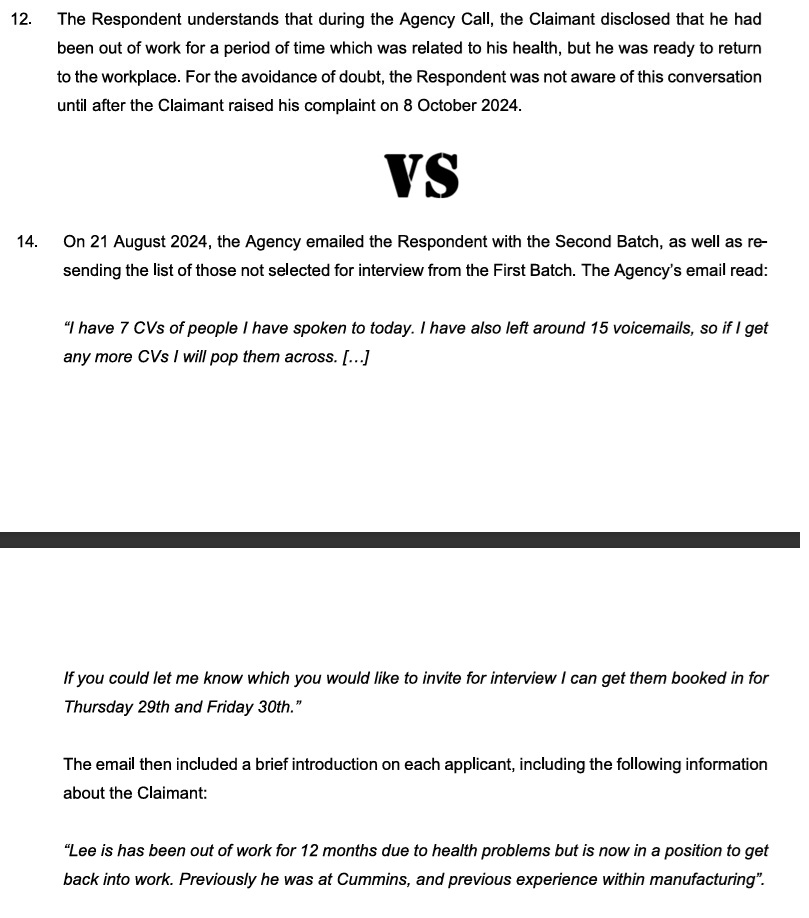
Cepac’s pleaded defence also adds a problem. Paragraph 12 of its ET3 places the company’s awareness of the agency conversation about my health-related absence after the October complaint. However, paragraph 14 describes an email Page sent Cepac on 21 August. That candidate introduction includes the information that I had spent twelve months out of work because of health problems and could now return.
The August email therefore puts health information inside Cepac well before October. Precisely what did paragraph 12 deny knowing? Who received the introduction, who opened it and what reached the recruiting manager? Those questions also bear directly on Walker’s assurance about the manager. The company supplied the dates itself, so nobody needs to extract them with a pair of surgical fucking pliers.
This does not, by itself, establish that a particular decision-maker knew I met the legal definition of disability. Instead, it identifies a documentary question that a proper investigation should resolve. Obtain the email and candidate history, then reconcile the accounts. Natures Aid Cepac display work brings the brand into this series; the ET3 explains why STADA should look past the artwork. Traceability must survive the journey from the product batch to the recruitment inbox.
Michael Page Adds A Blackout Supplement
Meanwhile, Michael Page’s response to my data subject access request made reconstructing that route harder. Internal correspondence concerning the discrimination complaint arrived with names and parts of the exchanges obscured. Page invoked third-party personal data when explaining redactions. The earlier account of the disclosure examines the material in detail. Here, the relevant point is the resulting gap in visibility.
Privacy deserves protection, including the privacy of other people in correspondence. However, that does not make the underlying recruitment questions disappear. Page can still explain its decisions, identify the systems involved and account for the movement of my information. Likewise, an investigator can seek appropriate records without publishing somebody else’s personal details. A redaction is therefore a reason to examine the disclosure carefully, not a magic spell that disinfects the whole process.
For STADA, that means asking for an intelligible account of what happened. Who handled the disclosure? When did the candidate status change, and what supported the explanation Cepac later gave? These are ordinary records questions. Yet the black boxes leave the claimant staring at the administrative equivalent of an ingredients label reading: contains stuff, mind your own bloody business.
Then The Lawyers Reached Into The Healthcare Arrangements
Once the dispute entered litigation, Cepac instructed Horsfield Menzies. The firm’s contact with my medical centre concerned appointment availability, and it used the resulting information when opposing postponement. My healthcare arrangements had therefore become material for the respondent’s procedural argument. That episode deserves examination alongside the original handling of health information, especially by a group selling care as its purpose.
Meanwhile, correspondence, complaints and social-media material accumulated around my conduct. I supplied medical evidence because my disability affected my ability to participate. Yet my reactions under pressure became central to the attempt to end the proceedings. The case increasingly revolved around how objectionable the complainant appeared, while the recruitment evidence still awaited a merits hearing. Apparently, the system could analyse my swearing more efficiently than a missing interview.
That is the bullying I describe: pressure, distressed responses and the use of those responses against me. It is my criticism of the documented strategy and its effects. STADA can examine the correspondence and decide whether its expectations reach that conduct. Otherwise, care stops at the counter, and the disabled person behind the complaint can apparently go and choke on the small print.
More Than £50,000 In Costs, No Recruitment Verdict
Cepac’s combined costs schedules exceeded £50,000. Following the hearing on 24 April 2026, which proceeded without me, the Tribunal struck out the claims and ordered me to pay £20,000 to Cepac. Its judgment rested on findings about my conduct of the proceedings, including unreasonable, scandalous and vexatious conduct. I dispute its treatment of my disability and the process that produced that result.
Crucially, the judgment acknowledges that strike-out denies a hearing on the merits. It therefore does not resolve whether Page offered the interview, why confirmation never came or how health information affected the recruitment process. Those matters still require evidential examination. A supplier review that simply files the strike-out as a clean bill of health would confuse a procedural outcome with answers the Tribunal never reached.
The Newcastle maladministration account sets out my wider criticism of the institutional failures. For this article, the distinction is enough: Cepac obtained an end to the proceedings through conduct findings. It did not obtain a merits judgment determining the recruitment allegations. Consequently, STADA has no sensible reason to treat the order as an all-purpose supplier disinfectant. The paperwork does not wash that much shit away.
STADA Has An August 2026 Complaints Procedure
STADA’s current grievance procedure took effect on 20 August 2026. It accepts third-party reports about relevant human-rights risks in its operations and supply chain, including inadequate remedies. Available channels include a reporting portal, compliance email and external ombudsman. Consequently, a concerned person has an identified route into the group. The next question is whether that route produces an answer worth reading.
For reports through those channels, it promises acknowledgement within seven business days where contact is possible. It also provides for investigation, updates and consideration of corrective measures, with protection against retaliation for good-faith reporting. That protection covers conduct by STADA or its suppliers. These commitments give a reporter something to measure. Publishing this article does not itself start that formal reporting timetable.
Therefore, the interesting question is what happens after a concern enters the system. The Natures Aid Cepac connection needs checking, followed by the relevant documents and an answer that addresses them. An acknowledgement alone cannot do that. Anyone can automate a reassuring email; even a useless bastard of a process can master “thank you for bringing this to our attention”. The examination must come afterwards.
A Portal Is The Front Door
Under that procedure, the independent ombudsman passes information on with the source’s consent. Meanwhile, STADA’s compliance function assesses reports and routes relevant investigations to its human-rights and environmental-risk function. Internal specialists or external providers may assist. The distinction matters because independent intake and independent investigation are different things. A badge on the entrance tells you little about who eventually examines the records.
Internal examination can still produce a proper answer. However, it requires someone willing to test the supplier’s account against the original material. Ask what contradicts the explanation, identify missing records and explain the conclusion. If procurement merely asks Cepac whether Cepac considers Cepac satisfactory, the inquiry will have the diagnostic sophistication of a mirror. Nobody needs another expensive system that discovers management agrees with itself.
Accordingly, I want the evidence to determine the response. A reference number should also lead somewhere beyond an inbox with comforting typography. STADA can show what its process achieves through the questions it asks and the reasons it gives. Otherwise, the grievance mechanism risks becoming a very elaborate way of putting a complaint somewhere the complainant cannot see it.
Natures Aid Cepac Questions For The Purchasing File
STADA’s partner code allows information requests about suspected non-compliance, monitoring and audits. It requires concerns to receive investigation and correction, and relevant identified risks or violations to reach STADA. Corrective action, suspension and termination operate under the code’s stated conditions. Separately, its human-rights statement provides for risk analysis and reassessment following relevant findings. The group has written the tools down; now the purchasing file needs an owner.
First, establish who commissioned the Natures Aid display and how Cepac entered that route. Confirm the dates and present relationship. Then examine the recruitment records: Page’s call notes, the candidate-status history, the August email and its recipients. Also ask what Walker reviewed before replying. Compare those records with the contemporaneous WhatsApp exchange and supporting statement. A supplier’s summary should face the same scrutiny as the complaint it answers.
Next, examine the medical-centre correspondence and how the parties used it. Identify whether any relevant concern reached the brand or parent, and what assessment followed. Finally, explain the findings and any response. These requests do not require STADA to invent a tribunal judgment. They require it to apply its own standards to evidence. Buying branded cardboard should not confer a lifetime exemption from awkward questions about the people behind it.
The Care Must Survive The Complaint
Natures Aid sells into a market where trust matters. Meanwhile, its parent puts health, partnership and human rights into its public commitments. The Cepac portfolio connects that brand presentation to a supplier whose recruitment and litigation record raises specific questions. Once those questions arrive, a values statement needs more substance than another photograph of someone looking wholesomely concerned beside a plant.
Here are the documents. My WhatsApp message records an interview and wage discussion immediately after the recruiter called. However, Walker’s later explanation gives a different account. Cepac’s ET3 also supplies an August route for health information that demands reconciliation with its account of knowledge. The litigation then ended through conduct findings, leaving the recruitment merits undecided. Together, those records provide a concrete basis for examination. No inspirational wellness paragraph can perform that work.
So, Natures Aid and STADA, establish the commercial route and address the evidence. Explain whether your expectations extend to the recruitment and complaint handling behind the display. If the standards apply, show what applying them means. Caring for people’s health is an ambitious promise. It should withstand a disabled person asking a difficult question without the care shrinking to fuck-all at the edge of the counter.
Lee Thompson – Founder, The Cummins Accountability Project
Sources
- Cepac: 2026 POS portfolio, physical page 4, Natures Aid counter display.
- STADA: Natures Aid brand profile.
- STADA: Acquisition of Natures Aid, 21 November 2016.
- STADA: Business Partners Code of Conduct, November 2023, especially clauses 1.6, 2.5 and 6.4–6.9.
- STADA: Human Rights Statement, December 2023.
- STADA: Supply Chain Act policy and reporting documents.
- STADA: Grievance mechanism, effective 20 August 2026.
- STADA: Compliance commitments.
- TCAP : KFC II, Maria Walker and the interview receipt.
- TCAP : Page, Cepac and the redacted disclosure.
- TCAP : Newcastle Employment Tribunal, deliberate maladministration.
- Employment Tribunal : Thompson v Cepac Limited and Page Outsourcing UK Limited, judgment.
- TCAP case records: WhatsApp exchange dated 21 August 2024; supporting witness statement dated 20 February 2025; complaint and Maria Walker reply dated 8 October 2024; Cepac ET3; Page data-access correspondence; respondent costs schedules and medical-centre correspondence. The WhatsApp image records the claimant’s contemporaneous account to a friend. The Walker image displays 09:51. The article distinguishes claimed costs exceeding £50,000 from the £20,000 costs order.