
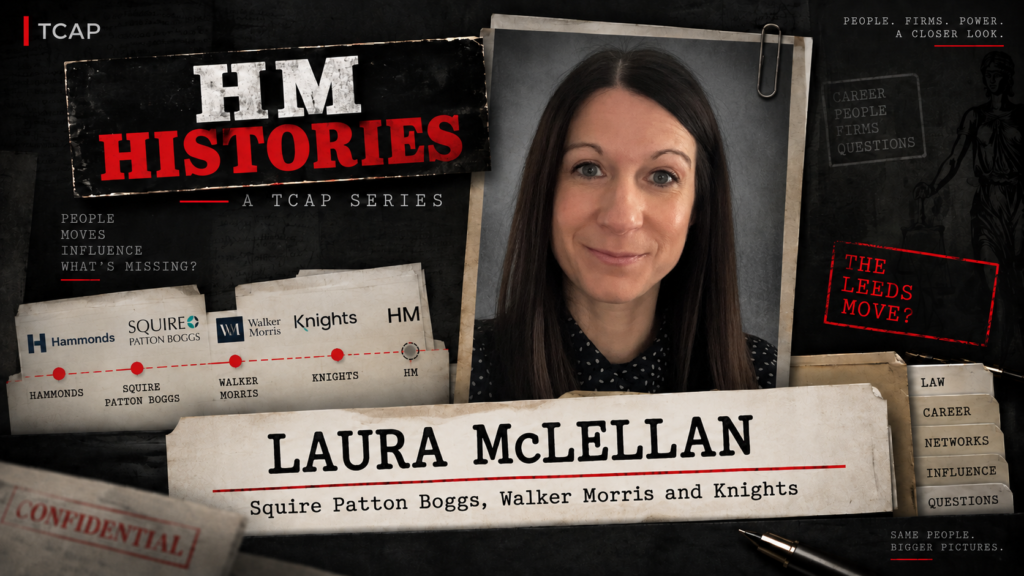
Laura McLellan’s Squire Patton Boggs years take HM Histories to a firm that put an annual $500,000 price on a relationship with Michael Cohen. Trump’s personal lawyer came with a business-development agreement and office space. Eventually, the public record also acquired an FBI search. The people selling commercial judgement had bought themselves quite a fucking exhibit.
We have already visited Walker Morris, Knights and the Hammonds years. The last instalment followed police statements, dismissal paperwork and client expenses. Now we move into the later incarnation of that first employer, where the documents concern a different professional appetite: the desire to be close to power, preferably with a fee arrangement attached.
The attraction was presented as an opportunity for clients. I read the history as a lesson in how readily institutional prestige can accommodate a useful connection. Give the relationship a grand enough label and Trump’s fixer arrives looking like a strategic asset. Afterwards, the expensive vocabulary starts measuring the distance between one office and the next. Association gets the champagne; separation gets the statement.
Laura McLellan At Squire Patton Boggs: The Rest Of The CV
McLellan’s own joining interview supplies the chronology. She began her training contract at Hammonds in 2005 and stayed for fourteen years through its successor firms. Walker Morris announced her arrival from Squire Patton Boggs in January 2020. The Cohen arrangement therefore falls within that long period of employment.
Her HM profile celebrates experience at a US international firm and describes her approach as “calm, concise and commercial”. The adjectives arrive freshly pressed, with no awkward bulges in the pockets. This chapter examines the institution behind that credential; the sources do not place McLellan in the Cohen arrangement.
A former employer’s name does useful work on a lawyer’s biography. It offers borrowed scale, authority and the suggestion of demanding professional standards. Consequently, the firm’s own decisions deserve examination alongside the prestige. Laura McLellan’s career history gives us a reason to open this particular file. Inside sits a major legal business presenting the president’s personal lawyer as a benefit worth advertising. Apparently the professional pedigree also came with a premium acquaintance.
The President’s Lawyer Joins The Offering
On 3 April 2017, Squire Patton Boggs announced its alliance with Michael D. Cohen & Associates. Then-chief executive Mark Ruehlmann promised “cutting-edge benefits”. The public-policy operation already included former House Speaker John Boehner and former Senate majority leader Trent Lott. Cohen joined a proposition in which political experience and connections were prominent selling points.
The cast list does a substantial part of the selling. Former office-holders supply stature; the president’s personal lawyer adds the prospect of another useful connection. Read the publicity and you can almost hear the cutlery being laid for a dinner to which ordinary people will never be invited.
Washington’s influence business can make this sound entirely ordinary. To an outsider, it resembles a luxury concierge service for people who consider the normal entrance beneath them. In that imagined concierge lounge, somebody has found a billable description for knowing the bloke near the bloke. The address book has put on a tie and started charging.
I find the salesmanship grubby. Public power affects people who cannot purchase a specialist relationship to help them navigate it. Yet a well-connected legal business can market its position around that power as another premium service. What a splendid fucking arrangement for everyone who can afford the brochure.
Half A Million For The Alliance
The contract details give that sales pitch a price. A court-filed FBI affidavit records a March 2017 agreement providing Cohen with a $500,000 annual fee, payable in monthly instalments, to generate business. Reporting on prosecutors’ filings also described an entitlement to a share of fees from introduced clients under specified circumstances.
An annual payment and a potential slice of the resulting business: the acquaintance had acquired a proper commercial structure. Somebody had taken the appealing idea, put it through the machinery and produced terms. Half a million dollars is a substantial commitment to the proposition that this particular acquaintance is worth having.
According to prosecutors, Cohen introduced five clients during the agreement. That number alone cannot establish whether the deal made financial sense; the value of their work would matter. However, it does give the grand language a more concrete shape. The advertised alliance had a measurable business-development component.
For me, the more revealing question concerns what the firm was willing to associate with its name. Legal businesses routinely ask clients to consider consequences beyond the immediate transaction. Here was a handsome opportunity to apply that advice internally, before the chequebook developed an erection.
An Alliance With Its Own Locked Door
The working arrangements would later occupy a prominent place in the explanation. Cohen had separate office space and his own computer system. Reporting on the prosecutors’ filing said the firm did not hold a key to his office. He kept no timesheets there and did not bill clients through the firm. Cohen was an independent practitioner, rather than its employee or partner.
These details make the word “alliance” do some impressive lifting. The announcement offered the advantages of a relationship while the practical arrangements preserved separation. Both were present from the start. The publicity could celebrate togetherness without requiring the computer systems, billing records or office keys to join the party.
There is a bleak little comedy in paying for an association while keeping its occupant behind a door you cannot open. The promotional department can admire the connection from the corridor. The computer systems remain apart. Meanwhile, the fee arrangement knows precisely how to find him.
A locked office is perfectly capable of protecting legitimate confidential work. It cannot stop a publicly advertised association from becoming part of the firm’s reputation. That is the awkward thing about selling the connection: the public may remember buying the introduction even after the explanatory small print arrives.
The Persona Was Already Public
In 2011, Cohen described defending Trump to ABC News: “grab you by the neck”. A lawyer discussing his work in the register of a nightclub eviction is a peculiar advertisement for professional judgement. The aggression is supposed to impress. From the other side of the table, it sounds like an expensive bastard promising to make you regret being there.
A formidable advocate should have more to offer than the prospect of making somebody’s life unpleasant. Yet the theatrical hard man has an obvious appeal to clients who want their difficulties frightened into submission. Legal expertise supplies the machinery; the performance promises to operate it without mercy.
I have very little patience for that cult of professional menace. Put a suit around the threat and it remains a threat. Add a prestigious affiliation and the language acquires an expensive setting, which does fuck all to improve its substance. By 2017, the firm had a public persona available to consider alongside the tempting political connection.
Some Partners Saw The Risk
The Wall Street Journal reported that some Squire Patton Boggs partners opposed the alliance. According to people familiar with the matter, they had not been given its terms and feared Cohen’s reputation would damage the firm’s. The objections reportedly concerned both transparency and the reputation everyone at the firm would have to share.
That report takes us inside the business, where the association apparently looked less convincing to some of the people sharing its reputation. Their reported objections concerned information and judgement. A prestigious partnership can contain people who think a celebrated opportunity is a thoroughly bad idea.
Partnerships can accommodate an impressive amount of disagreement while continuing to announce a single corporate position. The outside world sees the confident launch. Reservations remain somewhere inside, competing with commercial enthusiasm and the people who believe they have found an opportunity.
The enthusiastic decision-maker gets to sell the possibilities. Other people inherit the explanation. What a piss-poor distribution of excitement and consequence. An institution can spend years cultivating respectability, then discover that a useful acquaintance has made the whole thing rather harder to explain.
The Federal Government Pays A Visit
On 9 April 2018, the FBI searched Cohen’s office inside Squire Patton Boggs’s New York premises. That day, the firm announced that its arrangement with him had concluded mutually under the agreement’s terms. It confirmed cooperation with the authorities and stated: “These activities do not relate to the firm”.
ALM reported that the firm had not answered questions about exactly when the alliance ended. The public announcement came on the day of the search. Its triumphant launch release was also no longer visible on the firm’s website, according to the same report. An association once worth announcing had become a relationship requiring explanation.
The warrant affidavit itself described Squire Patton Boggs as conducting legitimate business unrelated to Cohen’s alleged offences. Later in 2018, Cohen pleaded guilty to tax offences, lying to a bank and campaign-finance violations, and separately to lying to Congress. His crimes brought a three-year prison sentence in December.
Nevertheless, the reputational spectacle belonged in the history of the advertised alliance. A relationship launched as an opportunity for clients was now being explained alongside a federal search. The public-policy offering had encountered public authority in a form considerably less amenable to a networking lunch. Somebody else’s government contacts were now doing the visiting.
The Brochure Discovers The Partition Wall
Read the launch beside the later explanation. First comes the appeal of working together. Then comes the careful account of independence, separate systems and whose activities belong to whom. The contractual separation existed from the start. What changes across the public story is the emphasis.
Beside that later explanation, the original salesmanship looks like an exceptionally expensive piece of corporate horseshit. A firm can be legally distinct from an associate’s wrongdoing and still deserve criticism for having marketed the association. Choosing a relationship is an exercise of judgement. Writing sensible boundaries around it does not settle whether the choice was wise.
The useful question survives every clarification: what made Cohen an attractive person to put beside the firm’s name? Its public-policy ambition and his position around Trump provide the obvious starting points. Prestige helped sell the connection; the connection helped sell the offering. A splendid little mutual back-scratch, until the public starts examining the fingernails.
This is where the corporate language starts eating its own trousers. An alliance is substantial enough to advertise, yet sufficiently separate to require a careful explanation once unwelcome attention arrives. The partition wall was always there. Somehow it became a much more fascinating architectural feature.
Laura McLellan And The Value Of A Famous Name
Laura McLellan’s profile presents her long international-firm experience as a professional asset. Fair enough: experience matters. HM Histories examines the organisations supplying that asset, including their choices when commercial possibility arrives wearing an expensive watch and standing near political power.
For a firm selling judgement, the uncomfortable question begins well before the investigators arrive. It begins when an influential relationship looks attractive enough to market. At that point, somebody has to weigh the apparent commercial advantage against the character and reputation being invited into the proposition.
I would like rather more of that reasoning in the brochure. The public gets confident adjectives. The awkward material has to fight its way out through reporting and court papers, carrying the bits the marketing department would rather leave in a fucking drawer. Meanwhile, the celebrated institutional name continues travelling down professional biographies as though its history were a sequence of immaculate decisions.
Follow Laura McLellan’s CV far enough and the prestige acquires a locked office, a half-million-dollar agreement and an FBI search. The next time somebody presents a famous law firm’s name as a reason to stop asking questions, ask who it was paying to open doors. Occasionally, the answer is the bloke whose own door the fucking FBI came to search.
Lee Thompson – Founder, The Cummins Accountability Project
Sources
- Horsfield Menzies – Welcome To Laura McLellan: her fourteen-year career at Hammonds and its successors
- Horsfield Menzies – Laura McLellan: professional profile
- Walker Morris – Employment Team Expands Expertise With Appointment Of Lateral Hire, 23 January 2020
- US District Court filing – Cohen search-warrant affidavit: agreement terms, separate office and computer arrangements, and the distinction between Cohen’s alleged offences and the firm’s legitimate business
- The Daily Beast – April 2017 launch statement
- ABC News – Donald Trump’s Political ‘Pit Bull’: Meet Michael Cohen, April 2011
- The Wall Street Journal, reproduced by the Pulitzer Prizes – 2018 reporting on Cohen: fee arrangements and reported partner opposition
- ALM / Legal Week – Squire Patton Boggs Global Managing Partner Relocates To London, 16 April 2018: prosecutors’ account of the alliance, five referrals and working arrangements
- ALM – After FBI Raid, Squire Says It Severed Ties To Trump Lawyer Michael Cohen, 9 April 2018: firm statement and unanswered question about the termination date
- Bloomberg Law – Trump Attorney Michael Cohen’s Big Law Ties, 10 April 2018: launch, independence and firm response
- US Department of Justice – Michael Cohen Sentenced To Three Years In Prison, 12 December 2018
- TCAP – Laura McLellan: Walker Morris And The Partner Expiry Date
- TCAP – Laura McLellan: Knights And The Price Of ‘One Team’
- TCAP – Laura McLellan: Hammonds, Hillsborough And The Paperwork From Hell