
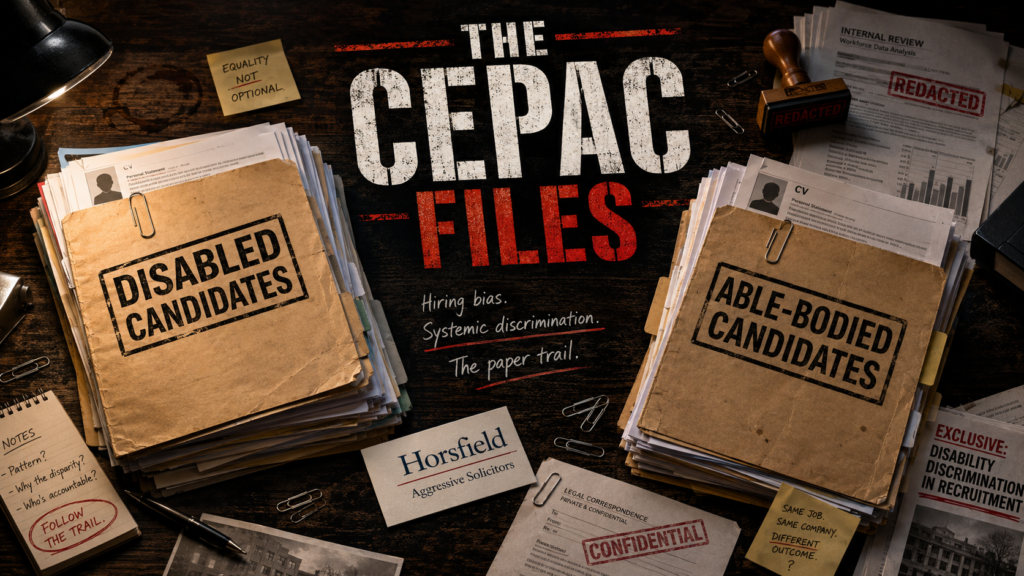
Beluga Cepac display work appears in the packaging company’s 2026 portfolio. Meanwhile, the vodka brand’s international owner, Noblewood, promises transparency and says it avoids grey zones. Here come Cepac’s ET3, Maria Walker’s email and the same-day WhatsApp receipt, with another alcohol-brand showcase for HSA-owned Cepac and a question the gold lettering cannot answer: do the values reach the supplier?
Beluga Cepac Displays: Welcome To The Premium End
Beluga sells the kind of vodka that needs a small ceremony before anybody admits they are drinking spirits. Its owner describes organic grain spirit from Latvia, production in Montenegro and a little metal sturgeon attached to each bottle by hand. Caviar completes the invitation. Clearly, somebody has considered every detail of the customer’s encounter with expensive piss: the fish, the finish, the flattering suggestion that buying a bottle constitutes an achievement.
Meanwhile, page seven of Cepac’s 2026 display portfolio supplies a less rarefied detail. A black-and-gold Beluga installation stands among the packaging company’s theatrical displays, surrounded by stock. There is the brand name, the elaborate presentation and Cepac’s own logo on the page. Consequently, Beluga enters this series through a supplier’s sales material, with its name doing useful work for the cardboard business.
Now the scene needs three additional documents. An ET3 records health information travelling through recruitment. A WhatsApp message preserves an interview offer that Cepac’s later explanation does not accommodate. Finally, Maria Walker’s email tells the unsuccessful candidate how the company says the process worked. Put them beside the display and the premium experience becomes considerably less smooth. Fortunately, nobody needs a trained palate to read a bloody date.
Noblewood Wrote The Invitation
Noblewood acquired Beluga’s global intellectual-property rights, excluding Russia, in 2022. The privately owned spirits group identifies Montenegro as its headquarters and describes its Latvian distillery and Montenegrin production site. Those are the current international brand owner’s own particulars. Therefore, Noblewood supplies the present-day values against which to examine the brand’s packaging connections.
More usefully, its values page promotes respect for individual differences, transparent relationships and honest cooperation. Then comes the sentence with the unfortunate habit of meaning something: “We avoid grey zones of any kind.” Eight words, no tiny exception for awkward packaging enquiries. That is an ambitious choice of language for a business whose brand appears in the Cepac showroom.
So let us ask the obvious question. Does Noblewood expect the businesses behind its displays to meet those standards, and what happens when evidence raises questions about their conduct? After all, a buyer can inspect print quality, dimensions and delivery records. Surely its ethical eyesight can survive the journey to a recruitment file. Otherwise, the values page starts to resemble a velvet rope outside an empty room: impressive access control for absolutely fuck-all.
The Interview Before The Lawyers
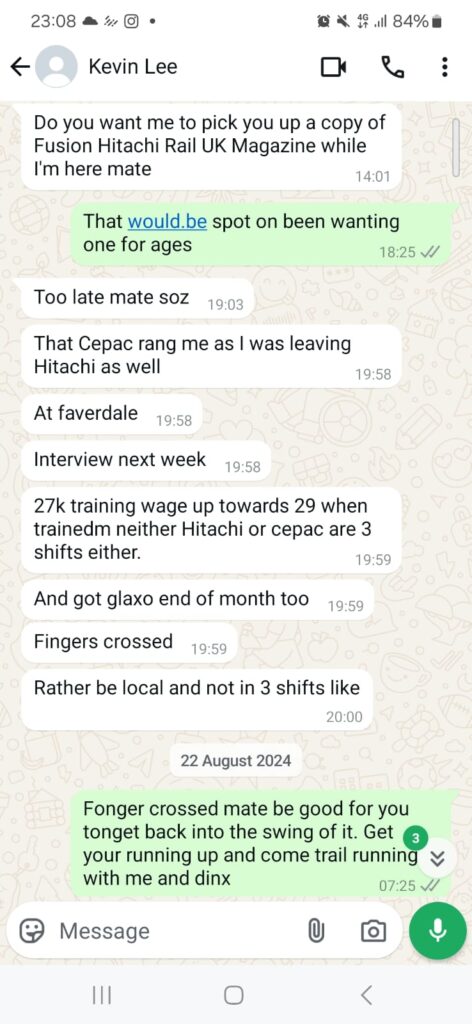
On 21 August 2024, Page Outsourcing called me about a production role at Cepac. During that conversation, the recruiter offered an interview for after the bank holiday and discussed pay. I also explained the mental-health reason for my employment gap. Page said another call would settle an exact interview time. However, that confirmation never arrived.
Later that day, I told a friend what had happened. The WhatsApp exchange records “Interview next week” and “27k training wage up towards 29”. These are my contemporaneous messages, retained by the recipient, who later supplied a supporting witness statement. At that point, I was discussing work and wages with a mate. Neither a tribunal claim nor a public campaign existed.
That timing matters because the dispute subsequently became whether an interview had ever been offered. Specifically, the message records my understanding immediately after the call, before anybody had a pleaded defence to protect. It also preserves the wage discussion, rather than some vague hope that a recruiter might eventually ring. Against the later corporate account, those scruffy little lines deserve examination. Their lack of a letterhead does not make them evaporate.
Maria Walker Supplies The House Explanation
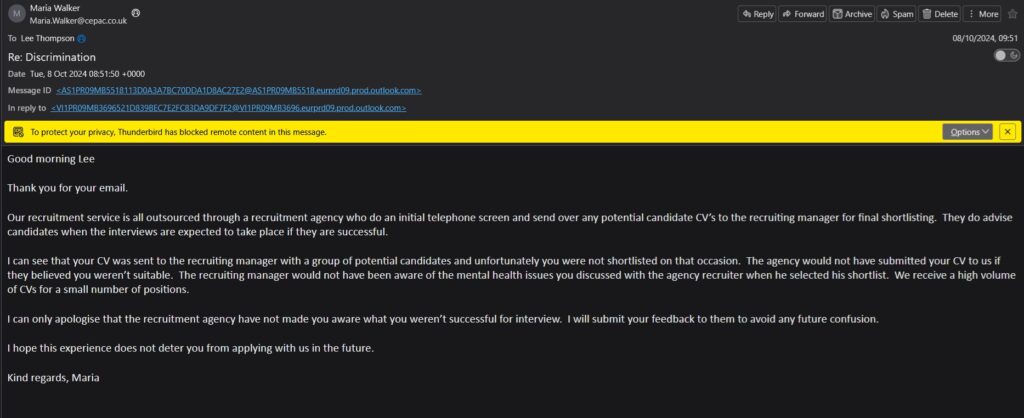
At 04:35 on 8 October 2024, I complained to Cepac about the interview offer, the promised confirmation and my mental-health disclosure. Maria Walker, its HR Business Partner, replied that morning. Her email displays 09:51. By then, the company had an account ready: Page screened candidates, passed CVs to the recruiting manager and advised people about interview timings if they succeeded.
According to Walker, my CV reached the manager, but I was “not shortlisted on that occasion”. She said the manager would not have known about the mental-health issues discussed with the recruiter. Meanwhile, the agency apparently deserved the apology for failing to explain that I had not secured an interview. The email ended with the prospect of avoiding future confusion and a hope that I would apply again.
What a hospitable little arrangement. In contrast, my account concerned an offered interview that disappeared; Walker answered with an unsuccessful shortlist and an agency communication problem. Yet she had not seen the WhatsApp receipt when she supplied that explanation. Consequently, her email needs checking against the call record, the candidate history and the contemporaneous message. A polite sign-off cannot do that work, however much corporate bullshit fits above it.
Two Paragraphs That Need A Sober Explanation
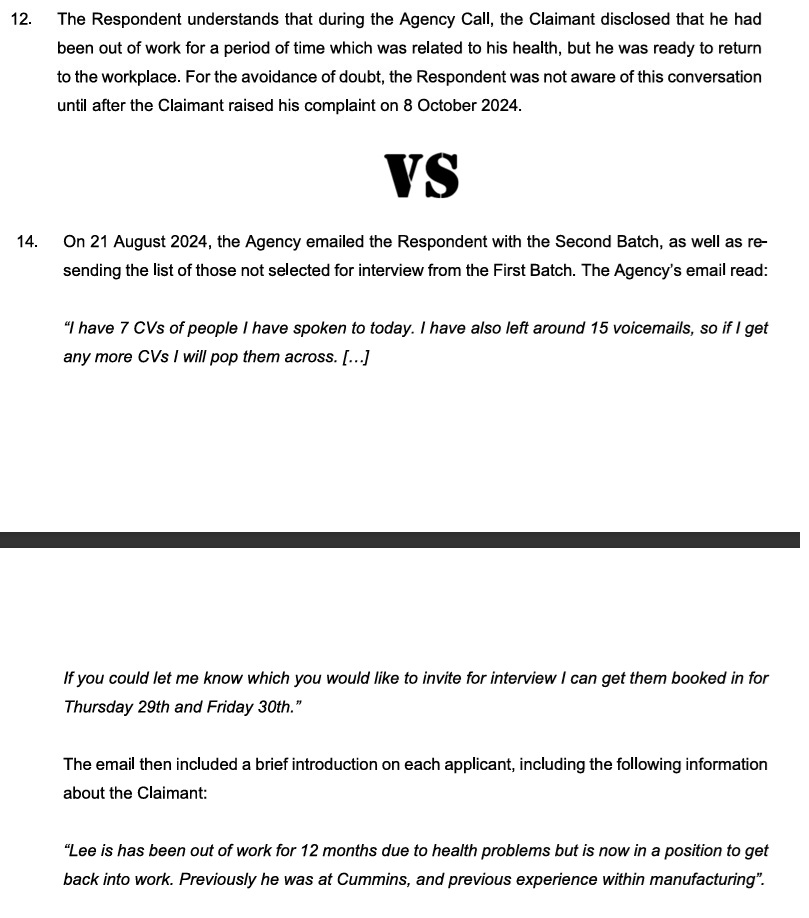
Cepac’s own ET3 then creates a specific chronology problem. Paragraph 12 says the company did not know about the agency conversation concerning my health-related absence until after my complaint on 8 October. However, paragraph 14 describes an email that Page sent Cepac on 21 August. It reproduces candidate information explaining that I had been out of work because of health problems and could now return.
Both statements sit inside the respondent’s pleaded account. The August email therefore supplies a dated route for health information into Cepac, weeks before the October complaint. What reached the recruiting manager? Who read the candidate introduction, and when? Above all, what did the author of paragraph 12 mean to exclude when paragraph 14 already put health information inside the company?
Accordingly, those questions require the actual email, its recipients and the recruitment records. Instead of a tasting note, Noblewood has a traceability exercise. Follow the information from Page to Cepac and compare it with Walker’s assurance about the manager. This is where the transparency promise acquires some weight. The company in the portfolio has produced two paragraphs that need reconciling; a buyer should not need a sommelier of horseshit to understand the answer.
Michael Page Adds The Black Ink
Meanwhile, Michael Page’s response to my data subject access request supplied its own contribution to visibility. Internal correspondence concerning the discrimination complaint arrived with names, routing details and parts of the exchanges obscured. Page invoked third-party data when explaining redactions. Nevertheless, the practical obstacle remains: the disclosure restricts my ability to reconstruct who discussed what and how information moved through the recruitment chain.
After all, Noblewood should understand the difference between presenting an attractive label and identifying what went into the product. Here, the equivalent questions concern decisions, recipients and dates. Page’s systems and Cepac’s inboxes hold the records needed to test the competing accounts. Consequently, another polished summary will not settle the problem. Ask for the underlying trail and an explanation of what the black boxes conceal.
There is no need to turn this into a separate Michael Page epic. Its role is already central: it made the call, handled my disclosure and sent the candidate information. Instead, the blacked-out material adds a nasty little visual joke to a case now sitting beneath a transparency slogan. For this particular cocktail, the recruiter appears to have mistaken the marker pen for a swizzle stick.
The Supplier’s Lawyers Changed The Drink
Once the dispute entered litigation, Cepac instructed Horsfield Menzies. The firm’s approach reached beyond debating what the recruiter had said. Its contact with my medical centre about appointment availability fed into opposition to postponement. Meanwhile, correspondence, complaints and social-media material accumulated around the question of my conduct. A recruitment claim became an exercise in making the claimant the most objectionable object in the room.
For a disabled person struggling under pressure, that shift has consequences. I supplied medical evidence because anxiety, depression and emotional dysregulation affected my ability to participate. Yet, in this procedural shitshow, my reactions became material for the attempt to end the claim. The process gave professional attention to my language while the missing interview still awaited a hearing. Apparently, a swear word travels through legal machinery more efficiently than an unanswered recruitment question.
That is the bullying at the heart of my criticism: apply pressure, collect the distressed response and use it to push the original complaint out of sight. Consequently, I fought over the effects of the process as well as the recruitment itself. Noblewood can examine that conduct alongside the documents. The legal stationery should not grant it automatic admission to the respectable end of the drinks cabinet.
More Than £50,000, Still No Recruitment Trial
Cepac’s combined costs schedules exceeded £50,000. Following the hearing on 24 April 2026, which proceeded without me, the Tribunal struck out the claims and ordered me to pay £20,000 to Cepac. The judgment rests on findings about my conduct of the proceedings, including findings of unreasonable, scandalous and vexatious conduct. I dispute that treatment of my disability and the way the process reached that result.
Crucially, the judgment acknowledges that strike-out denies a hearing on the merits. Therefore, it supplies no merits determination resolving the offered interview, Walker’s explanation or the health-information chronology. Instead, the respondent secured an end to the proceedings through the conduct application. Those are the ingredients of the outcome; nobody gets to relabel it as a completed recruitment investigation.
From a customer’s perspective, the distinction is elementary. A supplier can show you that a claim ended and still leave the underlying factual questions unanswered. However, Cepac’s legal bill does not fill those gaps. Nor does the costs order turn my WhatsApp into a hallucination. Some expensive bastard of a process has happened here, but the questions on the table remain short enough to fit on a drinks coaster.
Newcastle’s Machinery Needs Its Own Inspection
The wider administrative record explains why I reject the idea that this was a clean route to an inevitable result. My published Newcastle investigation documents misrouted correspondence, disputes over access to the file, adjustment requests and the treatment of medical evidence. These failures shaped my ability to participate. Consequently, they belong beside the conduct narrative, rather than underneath it like the unpleasant small print on a bar tab.
By March 2026, Employment Judge T. R. Smith described reviewing a file of 1,941 pages in three hours. The complaint at its centre still concerned recruitment, an interview and health information. Yet the machinery had become a colossal pain in the arse while the factual dispute remained unresolved. For me, that is the scandal: an institution capable of producing this much procedure could not deliver a hearing of the original claim.
Nobody at Noblewood needs to decide an appeal before asking Cepac for its recruitment records. Equally, buying a display should not mean buying the supplier’s preferred account of its litigation. Examine the primary documents and ask what they establish. Otherwise, due diligence becomes the corporate equivalent of accepting a bar’s hygiene certificate because the rat behind the counter has put on a waistcoat.
Another Alcohol Showcase For HSA-Owned Cepac
HSA Group identifies Cepac as one of its companies on its own website. Meanwhile, the portfolio puts Beluga among the alcohol brands whose presentation Cepac uses to sell its capabilities. Alongside the Pernod Ricard work already examined in this series, that is another route into the drinks trade for HSA-owned Cepac. The booze business needs displays, and the cardboard business wants the orders. Consequently, Beluga adds another alcohol-linked profit opportunity to the HSA subsidiary’s sales pitch.
There is money in helping other people sell alcohol. After all, Cepac uses the work to demonstrate what it can deliver for the next paying customer. The portfolio uses branded work to attract further business. In other words, premium vodka helps advertise the packaging company as well as the packaging helping advertise premium vodka. Even the little cardboard stage gets a second performance.
Meanwhile, HSA’s wider corporate language celebrates care, compassion and responsible capitalism. Fine: apply that language to the disabled candidate in this file, because this selective compassion is taking the piss. A group seeking commercial returns from alcohol-brand work can also explain what standards it expects from the subsidiary doing that work. The moral bookkeeping looks rather selective if the customer logos belong in the family album but the recruitment complaint belongs in somebody else’s bin. HSA boast printing the Qur’an as part of it’s work. Maybe they should give them away with a free bottle of vodka.
Noblewood Can Ask For The Unfiltered Version
First, the request should concern the Beluga Cepac display itself. Identify the commissioning business, production date, purchasing route and whether Cepac remains involved. The 2026 portfolio provides the public starting point; commercial records can supply the rest. Noblewood should then explain which expectations apply to packaging partners and who checks them. Those answers would put some useful substance behind the brand’s presentation.
Next, ask Cepac to reconcile paragraphs 12 and 14 against the original August email. Establish what the recruiting manager saw and what Walker checked before answering my complaint. Page can supply the candidate-status history and any retained call material. Meanwhile, the WhatsApp receipt and witness statement provide a contemporaneous account to test against those records. In other words, this is ordinary fact-finding, however inconvenient the results might prove.
Finally, explain how the legal response fits the standards Noblewood expects. That means examining the medical-centre contact, the handling of disability evidence and the decision to pursue strike-out. A buyer should be able to ask these questions without commissioning another glossy declaration of virtue. Procurement has enough fucking PDFs. What this file needs is a named person willing to read the awkward ones and give a substantive answer.
Take The Fish Off The Hook
Beluga’s presentation relies on precision, finish and the impression that somebody has taken exceptional care. However, the evidence offers a different inspection: a same-day interview message, an October email and an August disclosure inside Cepac’s own defence. Together, they leave specific questions about the recruitment process. Neither a gold label nor a legal victory on conduct answers them.
So the invitation to Noblewood is straightforward. Establish the commercial facts, examine the recruitment trail and say whether its values extend to packaging partners. If the business identifies a problem, explain what follows. If it considers Cepac’s account satisfactory, identify the records that reconcile it. Either response would require more work than leaving a corporate slogan to perform an unpaid security shift outside the door.
For now, the sturgeon sits beautifully on the bottle while the difficult questions gather beneath the display. I would like somebody to pick them up. Cepac chose this branded work for its sales portfolio; Noblewood chose its own language about transparency. They can manage the resulting enquiry between them. Otherwise, what a load of premium bollocks to serve with the caviar.
Lee Thompson – Founder, The Cummins Accountability Project
Sources
- Cepac: 2026 Portfolio of Display Products, page 7
- Noblewood: Group and Beluga brand ownership
- Noblewood: Mission, Vision and Values
- Noblewood: Beluga Vodka
- HSA Group: Cepac company profile
- HSA Group: Corporate purpose and responsible capitalism
- TCAP – The Cepac Files : KFC II, the WhatsApp receipt and Walker email
- TCAP – Page Partners : Cepac Limited, redactions and the recruitment disclosure
- TCAP – Newcastle Employment Tribunal, the administrative and procedural record
- TCAP – Pernod Ricard II, the alcohol-brand display connection
- Employment Tribunal: Thompson v Cepac Limited and Page Outsourcing UK Limited, judgment dated 29 April 2026
- Case-file evidence: WhatsApp exchange of 21 August 2024; supporting witness statement dated 20 February 2025; complaint and Maria Walker reply of 8 October 2024; Cepac ET3, especially paragraphs 12 and 14; Page DSAR disclosure; medical-centre correspondence; respondent costs schedules. Walker’s screenshot displays 09:51; its header records 08:51:50 UTC, equivalent to 09:51:50 BST.